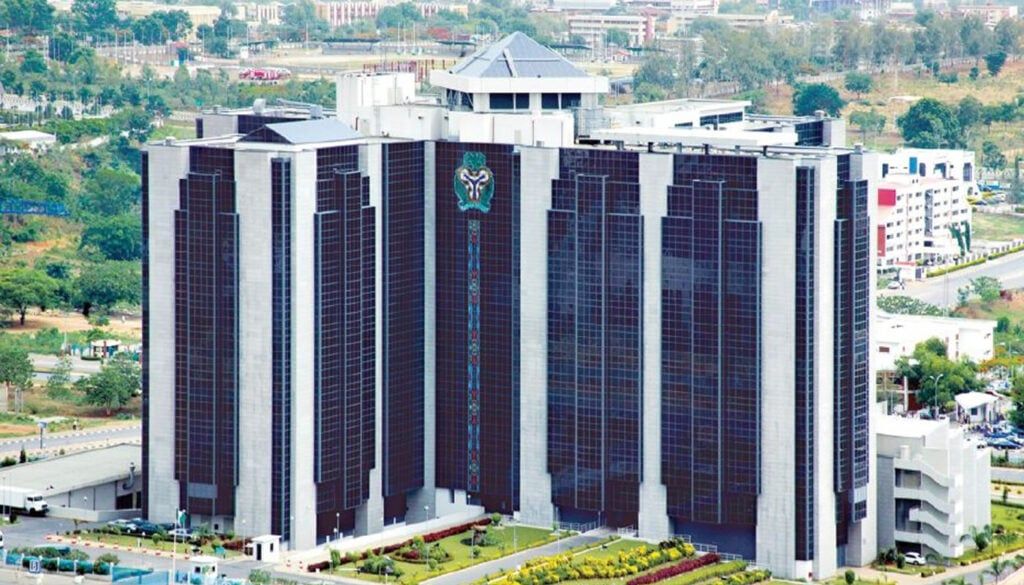
The Central Bank of Nigeria has disclosed that over half of the country’s financial industry is prepared to meet data localisation requirements.
It stressed that Nigeria must strengthen its digital sovereignty without stifling innovation or its integration with global technology.
The disclosure was made on Wednesday in Lagos by the Director of the Payment System Supervision Department at the CBN, Dr. Rakyat Yusuf. She spoke at the CBN-National Information Technology Development Agency (NITDA) Executive Regulatory Dialogue on the National Sovereign Cloud Initiative (NSCI) and data localisation.
Yusuf said a survey by the apex bank on the industry’s level of readiness showed that more than half of financial institutions were set to comply. She expressed optimism that the remaining institutions would make progress after the clarifications provided at the dialogue.
“A survey we conducted to generate data on the level of preparedness has shown that more than 50 per cent of the industry is ready to comply,” she said.
She added: “Ultimately, we expect everyone to be on board by January 2027 to ensure that payment data is properly localised.”
According to Yusuf, the policy is about “our sovereignty, clarity and visibility over our transaction data,” and also about ensuring the stability of the financial system.
She said the CBN’s priority was to help financial institutions achieve compliance rather than immediately resorting to sanctions.
“However, where we identify a deliberate attempt to avoid compliance, sanctions will come into play. There will be sanctions for non-compliance,” she warned.
Also speaking at the event, the CBN Deputy Governor, Financial System Stability, Lamido Yuguda, said Nigeria must tighten its control over critical digital infrastructure while staying open to global technological developments.
He said: “The objective of the National Sovereign Cloud Initiative should not be to constrain innovation or isolate Nigeria from global technological developments. Rather, it should provide the security, resilience, and regulatory certainty necessary to support investment, innovation, and sustainable growth.”
Yuguda noted that the resilience of the financial system increasingly depended on the digital infrastructure supporting it.
He added: “We must strengthen digital sovereignty while remaining globally competitive; enhance security without constraining innovation; and promote localisation while ensuring that the financial system continues to benefit from efficient and reliable technology.”
Meanwhile, the Director-General of NITDA, Kashifu Abdullahi, assured financial institutions that Nigeria’s technology ecosystem had the capacity to support the implementation of the sovereign cloud initiative.
“Today’s workshop is to give you the assurance that the technology exists, the Nigerian tech ecosystem is capable, and it can support you in complying with your regulator’s mandate or directive,” he said.
Abdullahi explained that digital sovereignty was not about isolation or building every technology locally. Rather, he said, it was about developing Nigeria’s capacity to compete globally while retaining control over critical infrastructure.
“It is about building our digital capacity to compete in the world we are in today,” he said.
He warned that external disruptions, such as submarine cable outages and geopolitical crises, should not automatically affect Nigeria’s payment system.
Abdullahi further said the initiative would give financial institutions a wider choice of technology providers. He added that it would help prevent dependence on a single vendor, country or technology platform.