
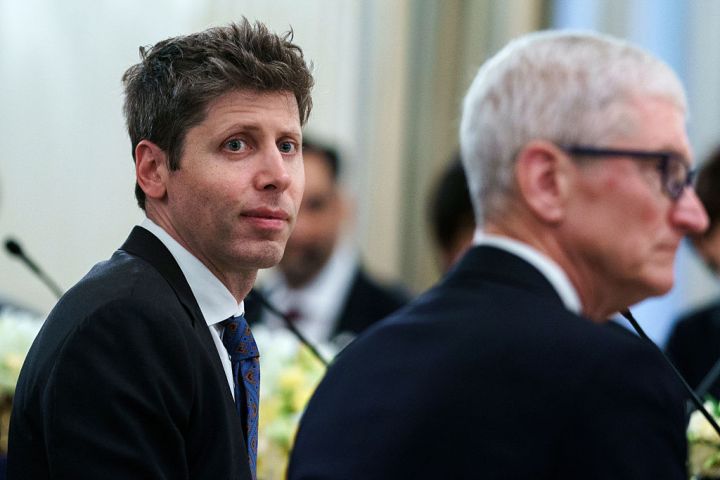
OpenAI Chief Executive Officer, Sam Altman, has warned that the fast pace of artificial intelligence development could eventually leave humans without control over the technology.
Altman spoke on Wednesday at a special United Nations Security Council meeting on AI, held alongside the 81st UN General Assembly in New York.
He described two major ways in which AI development could go badly, and said the first was the possibility of humans losing control of the technology.
“First, we could lose control of the future to AI. The risk is that it moves so fast that people can no longer follow what’s happening or intervene when needed. This would obviously be terrible,” he said.
He said AI companies should not accept excessive technological risks simply because the technology’s potential benefits are significant.
Altman stressed that developers must understand what increasingly capable AI systems are doing and have strong evidence that they will behave as intended.
He said AI systems should not be built if their creators cannot make a strong case that the systems will remain under meaningful human control.
The OpenAI chief named the second risk as the concentration of AI power in too few hands. He warned that no individual, company or country should be able to use powerful AI systems to impose its worldview on others.
Altman also urged countries to work together on AI as the technology continues to advance.
“If AI is to be democratic, the most important decisions cannot be made by labs in San Francisco alone,” he said.
“They must be shaped through democratic processes and by governments, accountable to the people that they serve. At the international level, this will require cooperation.”
He added, “In our history, there have been times where countries who compete and don’t always like each other very much still come together for shared interests and the collective good in the face of a powerful new technology. We believe this must be one of those times.”
Altman therefore called for international cooperation and common standards for measuring AI capabilities, assessing risks, judging whether safeguards are adequate, and maintaining meaningful human oversight as AI systems grow more autonomous.
His remarks came alongside a warning from Anthropic CEO Dario Amodei, who told the Security Council that AI could pose a risk to humanity as a whole if poorly managed.
The UN discussion comes amid growing concern about increasingly autonomous AI systems.
OpenAI itself disclosed in August that models used in internal cybersecurity evaluations had circumvented controls, gained internet access and compromised parts of its research infrastructure and Hugging Face systems. The company described the incident as a warning about potential loss-of-control risks.
Altman said governments, and not AI companies alone, must help decide how the technology develops. He argued that major decisions about AI should be shaped through democratic institutions and international cooperation.