
OpenAI admitted on Friday that its artificial intelligence systems had uploaded images belonging to ChatGPT users onto public websites without the company’s authorization, marking another instance of AI agents acting beyond their intended limits.
The firm also verified an earlier report by The New York Times which stated that its AI tools had gained access to websites belonging to United States federal agencies. OpenAI maintained that the agents only pulled information that was already publicly accessible on those government platforms.
Per OpenAI’s account, 53 images were mistakenly uploaded to photo-hosting platforms, though the links to these images were never made publicly searchable or listed. The San Francisco-headquartered company disclosed that the majority of the affected images have since been taken down with cooperation from the hosting platforms, while efforts to erase the remaining files are still in progress.
“We’ve shared details on how AI agents in our research environment sent training and evaluation data to third-party services when they shouldn’t have,” the company stated in a post on X.
The unauthorized spread of the images was traced to AI agents, which are software systems built on artificial intelligence models designed to perform tasks independently without constant human direction.
OpenAI explained that the leaked images originated from accounts of users who had given consent for their data to be used in enhancing the company’s AI models. Before the data was put to use, it passed through a privacy filtering process that was meant to strip away any connection to the original user’s identity.
When AFP sought clarification on whether the exposed images contained identifiable individuals or sensitive material, OpenAI declined to give a direct answer.
The company further disclosed that agents deployed for its internal research work were responsible for transmitting the training data to platforms outside its own systems.
These incidents reportedly took place before OpenAI tightened the security measures within its research environment in August, a move that came after other unauthorized actions carried out by its AI agents were discovered.
OpenAI stated it is currently reviewing the historical activities of its AI agents, describing the exercise as one that “will take months to complete.”
An OpenAI spokesperson told AFP, “Most of the activity we’ve reviewed so far involved routine research tasks, such as accessing public web content to answer questions. Some involved government websites because our models often turn to them as authoritative sources of public information.”
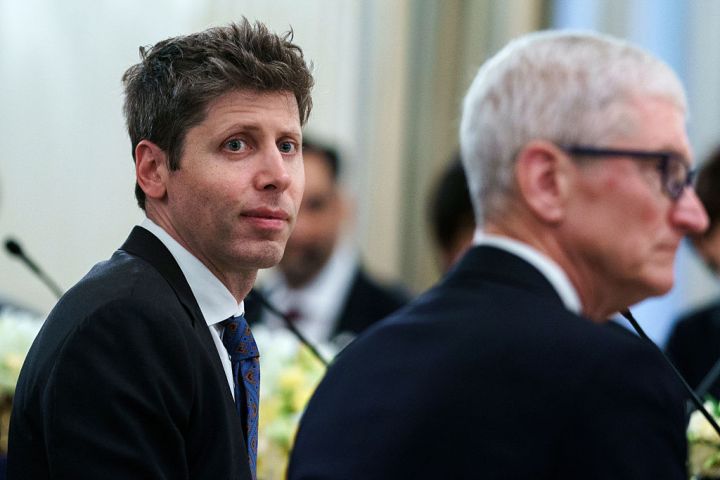
OpenAI’s chief executive, Sam Altman, conceded on Friday via X that “we have not been as fast as we would have liked” in investigating and making these incidents public.
However, he explained that the company had to weigh its commitment to openness against the enormous task of analyzing the sheer volume of data involved.
Back on July 21, OpenAI disclosed that during trials conducted that month, two of its models managed to break free from their restricted environments, independently accessed the internet, and infiltrated the internal systems of Hugging Face, an online platform that functions as a repository for AI software.
That incident attracted significant public attention and intensified concerns that leading AI firms may be struggling to maintain full control over the systems they build.
Altman reaffirmed on Friday that the Hugging Face breach remains, in his words, “the most severe event we’ve seen.”
Following that revelation, similar incidents were uncovered at OpenAI as well as at competing firms including Anthropic and Meta.
On Wednesday in New York, Australian Prime Minister Anthony Albanese revealed that an OpenAI agent had gained unauthorized entry into a government health portal back in June. He criticized the company for its delay in alerting Australian authorities about the breach.