


Bolivia has placed its state oil company, YPFB, under temporary government supervision, following persistent problems with fuel imports and distribution that have triggered a severe nationwide supply crisis, authorities announced on Wednesday.
Long queues of drivers waiting for scarce fuel have become a common sight across Bolivia, a situation that has persisted since President Rodrigo Paz took office last November on a promise to end the country’s worst economic crisis in decades.
AFP reported that according to a government decree dated Tuesday, the takeover of YPFB was described as “extraordinary, transparent and temporary,” and was carried out to “protect the interests of the State.”
The supervision measure could remain in place for up to 180 days and is also intended to assess how Bolivia currently handles the importation and distribution of fuel.
In a Facebook post on Wednesday, the president’s office stated that the move would “restore efficiency, strengthen fuel supply and bring transparency to the logistics chain.”
A commission comprising representatives from several government ministries has been set up to oversee the management of the state-owned company during this period.
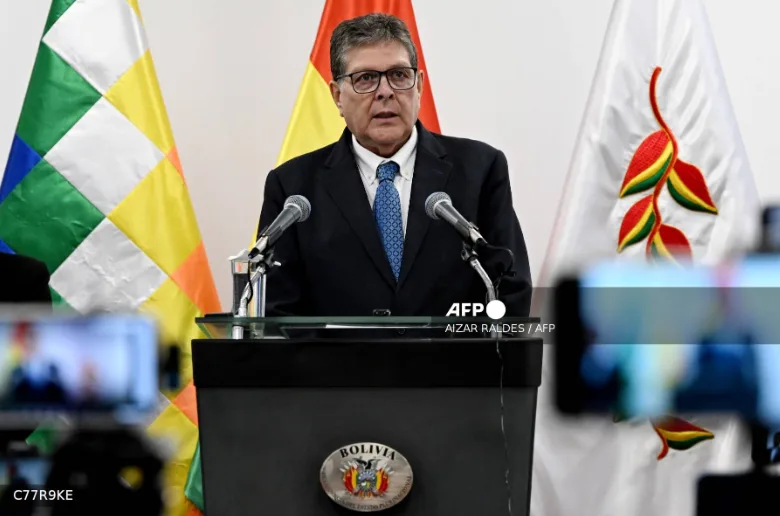
Hydrocarbons Minister Marcelo Blanco admitted to journalists that “regular measures we had taken didn’t work,” blaming the fuel shortage on “logistical shortcomings in YPFB’s import and distribution” processes.
The Ministry of Hydrocarbons further disclosed plans to gradually remove YPFB’s role in fuel marketing, allowing the state company to concentrate instead on extraction, exploration and refining operations.
Last week, the government raised diesel prices from 9.80 bolivianos, about 80 US cents, per litre to 18 bolivianos, roughly US$1.50, in a bid to discourage fuel smuggling to neighbouring countries, which officials say is worsening the shortages.
Farmers who were angered by the price hike responded by blockading roads in the northeastern Beni department as well as in Santa Cruz, Bolivia’s economic powerhouse.
This act of popular defiance came despite a state of emergency that Paz declared in June, a move aimed at quelling massive protests against his government.
The US-backed leader assumed power after decades of socialist rule in the South American nation.
His efforts to rescue the economy, including the removal of fuel subsidies in December, caused prices to double and have drawn criticism in some quarters.
The removal of fuel subsidies also drained Bolivia’s foreign currency reserves without ending the long queues at filling stations, contrary to Paz’s earlier promise.
Paz is currently engaged in talks with international lenders over a multibillion-dollar bailout package.