





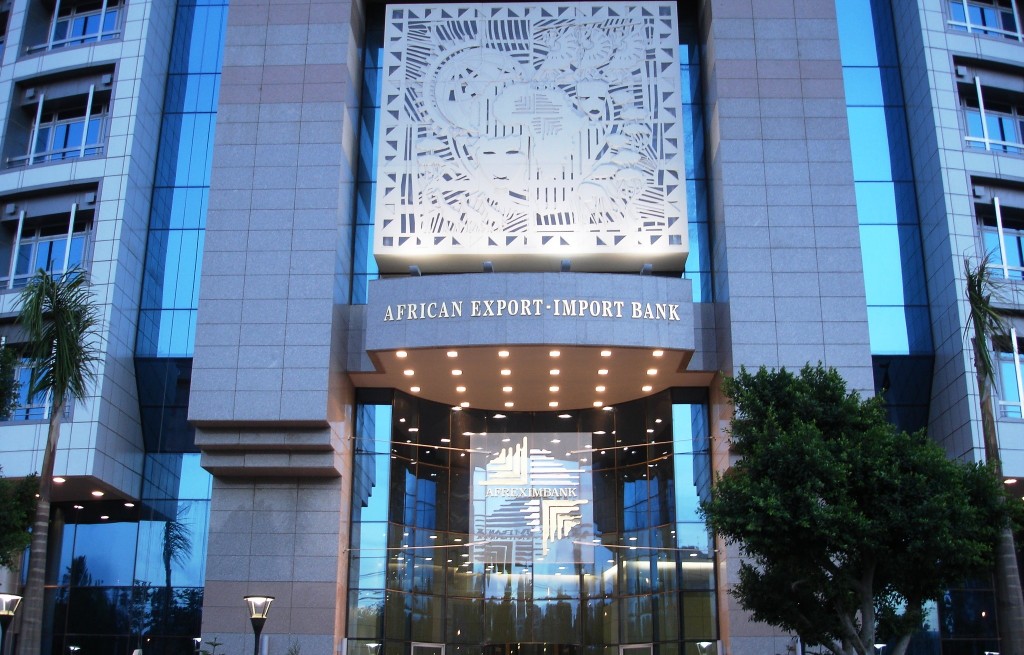
The African Export-Import Bank has reported a net income of $534.7 million for the first half of 2026, representing a 30 per cent increase from the $412.7 million recorded in the corresponding period of 2025.
The bank attributed the stronger performance to higher net interest income and increased fees and commissions, reflecting the continued expansion of its lending and trade-related activities.
Afreximbank disclosed the results on Monday, August 24, 2026, in a statement from Cairo, Egypt, covering the six months ended June 30, 2026.
The results showed that the bank and its subsidiaries maintained strong financial performance while continuing to support trade and economic development across Africa and the Caribbean.
The Group’s total assets and contingencies increased by 7.8 per cent to $52.3 billion, compared with $48.5 billion at December 31, 2025.
The increase was largely driven by expansion in lending, with net loans and advances rising 5.7 per cent to $35.4 billion from $33.5 billion at the end of 2025.
Afreximbank’s earnings strengthened significantly during the period, with net interest income increasing 22 per cent to $1.0 billion from $0.84 billion in the first half of 2025.
Fee and commission income also rose 15 per cent to $71.1 million from $61.9 million, supported by higher fees from guarantees, letters of credit and advisory services.
“As a result, net income reached US$534.7 million, representing a 30% increase from US$412.7 million recorded in the first half of 2025,” the statement reads in part.
The improvement in earnings was also reflected in the bank’s profitability ratios.
Return on average shareholders’ equity increased to 13 per cent from 11 per cent in H1 2025, while return on average assets rose to 2.54 per cent from 2.22 per cent.
“Profitability indicators showed further improvement, with return on average shareholders’ equity rising to 13%, compared with 11% in H1’2025, while return on average assets increased to 2.54% from 2.22% over the same period.”
Commenting on the performance, Denys Denya, Afreximbank’s Senior Executive Vice President, said the results reflected the resilience of the Group despite the complex global environment facing its member countries.
“Our financial performance and strong position reflect the continued resilience of the Group at a time when our member countries are navigating a particularly complex global environment. Our healthy balance sheet gives us the capacity to respond when markets are disrupted, while continuing to finance the trade, industrialisation and investment that underpin longer-term economic resilience,” Denys said.
The growth in Afreximbank’s half-year earnings was closely linked to the expansion of its lending activities.
Net loans and advances rose 5.7 per cent to $35.4 billion during the period, up from $33.5 billion at the end of 2025.
At the same time, the bank maintained an NPL ratio of 2.20 per cent, improving from 2.43 per cent at year-end 2025.
The Group’s gross income also increased to $1.8 billion from $1.6 billion in H1 2025, while its shareholders’ funds rose to $8.5 billion.
Afreximbank also strengthened its funding position after the reporting period through a $1.5 billion dual-tranche bond issuance, comprising $750 million in a 5.5-year tranche and another $750 million in a 10-year tranche.
The transaction, the largest international debt capital markets issuance in the bank’s history, was approximately two times oversubscribed.
Despite higher personnel expenses and persistent inflationary pressures, the bank’s cost-to-income ratio remained relatively strong at 20 per cent, compared with 19 per cent a year earlier.
Afreximbank’s latest performance follows a strong 2025 financial year, when the bank reported a profit of $1.15 billion, up from $973.5 million in 2024.
The increase was supported by interest income of $3.16 billion, compared with $3.05 billion a year earlier, while loans and advances reached about $34 billion.
The bank’s stronger financial performance has also come as intra-African trade continues to expand.
In 2025, intra-African trade increased 5.47 per cent to $213.8 billion from $202.7 billion in the previous year.
Afreximbank attributed the increase to robust growth in several African economies, including Ethiopia, Uganda, the Democratic Republic of Congo and Zambia.
South Africa remained the largest contributor to intra-African trade, while Côte d’Ivoire maintained a significant role in West African trade.
The latest half-year results therefore place Afreximbank in a stronger financial position as it continues to expand lending and finance trade, industrialisation and investment across African and Caribbean economies.
The bank’s liquid assets represented 13 per cent of total assets at the end of June, within its strategic target range of 10 per cent to 15 per cent.