





Nigeria’s increasing deployment of oil rigs has failed to translate into a corresponding and sustained improvement in crude oil production, raising concerns over the country’s ability to convert massive investments in upstream activities into higher output and government revenue.
Rig count is widely regarded as a key measure of activity in the exploration and production sector. Ordinarily, an increase in the number of active rigs should support the drilling of new wells, the development of additional reserves and the maintenance of existing producing assets. However, production data indicate that Nigeria’s crude oil output has remained relatively subdued despite substantial drilling activity over the past decade.
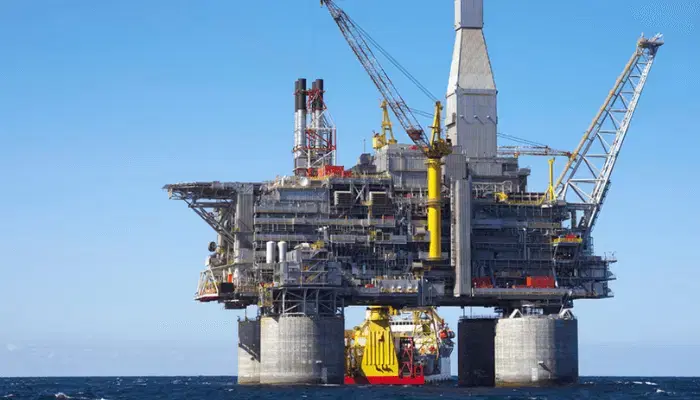
Data from the Organisation of Petroleum Exporting Countries (OPEC) showed that 2,099 rigs were deployed in Nigeria between 2016 and 2026, representing investments worth billions of dollars. The highest annual deployment was recorded in 2018, when 360 rigs were utilised, while 2021 recorded the lowest figure at 87 rigs.
The cost of such operations is substantial, particularly in deepwater environments. A deepwater rig alone can cost between $400,000 and $600,000 per day, excluding expenses for drilling mud, casing, cementing, logistics, helicopters, supply vessels, insurance and other associated services. An individual offshore exploration well can also require between $50 million and more than $150 million, depending on its depth and technical complexity.
Despite these huge investments, Nigeria’s crude oil production has failed to return to its historical highs. The country’s highest annual crude output excluding condensate during the period under review was approximately 1.734 million barrels per day (bpd) in 2019, still significantly below annual budget expectations. By 2022, production had fallen to about 1.143 million bpd.
One of the major factors behind the persistent decline is the deteriorating performance of mature oil fields, many of which have been producing for several decades. Data from the Nigerian Upstream Petroleum Regulatory Commission (NUPRC) showed that the combined average production of five mature fields fell by 20.8 per cent year-on-year to 10,930 bpd in June 2026, from 13,794 bpd recorded in the corresponding month of 2025.
A mature oil field is generally one that has passed its early development and peak production stages. As reservoirs age, declining pressure, increasing water production and reduced natural flow can progressively lower output. Sustaining production from such assets therefore requires continuous investment in workovers, additional wells, artificial lift systems and enhanced oil recovery techniques.
The Abo field, operated by Eni/Agip and producing since 2003, recorded one of the sharpest declines. Its output dropped by 39.2 per cent to 6,870 bpd in June 2026, compared with 11,297 bpd a year earlier.
Pennington, operated by Pennington Producing Limited, recorded a 45 per cent decline, falling from 7,107 bpd to 3,880 bpd. Ugo Ocha, also known as Jones Creek, declined by 16.6 per cent from 32,246 bpd to 26,900 bpd.
Production from Sea Eagle, operated by Renaissance Energy, fell by 8.3 per cent to 14,570 bpd from 15,886 bpd, while Okwori, operated by Antan Producing Limited, recorded a marginal decline from 2,435 bpd to 2,430 bpd.
Investigations across Abia, Akwa Ibom, Bayelsa, Cross River, Delta, Edo, Imo, Ondo and Rivers states indicate that many Nigerian oil fields have experienced considerable depletion since commercial oil production began following the country’s first commercial discovery in 1956.
Although some operators have continued to invest in additional drilling, well workovers and other production-enhancement measures, others have struggled to commit sufficient capital to ageing assets. The result has been a combination of declining production, unstable output and slower development of new reserves.
Renaissance Africa Energy, which operates the Sea Eagle field, attributed its declining output to the natural progression of a mature asset. The company said the field’s performance remained broadly consistent with expectations contained in its approved Field Development Plan.
According to the company, Sea Eagle’s current production profile had already been incorporated into its business and growth strategy and represented only a relatively small component of its overall production portfolio. It added that it was continuing to assess opportunities to optimise output, improve asset value and maintain operational reliability in accordance with regulatory requirements and approved development plans.
Eni also linked the performance of the Abo field to its maturity, noting that the deepwater asset produced its first oil in April 2003 and had remained in operation for 23 years. The company said production optimisation initiatives were being implemented, including upgrades to gas compressors, to sustain the field’s performance.
Nigeria’s prolonged production challenges have also weakened its position within OPEC and the international oil market. Historical data show that the country’s crude production reached approximately 2.5 million bpd in November 2005, when Nigeria wielded considerably greater influence within OPEC.
However, despite investment initiatives following the implementation of the Petroleum Industry Act (PIA), national crude production, including condensate, has remained below 1.7 million bpd.
The country’s constrained production capacity was further highlighted by its absence from the seven OPEC+ members that participated in a virtual meeting on August 2, 2026, to review oil market conditions and production plans.
At the meeting, Saudi Arabia, Russia, Iraq, Kuwait, Kazakhstan, Algeria and Oman agreed to adjust production by 188,000 bpd from additional voluntary cuts announced in April 2023, with the adjustment scheduled to take effect in September 2026. The countries also reiterated their commitment to compensating for previously over-produced volumes and maintaining conformity with the Declaration of Cooperation.
The latest OPEC+ adjustment highlights the contrasting positions of Nigeria and several other major producers. While participating countries are using production management to influence global market conditions and maximise oil revenues, Nigeria continues to face difficulties producing enough crude to meet its OPEC allocation, while also responding to increasing demand from new domestic refineries.
Industry experts have identified ageing infrastructure and reservoirs, insufficient investment, crude oil theft, pipeline vandalism, security challenges and delays in bringing new projects on stream among the major constraints on production growth.
An industry source said increasing exploration activity would have limited impact unless it was accompanied by accelerated field development and more aggressive efforts to recover oil from existing assets.
The expert argued that Nigeria needed to combine exploration with enhanced recovery from mature fields, improved security, infrastructure upgrades and faster regulatory approvals. With the country already holding substantial proven reserves, the immediate challenge, according to the expert, was not simply discovering more hydrocarbons but converting existing reserves into sustainable production.
The source also called for renewed efforts to complete major projects, including Bonga North, Southwest/Aparo, Zabazaba and Etan, which could contribute to restoring Nigeria’s production capacity.
Chairman and Chief Executive Officer of Brittania-U, Catherine Uju Ifejika, highlighted the potential of sustained investment in mature fields, citing her company’s experience with the Ajapa field.
She said Brittania-U invested more than $400 million after acquiring the asset from Chevron. The investment included the drilling of additional wells and deployment of a Floating Production, Storage and Offloading (FPSO) facility. According to her, the investment enabled Ajapa to begin production at about 2,300 bpd in 2010 and subsequently achieve higher and more stable output.
Professor Emeritus of Petroleum Economics, Wumi Iledare, said the decline in mature-field production represented a structural problem with direct implications for government revenue and the wider economy.
According to him, falling crude output reduces government earnings, weakens foreign exchange inflows and limits economic value creation. He therefore advocated a more proactive approach to managing mature assets rather than simply accepting natural production decline.
Iledare recommended faster regulatory approvals, incentives for the re-entry of selected abandoned wells, infill drilling, workovers, optimisation of artificial-lift systems and the deployment of commercially viable enhanced oil recovery technologies.
He noted that the PIA had already recognised the maturity profile of Nigeria’s petroleum assets through production allowances and a progressive royalty structure designed to balance government revenue with continued investment in oil recovery.
For Nigeria, the challenge is increasingly shifting from discovering additional reserves to ensuring that existing resources are economically recovered before their productive lives end. Without sustained investment and an enabling regulatory and operating environment, higher rig activity alone may continue to produce limited gains in national crude output.
As Iledare put it, the central objective should be petroleum asset optimisation, which ultimately translates into greater public value through improved production, revenue generation and economic activity.