
Nigerian firms and households expect inflation-related spending to ease over the next six months, even as energy costs remain the biggest driver of inflation perceptions.
This is according to the Central Bank of Nigeria’s July 2026 Inflation Expectation Survey.
The survey showed that energy costs, insecurity, interest rates and exchange rate movements remained the major factors shaping inflation perceptions among respondents.
The survey also showed that businesses continued to experience a stronger impact from inflation than households, while expectations of further moderation in price pressures improved.
The CBN said 60.9 per cent of firms reported an increase in expenditure due to inflation in July, compared with 55.9 per cent of households.
Despite the higher expenditure levels, respondents expect inflation-related costs to gradually decline over the next six months.
Energy costs, including PMS, diesel and electricity, ranked as the biggest driver of inflation perceptions among firms at 74.1 points and households at 61.9 points.
Insecurity ranked second among firms at 71.3 points and third among households at 56.5 points.
Interest rates recorded 69.0 points among firms, while exchange rate movements stood at 68.8 points.
Among households, transportation ranked second at 61.2 points, followed by insecurity at 56.5 points and exchange rate movements at 54.1 points.
The CBN said natural disasters, raw materials or household purchases and infrastructural challenges were generally perceived as less significant contributors to overall inflation perceptions during the review period.
The survey showed differences in inflation perceptions across household income groups, with middle-income earners recording the highest perception of inflation during the review month.
Households earning between N150,001 and N250,000 reported the highest inflation perception at 71.0 per cent.
Respondents earning between N350,001 and N450,000 recorded the lowest perception of high inflation at 55.6 per cent.
The Inflation Perception Index stood at 40.0 points in July, indicating that respondents perceived current inflation to have moderated compared with the preceding month.
The Inflation Expectation Index is projected to decline to 21.2 points in August, signalling expectations of further easing in inflationary pressures.
The CBN said businesses were more optimistic than households about a reduction in inflation-related expenditure over the next six months.
“Overall, business and household respondents anticipate a gradual reduction in inflation-related expenditure over the next 6 months. This expectation is largely influenced by business respondents, who exhibit a more optimistic outlook regarding the easing of inflationary pressures,” the CBN noted.
Nairametrics earlier reported that the Nigerian Midstream and Downstream Petroleum Regulatory Authority (NMDPRA) is proposing new rules that would prohibit petroleum companies from coordinating fuel prices, restricting supply, or engaging in market-sharing arrangements that distort competition across Nigeria’s midstream and downstream oil and gas sector.
The proposed regulations come just weeks after allegations of coordinated fuel pricing resurfaced in Nigeria’s downstream petroleum market.
The latest survey comes after Nigeria’s headline inflation eased marginally to 15.91 per cent in June 2026 from 15.93 per cent in May, according to the National Bureau of Statistics (NBS).
The moderation in headline inflation has coincided with improving expectations among businesses and households, although energy costs remain a major source of pressure on both groups.
The NBS is expected to release Nigeria’s August 2026 Consumer Price Index report on Monday, August 17, 2026.
The upcoming inflation report will provide the latest official data on whether the moderation reflected in consumer expectations has translated into further easing in measured inflation.
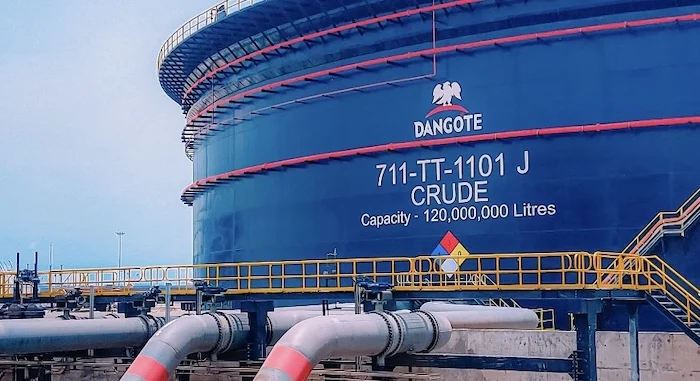
Dangote Refinery had slashed the ex-depot price for PMS to N1,075 per litre on July 2nd, following the fall in the prices of crude oil at the global oil market.
The resumption of the U.S.-Iran conflict has seen oil prices skyrocketing again in recent days.
It was reported that Nigerians are increasingly postponing major purchases such as cars, homes and household appliances as high living costs and elevated borrowing rates continue to squeeze household finances.