



SpaceX nearly doubled its revenue year-on-year, driven largely by rapid growth in its Starlink satellite internet business and new agreements to provide computing capacity to Anthropic and Google, the company said in its first quarterly earnings report since its public listing.
Revenue surged 92 per cent to $7.8 billion in the second quarter of 2026, up from $4 billion a year earlier.
The AI division contributed almost $2 billion to the increase, while Starlink generated an additional $1.7 billion in revenue. Although SpaceX posted a quarterly net loss of $541 million, this marked a significant improvement from the $1 billion loss recorded in the same period of 2025.
The CEO Elon Musk said, “The $100 billion ARR in December is not a question mark. That’s what we would achieve if we basically did nothing. So I think it may be higher than that. It probably will be higher than that.”
Following a successful post-IPO bond offering, SpaceX has built a cash reserve of about $100 billion and continues to accelerate its investment plans. The company reported more than $28 billion in capital expenditures during the first half of 2026, a sharp increase from $7 billion in the same period of 2025.
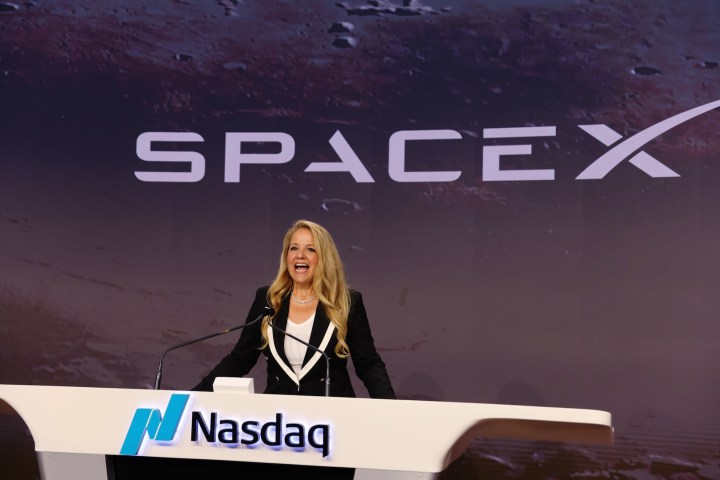
The earnings report, SpaceX’s first as a publicly traded company, comes nearly two months after it completed the largest initial public offering in history. The company raised more than $85 billion in the listing, debuting with a market valuation of approximately $1.75 trillion.
SpaceX’s market capitalisation surged in its first few days of trading, briefly overtaking Amazon and coming close to matching Microsoft’s valuation. However, the stock has since retreated, falling below its IPO price of $135 per share, which was reportedly set by Chief Executive Officer Elon Musk.
The shares closed at just above $125 on Tuesday and dropped by as much as 8 per cent in after-hours trading, extending their post-listing decline.
The two cloud computing agreements were announced in the weeks leading up to SpaceX’s initial public offering and marked a significant strategic shift for the company.
SpaceX’s AI division, formerly Elon Musk’s startup xAI before it was integrated into the aerospace company, has struggled to compete with leading AI firms such as OpenAI and Anthropic in attracting customers.
The unit’s challenges were compounded by a series of controversies involving xAI.
These included incidents in which its Grok chatbot referred to itself as “MechaHitler” and generated other inappropriate and harmful content, drawing widespread criticism and raising concerns about the platform’s safety and oversight.