





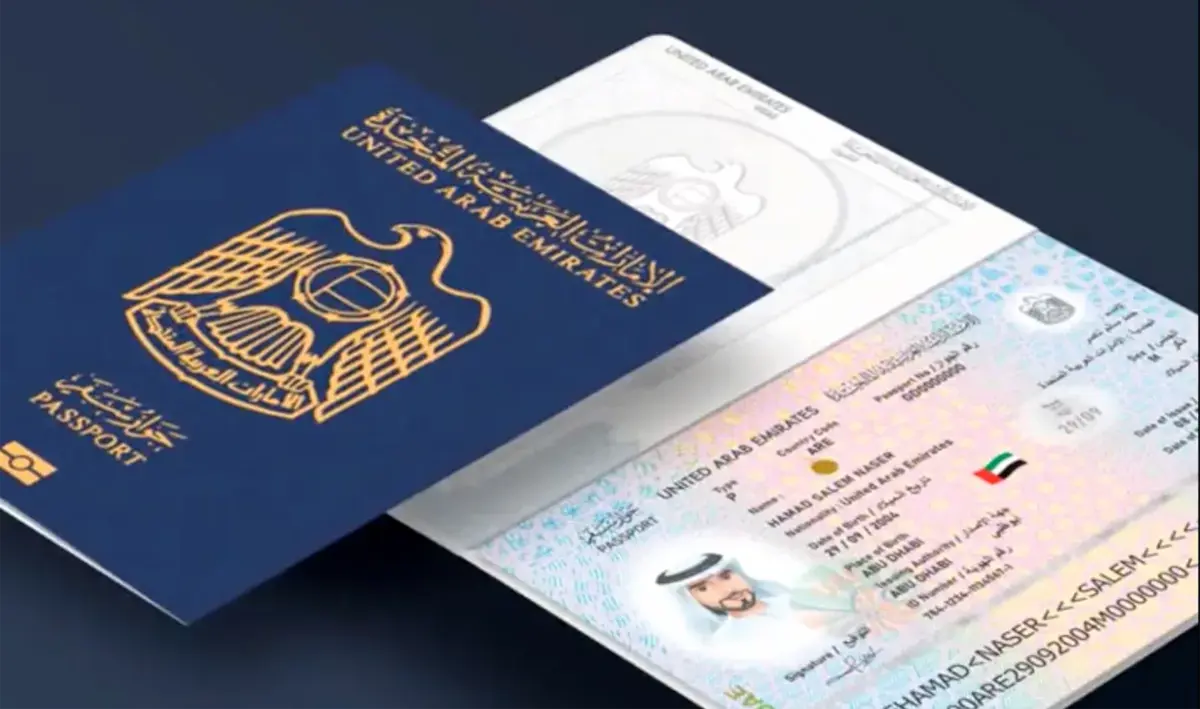
The United Arab Emirates has recorded the biggest improvement in passport strength of any country over the past two decades, adding visa-free access to 153 destinations and rising from the middle of the global rankings to become one of the world’s most powerful passports.
Nairametrics reported that this was disclosed in the 20th anniversary edition of the Henley Passport Index, released recently, which tracks the number of destinations passport holders can visit without obtaining a prior visa.
According to the report, the UAE climbed three places since January 2026 to rank joint second globally alongside Japan and South Korea, with visa-free or visa-on-arrival access to 188 destinations.
Singapore retained the world’s strongest passport, offering access to 192 destinations.
Henley & Partners described the UAE’s performance as the greatest improvement recorded in the history of the passport index.
Twenty years ago, the UAE passport ranked in the middle of the global rankings. Since then, it has added access to 153 visa-free destinations, a rise the firm attributed to sustained diplomatic engagement, international cooperation, and strategic foreign policy.
“The UAE’s latest rise is particularly significant in this anniversary year, recording the greatest improvement of any passport in the index’s history,” the report stated.
Dr. Christian H. Kaelin, Chairman of Henley & Partners and creator of the Henley Passport Index, said passport strength increasingly reflects geopolitical influence rather than economic prosperity alone.
“Twenty years of data show that passport power is one of the clearest expressions of a country’s geopolitical capital. The world’s strongest passports belong to nations that other countries want as partners for trade, investment, security, or cooperation.”
The report showed that international mobility has improved significantly over the past two decades despite rising geopolitical tensions.
The average passport now grants visa-free access to 108 destinations, compared to just 58 destinations when the Henley Passport Index was launched in 2006.
In 2006, the world’s most powerful passports held by the United States, Denmark, and Finland provided visa-free access to 130 destinations. Today, Singapore tops the rankings with access to 192 destinations.
However, the gap between the world’s strongest and weakest passports has widened considerably. Afghanistan remains at the bottom of the rankings, with access to only 22 destinations.
The report also noted that Bolivia is the only passport globally to have lost visa-free access over the past 20 years, declining by six destinations.
Also, the United States, which occupied first place in 2006, has dropped to 10th position, while the United Kingdom has slipped from third to sixth despite modest gains this year after securing visa-free access to China and Malawi.
Meanwhile, Asia has strengthened its presence at the top of the rankings, with Singapore holding first place and Japan, South Korea, and the UAE sharing second.
The UAE’s growing global influence extends beyond passport mobility. Earlier in January 2026, Nigeria and the United Arab Emirates signed a Comprehensive Economic Partnership Agreement (CEPA) aimed at strengthening bilateral trade and expanding market access for Nigerian businesses and professionals.
Nairametrics also previously reported that the UAE remains one of the world’s most attractive destinations for high-net-worth individuals due to its tax-friendly environment.
This has helped make the UAE a preferred destination for some of Africa’s wealthiest individuals, including Nigerian billionaire Aliko Dangote, Egyptian billionaire Nassef Sawiris, and South African billionaire Johann Rupert, among other global investors seeking long-term wealth preservation.