
The Transmission Company of Nigeria has dismissed assertions that the national transmission network is the main barrier to improved electricity supply, maintaining that the grid can currently wheel up to 8,700 megawatts of power, well above the highest volume of electricity ever generated and transmitted in the country.
Speaking on Monday in Lagos at a four-day Parliamentary and Stakeholders’ Engagement Summit on Power Sector Reforms in Nigeria, TCN Managing Director and Chief Executive Officer, Sule Abdulaziz, said industry data indicates that transmission is not the principal bottleneck within Nigeria’s electricity value chain.
Abdulaziz maintained that although the transmission network is frequently blamed as the weakest segment of the Nigerian Electricity Supply Industry, available data tells a different story.
He noted that Nigeria has an installed generation capacity of 13,625 megawatts, yet the highest amount of electricity ever generated and successfully delivered to the national grid is 5,801.84 megawatts, underscoring what he described as a significant gap between installed capacity and actual power output.
He stated that the milestone was recorded on March 4, 2025, when TCN successfully wheeled a record 5,801.84MW and transmitted an unprecedented 128,370.75 megawatt-hours of electricity in a single day.
Abdulaziz added that despite Nigeria’s installed generation capacity exceeding 13,000MW, the volume of electricity dispatched to consumers remains far below that level due to persistent constraints across the entire electricity value chain, rather than limitations within the transmission network alone.
“Before presenting TCN’s achievements, I wish to address directly and factually a narrative that has gained currency in public discourse: the characterisation of transmission as the singular or primary constraint in Nigeria’s electricity challenges. The data does not support this characterisation, and this Committee deserves the full picture.
“The following verified sector-wide capacity figures establish the true position. According to NERC’s February 2026 Operational Factsheet, Nigeria’s total installed generation capacity stands at 13,625MW. Yet the highest volume of electricity ever produced and delivered to the national grid, in the entire history of Nigeria’s electricity industry, stands at 5,801.84MW.
“The conclusion these figures compel is unambiguous. Nigeria’s national transmission grid today has the capacity to wheel 8,700MW, yet the highest volume of electricity ever generated and delivered to that grid has never exceeded 5,801.84MW. The transmission network has consistently wheeled every megawatt made available to it. Our grid has the capacity and our operators have the competence. The transmission network of Nigeria is ready,” he stated.
He said TCN has expanded the country’s bulk power wheeling capacity from approximately 7,000MW to a verified 8,700MW, adding about 1,700MW of evacuation capacity to the national grid and strengthening its ability to transmit electricity generated across the country.
He attributed the achievement to sustained investments in transmission infrastructure, extensive engineering upgrades, and continued support from the Federal Government as well as international development partners over the years.
“Through deliberate, sustained and strategically phased infrastructure investment, TCN has successfully increased the nation’s bulk wheeling capacity from approximately 7,000MW to a confirmed 8,700MW. This represents a net addition of 1,700MW to the grid’s evacuation capability, installed, commissioned and fully operational capacity that benefits.
“On 4 March 2025, at 21:15 hours, the Nigerian electricity transmission network achieved a new all-time peak wheeling record of 5,801.84 megawatts, the highest volume of electricity ever transmitted across the national grid in the history of Nigeria’s electricity industry. On that same day, TCN set a second historic record: delivering 128,370.75 megawatt-hours of energy, the highest single-day energy throughput ever recorded on the national grid.
“These twin records are not coincidental. They are the direct and measurable outcome of TCN’s years of infrastructure investment, engineering diligence, and operational discipline. They stand as incontrovertible proof that Nigeria’s transmission network is capable of handling substantially greater volumes of power, and that TCN’s team has the expertise to manage it safely and efficiently,” Abdulaziz said.
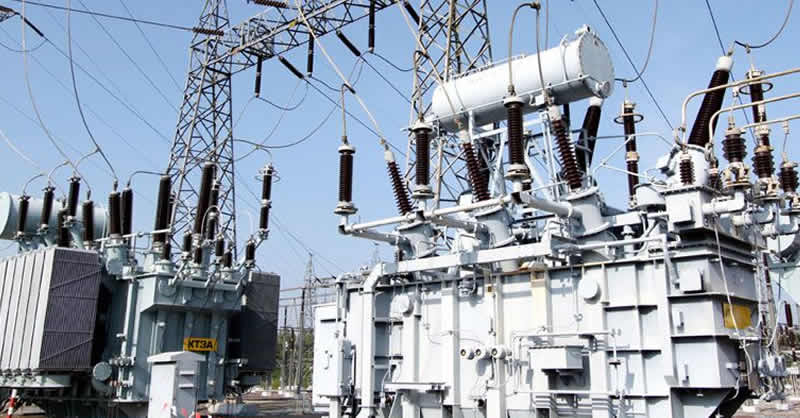
He further revealed that TCN commissioned 82 new power transformers across the country between January 2024 and November 2025, boosting the national grid with an additional 8,500MVA of transformation capacity and enhancing its ability to transmit and distribute electricity more efficiently.
According to him, the deployment represents one of the most extensive transformer installation programmes in the history of the transmission company.
“Between January 2024 and November 2025, a period of just 23 months, TCN commissioned 82 new power transformers across the country, adding approximately 8,500MVA of transformation capacity to the national grid. This is an unprecedented pace of transformer deployment in TCN’s operational history and represents one of the most concentrated periods of grid strengthening the country has ever witnessed,” he said.