
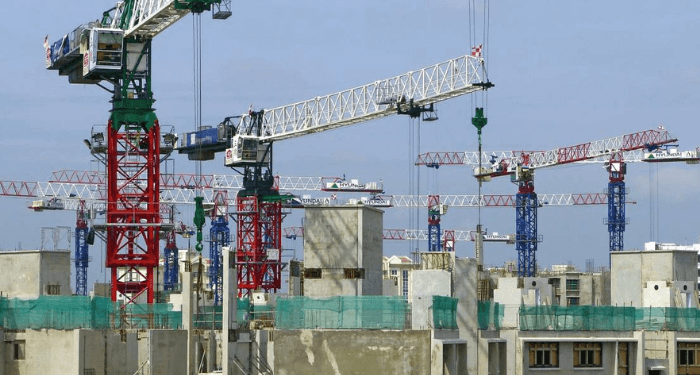
Nigeria’s construction costs increased by 20 per cent between December 2025 and May 2026 as rising prices of building materials and energy continued to put pressure on the sector.
Nairametrics reported that the increase was disclosed in a report by Fortren & Company, authored by the firm’s Chief Executive Officer, Martin Uche.
According to the report, the sharp rise in construction costs was driven by supply chain disruptions and increasing freight charges linked to the escalating Iran-Israel conflict. These challenges have significantly increased project delivery costs across major African markets, including Nigeria.
The report identified growing geopolitical tensions arising from the Iran-Israel conflict as a key factor behind the increase in construction expenses. It explained that disruptions to energy supplies and freight movements through the Strait of Hormuz have had a major impact on global logistics networks and supply chains.
“Fortren & Company’s tracking of construction input and energy cost indices across six African markets shows an average increase of 20% over the five months to May 2026, driven by supply chain and freight disruptions linked to the escalating Iran-Israel conflict,” the report read in part.
“One of the direct impacts we are seeing is an increase in the cost of building materials. In the past five (5) months, construction costs have risen by 20% in countries like Nigeria.”
The report further stated that Nigeria ranks among the hardest-hit markets because of its dependence on imported cement, steel and finishing materials, as well as the widespread use of diesel-powered equipment and operations within the construction industry.
It noted that cement, steel and finishing materials recorded the most significant price increases during the period. As a result, many contractors have begun shifting away from fixed-price contracts in favour of indexed pricing arrangements.
Developers are also increasingly postponing projects, renegotiating contractual agreements or reducing project specifications as the financial viability of developments comes under mounting pressure.
According to the report, the 20 per cent increase in construction costs is part of a broader repricing cycle currently affecting real estate markets across Africa rather than a temporary inflationary trend.
The report explained that elevated energy costs and ongoing disruptions to international freight routes have permanently increased the baseline cost of development activities across the continent.
Nigeria’s heavy reliance on imported construction inputs and diesel-powered systems has further heightened its vulnerability to fluctuations in global oil prices.
As a result, the gap between projected development costs and actual project expenditures has widened considerably, particularly for projects that were initiated based on earlier pricing assumptions.
The report observed that developers and contractors are increasingly embracing indexed and phased contracting models as a way of sharing risks amid persistent market volatility.
While such contracting arrangements may offer greater flexibility, the report warned that they could also slow project execution timelines and create additional challenges in securing financing.
It further noted that rising construction costs are beginning to affect the wider real estate market, with implications for rental prices, housing affordability and investment returns across major urban centres.
The Strait of Hormuz has remained effectively closed or heavily restricted for most commercial shipping activities since early March 2026 following Iran’s response to United States and Israeli strikes that commenced on February 28.
Shipping traffic through the strategic route has fallen dramatically, with some days recording almost no vessel movements.
The restrictions have been associated with mines, attacks, security concerns, insurance cancellations and selective approvals granted by Iranian authorities.
Iran has periodically relaxed and reintroduced the restrictions amid fragile ceasefire efforts and continuing tensions within the region.
The disruption has affected approximately 20 per cent of global seaborne oil shipments as well as significant volumes of liquefied natural gas, contributing to rising energy and transportation costs worldwide.
Although United States officials have indicated progress toward a possible arrangement that could facilitate the reopening of the route, full normalisation of shipping activities has not yet been achieved.
The report concluded that uncertainty surrounding the Strait of Hormuz continues to be a major factor influencing global energy markets, freight charges and supply chains, with direct consequences for construction activity in Nigeria and other economies that rely heavily on imports.