





Volkswagen reported its first quarterly loss in five years on Thursday, topping one billion euros, as the German auto giant struggles with United States tariffs and a troubled electric shift at subsidiary Porsche.
The loss in the July-to-September period amounted to 1.07 billion euros ($1.24 billion) and was the first suffered by Europe’s biggest carmaker since the second quarter of 2020, when it was hit by the coronavirus pandemic.
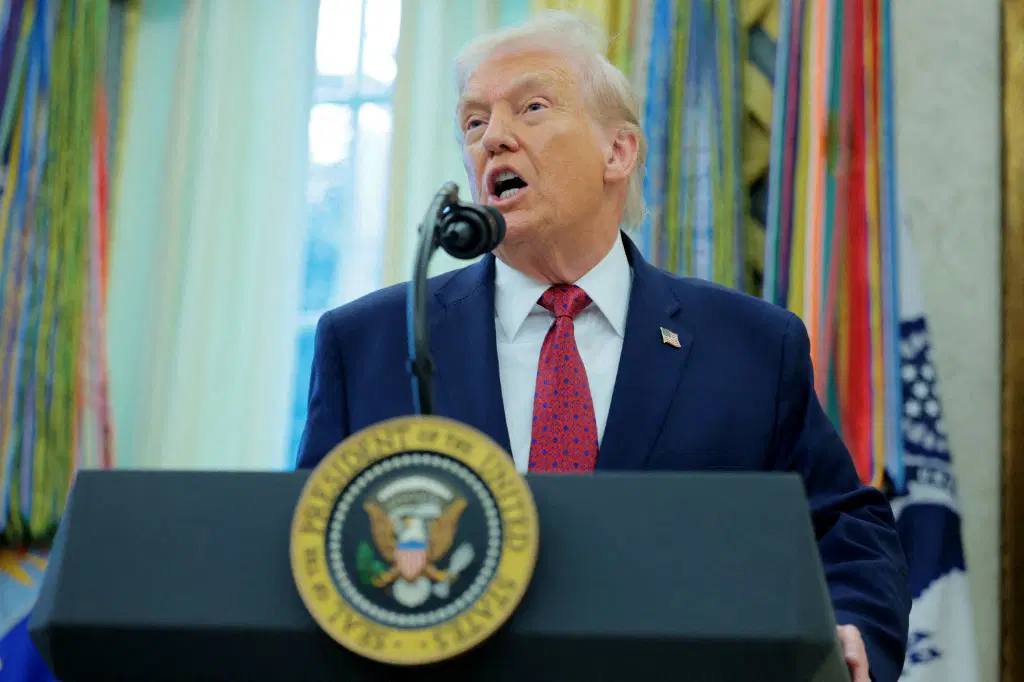
The 10-brand manufacturer, whose models range from Skoda to Seat and Audi, warned that US President Donald Trump’s tariff blitz was costing it five billion euros on an annual basis.
Volkswagen finance boss Arno Antlitz summarized the financial impact, stating: “The result is much weaker compared to the same period last year. Higher tariffs, adjusting the product strategy at Porsche, and write downs to Porsche’s value cost 7.5 billion euros.”
This latest bad news for VW and the wider German auto industry reflects broader problems for traditional manufacturers in Europe’s struggling top economy.
Beyond tariffs and the slower-than-expected shift to electric cars, fierce competition in key market China has hammered German manufacturers and their suppliers.
Porsche, long the jewel in Volkswagen’s crown, has in recent years become a headache for the wider group amid intense pressure from local competitors in China and weak demand for electric sports cars that lack the thrill of noisy petrol engines.
Volkswagen in September warned of a bumper 5.1-billion-euro hit to its core profit for the year after Porsche cut profit targets and said it would carry on selling petrol vehicles for longer than previously planned.
Volkswagen absorbed costs from Porsche’s changed strategy and also wrote down the value of its shares in the Stuttgart-based sports car maker.
The automotive giant is also dealing with US tariffs on car exports from the European Union, which are subject to a tariff of 15 per cent under an EU-US deal unveiled late July.
That is down from an earlier level of 27.5 per cent, but still far higher than the 2.5 per cent in force before Trump launched his trade war in April. The carmaker—which has a plant in Tennessee—also has to grapple with US duties on a range of imported car parts.
Speaking on a call after the results were released, Antlitz said Volkswagen was looking at US price increases as well as opening a possible Audi factory in the country to help offset the tariff impact.
He outlined the localization strategy, saying: “Localisation of parts in the US is exactly what we’re looking at. We have to decide on the Audi plant this year.”
Despite the net loss, revenues grew by 2.3 per cent to 80.3 billion euros, helped by a slight increase in vehicle sales globally. Even before Trump unleashed his tariffs, VW was struggling, having struck a deal with unions last December to cut 35,000 jobs by 2030, mostly at its namesake brand, as part of wider plans to save 15 billion euros a year.
Another headache emerged earlier this month after Dutch officials took control of the Netherlands-based but Chinese-owned chipmaker Nexperia, citing national security concerns. That prompted authorities in Beijing to ban the export of Nexperia chips out of China.
The chips are found in a typical car’s onboard electronics, and the European auto lobby ACEA warned Wednesday that supplies were “rapidly dwindling.” Volkswagen previously warned it could not rule out plant stoppages if supplies ran dry and said it was searching for alternative sources.
Asked about shortage fears, Antlitz offered a limited guarantee: “We secure production day-by-day, week-by-week,” he said, adding that Volkswagen was for now “safe until the end of next week.”

