






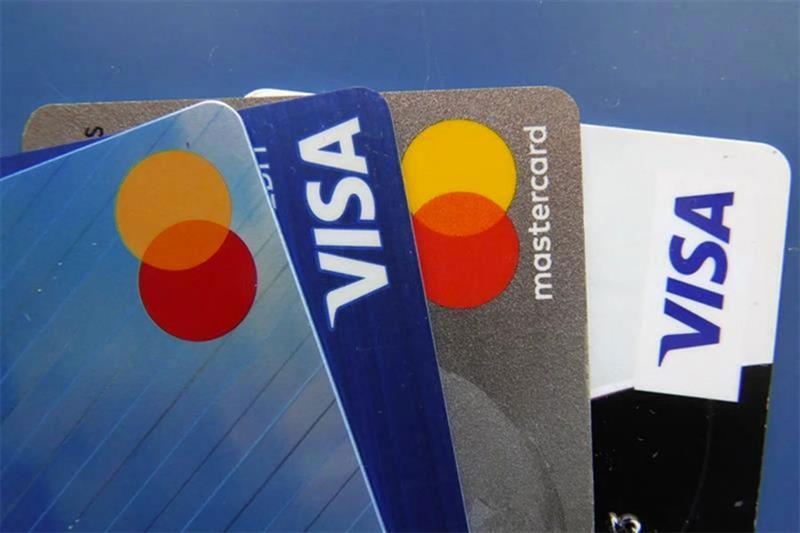
Visa detected nearly $1 billion in scam-related payment activity over a six-month period, highlighting how fraudsters are increasingly using artificial intelligence and sophisticated social engineering tactics to deceive consumers as payment network security continues to strengthen.
The finding, contained in Visa’s mid-year 2026 Biannual Threats Report released on Monday, covers the period from July to December 2025 and reflects a major shift in the global fraud landscape. The payments company said scams have emerged as the largest category of consumer payment fraud, with criminals moving away from attacking payment infrastructure and instead manipulating consumers into authorising transactions that appear legitimate.
The report said the trend reflects a broader shift in cybercrime, with fraudsters increasingly exploiting human behaviour rather than technological weaknesses. By using impersonation, false urgency and increasingly sophisticated AI-generated content, criminals are deceiving consumers into authorising fraudulent transactions.
“Payments at a network level continue to get safer, but threats are evolving faster than ever,” Visa’s Chief Risk and Client Services Officer, Paul Fabara, stated.
“Criminals are increasingly targeting people rather than technology, using deception, urgency, and AI-enabled tools to exploit trust. Addressing this shift requires continuous innovation at the network level and close collaboration across banks, merchants, policymakers, and the broader payments ecosystem,” he said.
The report suggests that stronger investment in payment security has made it increasingly difficult for criminals to breach payment infrastructure directly, driving them to focus instead on social engineering tactics that trick consumers into authorising fraudulent transactions themselves.
The report suggests that stronger investment in payment security has made it increasingly difficult for criminals to compromise payment infrastructure directly, prompting them to shift their focus to social engineering schemes that trick consumers into authorising fraudulent transactions themselves.
Visa said fraud involving device tokens—a security technology that replaces sensitive card details with unique digital identifiers—fell by 9.6 per cent in the second half of 2025 compared with the corresponding period in 2024.
According to the company, the decline shows that stronger authentication measures and network-level security protections are effectively reducing fraud, even as cyberattacks become more frequent and increasingly sophisticated.
At the same time, the report identified scams as the fastest-growing source of financial losses for consumers, fuelled by fraudsters impersonating trusted organisations, manufacturing false emergencies and using AI-powered tools to make fraudulent messages and communications appear increasingly convincing.
The report said artificial intelligence has become a double-edged sword in the payments ecosystem. While cybercriminals are leveraging AI to create more convincing phishing campaigns, voice-cloning scams and other forms of digital deception at scale, financial institutions and payment networks are increasingly using the technology to detect suspicious activity and stop fraudulent transactions earlier in the payment process.
“The rapid adoption of AI has fundamentally lowered the barrier to entry for fraud,” Visa’s Vice President and Cluster Head for West Africa, Andrew Uaboi, noted.
“What once required deep technical skill can now be executed with a prompt. That reality makes intelligence-driven defenses and coordinated action across the ecosystem more critical than ever. With this report, our goal is to help leaders act sooner before fraud reaches consumers.”