





The justices of the United States Supreme Court, including its conservative members, repeatedly posed critical questions to the administration of President Donald Trump on Wednesday as they heard arguments concerning the president’s authority to impose sweeping tariffs.
The central issue before the court is whether the president can take such unilateral trade actions under a 1977 emergency law.
The court session, which lasted more than two hours, involved listening to arguments presented by both the administration and opponents of Trump’s actions.
It remains unclear when the Supreme Court will issue its final ruling, though U.S. media sources have reported that a decision could take anywhere from weeks to several months.
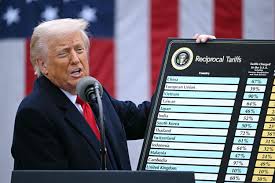
The core of the legal case is focused on country-specific tariffs that were first announced by the Trump administration in April, targeting dozens of U.S. trading partners, with some rates subsequently adjusted by the administration.
In justifying the tariffs, Trump invoked the International Emergency Economic Powers Act of 1977, or IEEPA, arguing that trade deficits with other nations constituted a national security risk, which justified imposing the tariffs without securing congressional approval.
However, an appeals court previously disagreed with the administration, ruling that tariffs fall squarely within Congress’s constitutional remit, thus dealing a blow to Trump’s aggressive trade policy.
During the Supreme Court hearing, Chief Justice John Roberts, an appointee of Republican president George W. Bush, highlighted the constitutional separation of powers, stating: “The vehicle is imposition of taxes on Americans, and that has always been the core power of Congress.”
In its current appeal, the Trump administration argues that stripping the president of this tariff authority would endanger key trade deals already struck with major trading partners, contending that those agreements were negotiated under pressure from the contested tariffs.