

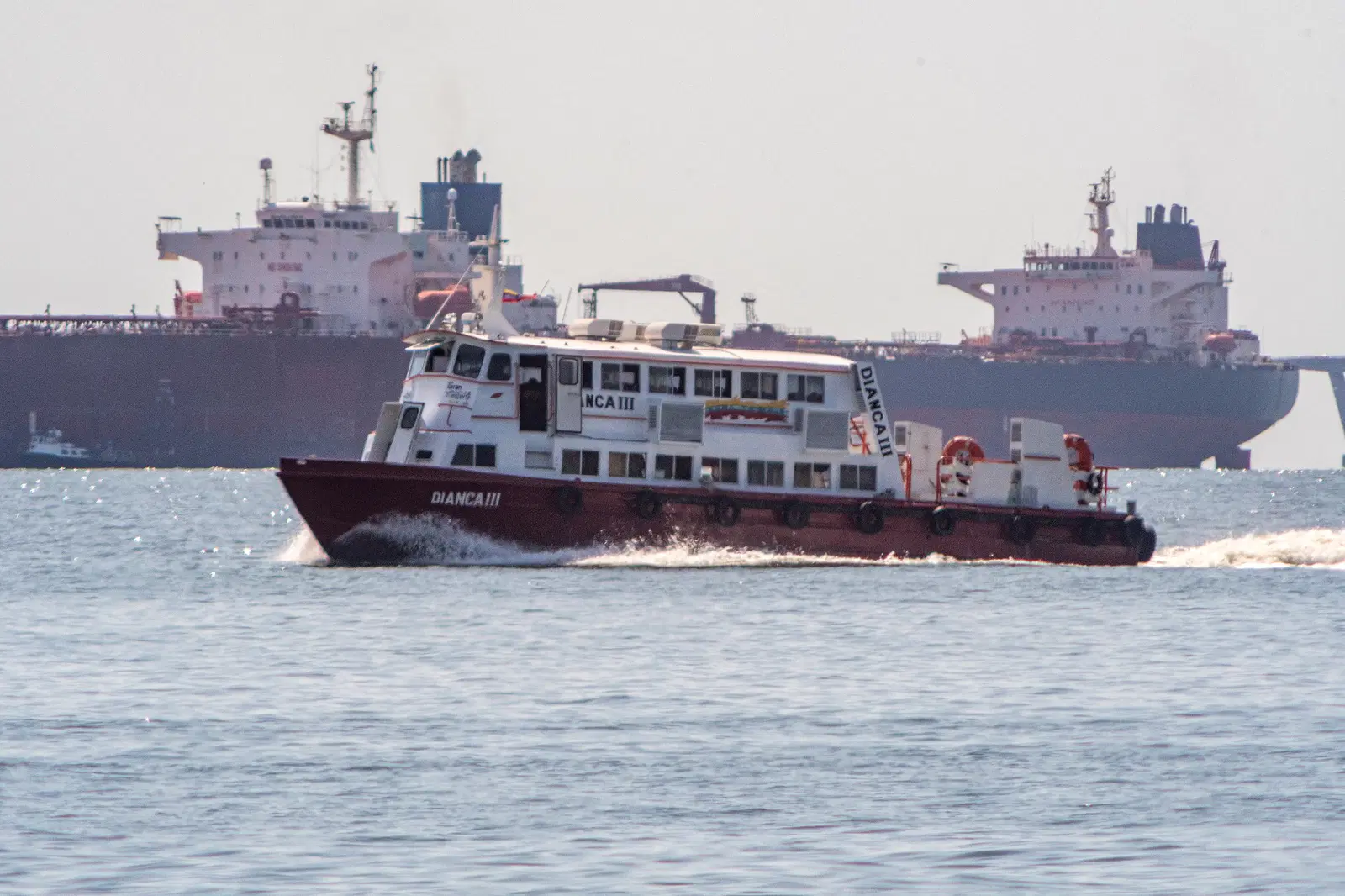
The United States has apprehended an oil tanker off the coast of Venezuela, a move the Venezuelan government has condemned as “theft and kidnapping,” marking the latest escalation in Washington’s pressure campaign against Caracas, according to US officials.
The interception, which took place on Saturday, was the second time in two weeks that US forces have interdicted a tanker in the region and followed days after President Donald Trump announced a blockade of “sanctioned oil vessels” entering and leaving Venezuela.
US Homeland Security chief Kristi Noem confirmed the action in a post on X, stating: “In a pre-dawn action early this morning on Dec. 20, the US Coast Guard with the support of the Department of War apprehended an oil tanker that was last docked in Venezuela.”
The post included nearly eight minutes of aerial footage showing a helicopter hovering just above the deck of a large oil tanker at sea.
Venezuelan authorities reacted strongly, describing the seizure as theft and kidnapping and warning that “those responsible for these serious events will answer to justice and to history for their criminal conduct.”
A separate post from the US Department of Homeland Security identified the vessel as the Centuries and said it was “suspected of carrying oil subject to US sanctions.”
According to TankerTrackers, an online service that monitors oil shipments and storage, Centuries is a Chinese-owned, Panama-flagged oil tanker.
The tracking service said the tanker loaded 1.8 million barrels of crude oil at a Venezuelan port earlier this month before being escorted out of Venezuela’s exclusive economic zone on December 18. The VesselFinder database also listed the ship’s last recorded position as off the Venezuelan coast.
An AFP review showed that Centuries does not appear on the US Treasury Department’s list of sanctioned companies and individuals.
However, White House deputy spokeswoman Anna Kelly said in a post on X that the tanker “contained sanctioned PDVSA oil,” referring to Venezuela’s state oil company, and described the ship as “a falsely flagged vessel operating as part of the Venezuelan shadow fleet.”
On December 10, US forces had seized another large oil tanker off the Venezuelan coast, which the US attorney general said was involved in transporting sanctioned oil from Venezuela to Iran.
The United States has for several months been building a significant military presence in the Caribbean, officially to combat Latin American drug trafficking, though the deployment has largely focused on Venezuela.
Venezuelan Defence Minister Vladimir Padrino Lopez struck a defiant tone during a public event in Caracas broadcast on state television on Saturday, although he did not directly reference the seized tanker.
“We are waging a battle against lies, manipulation, interference, military threats, and psychological warfare,” Padrino Lopez said, adding “that will not intimidate us.”
Venezuelan Foreign Minister Yvan Gil also said Iran, one of Caracas’s closest international allies, was providing support “in all areas” to counter what he described as “piracy and international terrorism” by the United States.
At present, there are 11 US warships operating in the Caribbean, including the world’s largest aircraft carrier, an amphibious assault ship, two amphibious transport dock ships, two cruisers and five destroyers.
Caracas views the US operation as an attempt to oust President Nicolas Maduro, whom Washington and several other countries regard as an illegitimate leader, and as a strategy to “steal” Venezuelan oil.
Since September, the US military has also carried out a series of air strikes against alleged drug trafficking boats in the Caribbean Sea and eastern Pacific Ocean. Critics have questioned the legality of these strikes, which have reportedly resulted in more than 100 deaths.
The tanker interception occurred as South American leaders met for a summit of the Mercosur bloc, where tensions surrounding suspended member Venezuela overshadowed talks on a potential trade agreement with the European Union.
During the summit, Brazilian President Luiz Inacio Lula da Silva clashed with Argentine President Javier Milei, warning that an outbreak of armed conflict over Venezuela could trigger a “humanitarian catastrophe.”
Milei, an ally of President Trump, countered by saying Argentina “welcomes the pressure from the United States and Donald Trump to free the Venezuelan people.”