




The United States Trade Representative’s office announced Thursday that it has launched Section 301 investigations into unfair trade practices by 60 countries, including India, citing their alleged failure to prevent forced labor in imported goods.
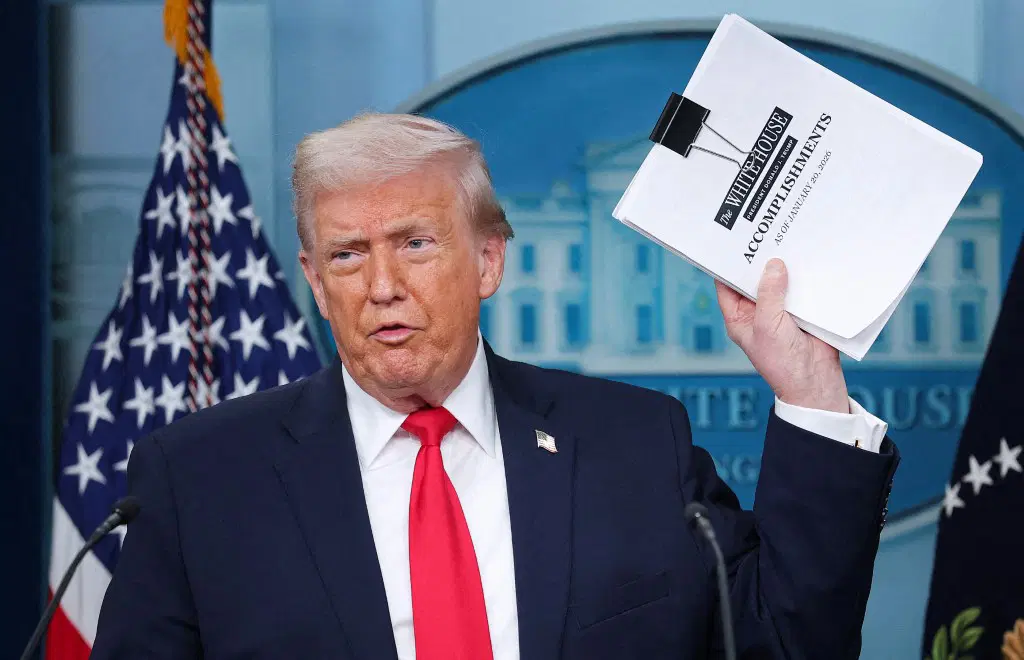
The move follows U.S. President Donald Trump’s administration’s efforts to reinstate global tariff pressure after the U.S. Supreme Court’s February 20 ruling deemed his worldwide tariffs unlawful, according to Reuters.
“These investigations will determine whether foreign governments have taken sufficient steps to prohibit the importation of goods produced with forced labour and how the failure to eradicate these abhorrent practices impacts US workers and businesses,” US trade representative Jamieson Greer said in a statement.
The review targets major U.S. trade partners and allies, including Australia, Canada, the European Union, the U.K., Israel, India, Qatar, and Saudi Arabia, as well as China and Russia. Other countries under investigation include Hong Kong, Indonesia, Japan, the Philippines, Singapore, South Korea, Taiwan, Thailand, and Vietnam.
Earlier, Trump had imposed a temporary 10% tariff for 150 days under Section 122 of the Trade Act of 1974 following the Supreme Court ruling.
On Wednesday, his administration also opened trade investigations into excess industrial capacity in 16 major trading partners.
Greer noted that the Section 301 probe could lead to new tariffs on India, China, the EU, Japan, South Korea, and Mexico as soon as this summer.
The U.S. has already limited imports of solar panels and other products from China’s Xinjiang region under the Uyghur Forced Labor Prevention Act, signed into law by former President Joe Biden.
Greer expressed hope that the Section 301 investigations, including any proposed remedies, would be completed before Trump’s temporary tariffs expire in July.
Section 301 of the U.S. Trade Act of 1974 is a central legal mechanism that enables the United States to investigate and take action against foreign trade practices deemed unfair or damaging to American businesses.
It is applied when the U.S. government considers another country’s policies or actions to be unjustifiable, unreasonable, or discriminatory, thereby restricting or burdening U.S. trade.

