




Three Republican members of the United States House of Representatives have raised concerns over national security risks linked to global submarine communication cables, urging tech giants to disclose their roles and safeguards regarding the infrastructure.
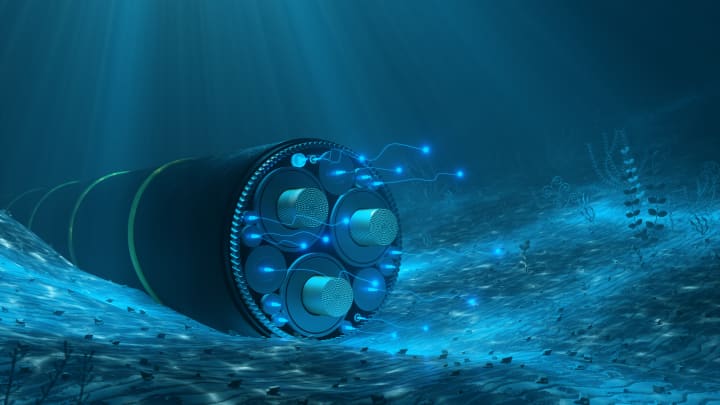
In a letter sent Monday, the lawmakers asked the CEOs of Alphabet, Meta (Facebook’s parent company), Amazon, and Microsoft whether they have implemented sufficient measures to prevent foreign interference in subsea cable systems. The inquiry follows mounting fears about the vulnerability of over 400 undersea cables that carry 99% of international internet traffic.
The letter, signed by Representative John Moolenaar—chair of a House panel on China—and Representatives Carlos Gimenez and Keith Self, pointed to Chinese entities such as SBSS, Huawei Marine, China Telecom, and China Unicom as ongoing participants in the servicing or maintenance of cable systems tied directly or indirectly to the tech firms.
“Foreign adversarial actors are increasingly positioning themselves—both openly and covertly—to compromise subsea cable systems at critical points of vulnerability,” the lawmakers wrote. They demanded the companies reveal, by August 8, whether they are aware of any suspected hardware tampering, optical signal tapping, signal distortion, or other anomalies during cable repairs or maintenance.
The letter cited growing evidence of “coordinated malign activity” by China and Russia, referencing incidents in strategic areas including the Baltic Sea and Indo-Pacific region. Among these was the November 2024 sabotage of two cables in the Baltic Sea, as well as Taiwan’s 2023 accusation that Chinese vessels severed the only two internet cables to the Matsu Islands. Suspected Houthi attacks have also damaged three cables connecting Europe and Asia via the Red Sea.
The Federal Communications Commission is also taking steps to tighten control. FCC Chair Brendan Carr announced last week that the agency intends to adopt new rules banning the use of Chinese technology in undersea cables connecting to the U.S.
Since 2020, U.S. regulators have blocked four cable projects intended to link the United States to Hong Kong, citing national security threats.

