


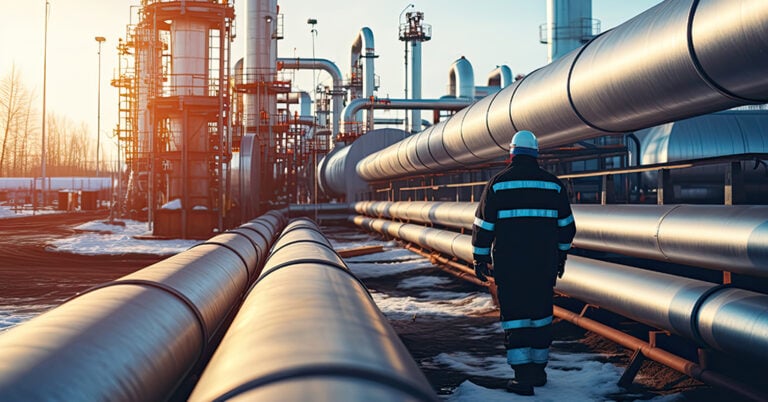


The escalating conflict in the Middle East, particularly the war involving Iran, has severely disrupted global energy shipments through the Strait of Hormuz, placing Africa’s fuel supply chain under intense pressure.
Many African countries are now operating with only weeks of refined petroleum products in reserve as traditional import routes face major constraints.
The International Energy Agency reports that approximately 600,000 barrels per day of petroleum products normally bound for Africa from the Middle East are now at risk, with tanker movements through the vital corridor reduced to minimal levels.
African governments are racing to identify alternative suppliers, amid concerns that richer nations may secure limited global supplies first in this competitive market.
A Bloomberg analysis highlights how the crisis reveals deep-rooted issues in Africa’s energy infrastructure, especially the continent’s reliance on imported refined fuels after prolonged refinery shutdowns and insufficient investment.
Energy analytics from Kpler show a dramatic drop in petroleum product loadings: from 580,000 metric tonnes in January to 183,000 metric tonnes in February, a reduction of 397,000 metric tonnes or 68.4 percent.
The decline intensified in March, with volumes falling to zero, representing a full 100 percent drop from February and the complete loss of the quarter’s initial 580,000 metric tonnes.
Several fuel cargoes originally headed for Europe and Africa have been redirected to Asia, where demand has spiked during the crisis.
One example is the vessel Brest, which loaded in India for Rotterdam but diverted near East Africa toward Indonesia, illustrating the rapid changes in global fuel routing.
East and Southern Africa, heavily dependent on Middle Eastern imports, are experiencing the most immediate impacts.
“We are looking everywhere for supply options,” Director-General at South Africa’s Department of Mineral Resources, Jacob Mbele, said in an interview.
“We are comfortable that in the coming weeks or so, we are safe, but the situation is fluid; it changes every day,” he added.
Securing cargoes is becoming harder for many African nations, which face limited foreign exchange and reduced negotiating leverage.
The continent’s refining capacity has shrunk by about a third over the past two decades, despite producing around seven percent of global crude oil, heightening import dependence on the Middle East.
In East Africa, Kenya consumes roughly 100,000 barrels of fuel daily and imports everything it needs, holding just 21 days of stock with minimal buffer against shortages.
Chairman of the Petroleum Outlets Association of Kenya, Martin Chomba, said the situation is already biting.
“The biggest suppliers are rationing product, and some distributors are experiencing stock-outs in rural areas,” he said.
Ethiopia has called on citizens to reduce fuel use, with the government focusing supplies on critical services.
Prime Minister Abiy Ahmed said in a public statement that fuel use must now be directed towards “basic and essential needs,” reflecting the growing strain on supply.
In West Africa, Russian diesel exports are stepping in to address the shortfall from Middle Eastern and Indian sources.
Kpler data indicates about 480,000 metric tonnes of Russian diesel reached the region in February, with another 446,000 metric tonnes anticipated in March, among the highest recent volumes.
Indian diesel exports to Southeast Asia have reached peak levels since May 2025, driven by better pricing there, with nearly half of India’s March diesel shipments going to the region and reducing availability for Africa.
Nigeria benefits from some protection thanks to the Dangote Refinery and smaller modular facilities, which cover much of its 493,000 barrels per day domestic demand.
The 650,000-barrels-per-day Dangote plant, operational since 2024, continues ramping up and could yield export surpluses.
Even so, Nigeria imports some crude to support operations, indicating ongoing challenges in local feedstock supply.
Energy specialists caution that the crisis may drive up fuel prices and threaten energy security continent-wide.
They stress the need for faster domestic refining investments and supply diversification to prevent repeated vulnerabilities.
The events demonstrate how geopolitical instability abroad can rapidly create economic hardships at home, especially for import-reliant countries.
As the Middle East situation develops, competition for fuel supplies grows fiercer, with Africa’s energy stability at stake.

