





The war in Iran has transformed the Strait of Hormuz into a critical choke point where a single misstep could disrupt economies worldwide.
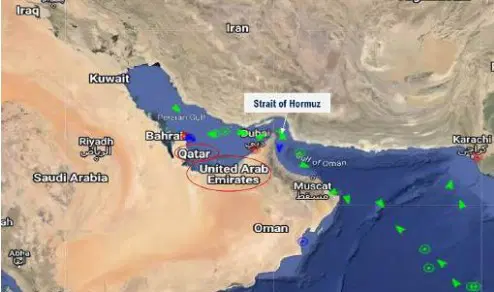
Iran’s threats against oil tankers passing through the Strait of Hormuz—a vital route carrying about 20 per cent of global oil exports in peacetime—have compelled regional countries to pursue alternative export paths.
Vanguard reported that analysts caution that these alternative routes fall short of fully meeting global oil demand.
“Saudi Arabia and the UAE can reroute some crude output to terminals outside the Gulf,” the International Energy Agency stated in its latest monthly oil report, saying that this can “help offset lost crude flows via Hormuz.”
Data intelligence firm Kpler warns that alternative export routes “remain insufficient, with record loadings from Fujairah (UAE) and Yanbu (Saudi Arabia) still leaving effective Middle Eastern exports at only about one-third of normal levels.”
Kpler indicates that Asian refiners are anticipated to increase purchases of long-haul cargoes from the Atlantic Basin, as a swift resumption of Strait of Hormuz traffic appears unlikely.
Typically, nearly 20 million barrels per day, representing around 20 per cent of global oil consumption, transit the Strait of Hormuz, primarily destined for China, India, South Korea, and Japan.
According to the IEA, approximately 350 oil tankers—both loaded and empty—are currently stranded in the vicinity.
Iran considers vessels belonging to the United States and its allies as “legitimate targets.”
Since the war’s onset on February 28, only about 80 ships have managed to navigate the strait.
A March 9 study by Standard Chartered bank notes that Bahrain, Iraq, Kuwait, and Qatar must export nearly all their crude via the Strait of Hormuz, while Saudi Arabia and the United Arab Emirates can partially mitigate the blockage through alternative pipelines.
Saudi Arabia’s East-West pipeline links Abqaiq near the Gulf to the Red Sea port of Yanbu.
On March 9, Saudi exports from western ports reached a record 5.9 mb/d, far exceeding the 2025 average of 1.7 mb/d, per IEA data.
This pipeline is expected to achieve its full capacity of 7 mb/d “in the coming days,” Amin Nasser, CEO of Saudi Aramco, promised on March 10.
The UAE is exporting crude via its Fujairah port on the Gulf of Oman to circumvent the Strait of Hormuz, though volumes remain modest.
“Usually 1.5 mb/d, they can be increased to 1.8 mb/d,” according to the IEA.
Combined, Saudi Arabia and the UAE possess additional crude transport capacity of up to 5.5 million barrels per day, the IEA reports.
Yet “despite record shipments from Fujairah and Yanbu, actual exports from the Middle East still account for only about a third of their normal level,” according to Kpler.
Iranian drone and missile attacks continue to threaten these alternative sites.
Other potential routes, such as the Iraq-Turkey pipeline, have remained inactive for years.
In Kazakhstan and Azerbaijan, export capacities are limited, and Iran targeted the Baku-Tbilisi-Ceyhan pipeline—which ends in Turkey—early in the conflict.
Russia’s oil export facilities face regular Ukrainian attacks, and despite partial U.S. sanctions relief, volumes cannot sufficiently cover global demand.
Although demand for Russian oil may rise due to Middle East disruptions, the IEA maintains unchanged forecasts for the country, projecting average production of 9.3 mb/d through the end of 2026.
Longer alternative routes from the United States, West Africa, and Latin America strain the already tight global tanker market, with production increases limited to a few hundred thousand additional barrels per day.
The Middle East war is imposing severe pressure on the global energy system, according to think tank Rystad Energy.
“Under the pre-war scenario, we had expected Brent to average $60 per barrel in 2026, as the market faced a substantial surplus of 2.6 million barrels per day,” says Rystad.
Since the conflict’s start, Brent crude prices have swung between $80 and $120, hovering around the $100 mark on Monday.