




The Strait of Hormuz is one of the world’s most critical maritime choke-points; here’s a listicle of essential facts you should know about it:
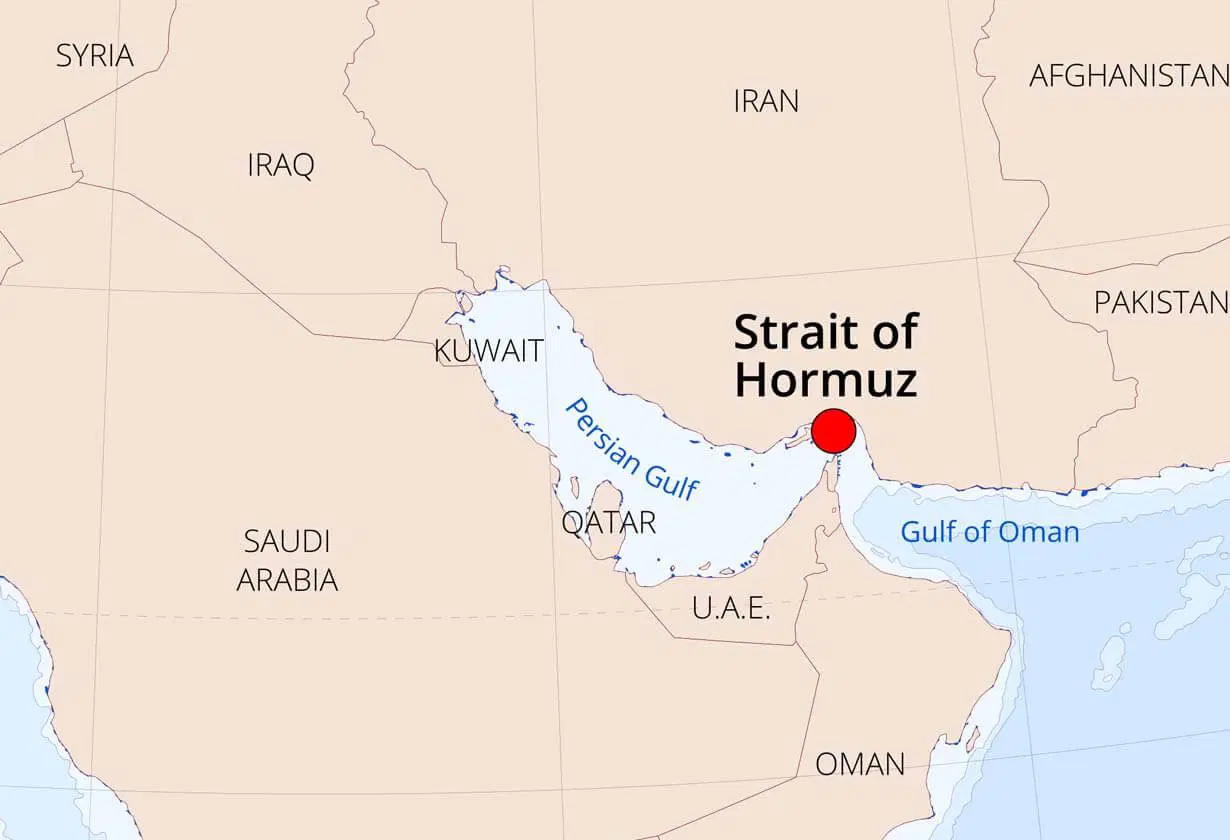
– Location and Geography: The strait is a narrow waterway connecting the Persian Gulf (to the north) with the Gulf of Oman and the Arabian Sea (to the south). It lies between Iran (north coast) and Oman (south coast, specifically the Musandam Peninsula), with the United Arab Emirates also nearby on the southern side. At its narrowest point, it measures about 21–33 km (13–21 miles) wide, with shipping lanes typically just 2–3 miles wide in each direction, separated by a buffer zone.
– Strategic Importance: It serves as the only sea route for oil and gas exports from major Persian Gulf producers, including Saudi Arabia, Iraq, Kuwait, the UAE, Qatar, and Iran itself, to reach global markets via the Indian Ocean.
– Oil and Gas Transit Volumes: In peacetime, roughly one-fifth (about 20–21%) of the world’s crude oil, condensate, and petroleum products — averaging 20–21 million barrels per day — passes through the strait. It also carries around one-fifth to one-third of global liquefied natural gas trade, much of it from Qatar. This makes it the single most important energy choke-point on the planet.
– Shipping Traffic: Normally, the strait sees around 100–140 vessel transits per day, including tankers, LNG carriers, and other commercial ships. Traffic flows through a designated Traffic Separation Scheme for safety.
– Geopolitical Sensitivity: Iran borders the northern side and has significant military presence nearby (including on several islands in or near the strait). While it is recognized as an international strait under the UN Convention on the Law of the Sea (allowing transit passage), its narrow geography gives Iran de facto influence over movements. The area has a history of tensions, with past threats or incidents during conflicts.
– Economic Ripple Effects: Disruption here doesn’t just affect energy prices — it impacts global supply chains, with Asian markets (especially China, India, Japan, and South Korea) receiving the vast majority of the oil that transits the strait.
Here are key facts and figures about the blockage of the Strait of Hormuz, a crucial shipping route virtually paralysed by the Middle East war.
The war erupted on February 28 when the United States and Israel began bombing Iran, prompting Tehran to retaliate with strikes across the region and sharply restrict access to the strait. Recent crossings appeared to have mainly used a route apparently approved by Iran around Larak Island just off the country’s coast, dubbed the “Tehran toll booth” by leading shipping journal Lloyd’s List.
The journal said Wednesday it had tracked more than 26 ships using the corridor overall, most Greek- and Chinese-owned, as well as others Indian-, Pakistani- and Syrian-owned. No ships tracked using transponder data had crossed the Strait of Hormuz using the regular route outside that corridor since March 15, according to the journal.
Just two vessels were detected crossing the strait heading west on Thursday. Both ships were dry bulk carriers transporting corn and reported Iran’s Bandar Imam Khomeini port as their destination, according to Kpler data. The channel typically sees around 120 daily transits, according to shipping industry intelligence site Lloyd’s List.
From March 1 to 26, commodities carriers made just 158 crossings, according to analytics firm Kpler — a decrease of 95 percent. Of these, 100 were by oil tankers and gas carriers and most were travelling east out of the strait.
Since March 1, 2026, 24 commercial vessels, including 11 tankers, have been attacked or reported incidents in the Gulf, the Strait of Hormuz or the Gulf of Oman, according to the British naval maritime security agency UKMTO. No incidents have been reported since Sunday, when the bulk carrier Phoenix reported an explosion next to the ship in Emirati waters, according to the UKMTO. Across all types of vessels, an additional four attacks claimed by the Iranian Revolutionary Guards have not been confirmed by international authorities.
Since the conflict began, at least eight seafarers or dock workers have died in incidents in the region, according to the International Maritime Organization (IMO). A further four remained missing and 10 were injured. Around 20,000 seafarers are affected in the region, according to the IMO.
Around 2,170 vessels sent transponder signals in the Gulf west of the Strait of Hormuz in the past day, according to Bloomberg data. Of those, 291 were tankers, including 78 crude oil and oil products tankers, 14 LNG tankers and 30 LPG tankers.
Since the war started, more than 43 percent of the crossings have been by ships under US, EU or UK sanctions, according to an AFP analysis of passage data. Of the crossings by oil and gas tankers, 56 per cent were by vessels under sanctions.