

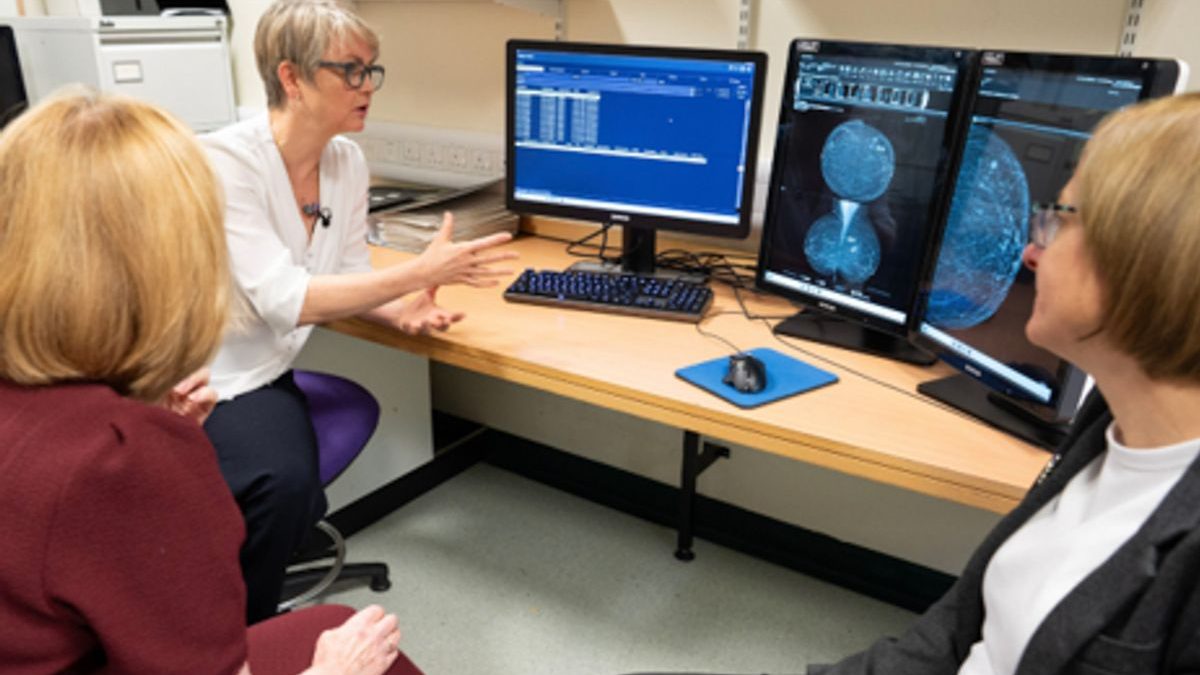
Nearly 700,000 women across the United Kingdom are expected to participate in the world’s largest trial examining how artificial intelligence can improve breast cancer screening.
The trial will use AI to analyse mammograms and assess whether the technology can improve early cancer detection, reduce the workload of healthcare professionals and avoid unnecessary diagnoses, according to BBC News.
Recruitment for the EDITH trial has commenced at Cambridge University Hospitals, the first of 30 sites participating in the study across the UK.
Under the UK’s routine breast screening programme, women aged 50 to 71 are invited for mammograms every three years, with more than two million women attending screenings annually.
Currently, two NHS specialists independently examine each breast X-ray, known as a mammogram. However, under the trial, artificial intelligence will replace one of the human reviewers.
Although several smaller studies have shown that AI could improve breast cancer detection rates, researchers leading the trial say further evidence is needed to establish that the technology is safe and does not increase unnecessary recalls for additional tests.
Breast cancer is the most commonly diagnosed cancer among women in the UK, with approximately 59,000 cases recorded annually.
Routine mammograms detect about a third of these cases, often at an early stage when treatment is more effective.
The UK’s breast cancer screening programme is estimated to prevent around 1,300 deaths each year.
Prof Fiona Gilbert, department of radiology, University of Cambridge, honorary consultant at Addenbrooke’s Hospital, and co-chief investigator said: “Millions of women have a mammogram each year and only a small number, less than 1%, will have cancer.
” Technology can make reviewing these images more efficient, freeing up specialist breast radiologists to spend more time caring for patients with cancer, supporting faster diagnosis and earlier treatment.”
Women will be notified about the study when they receive invitations for routine breast screening, although participation will be entirely voluntary.
The trial is not expected to alter the existing procedures or experience of women attending breast screening appointments.