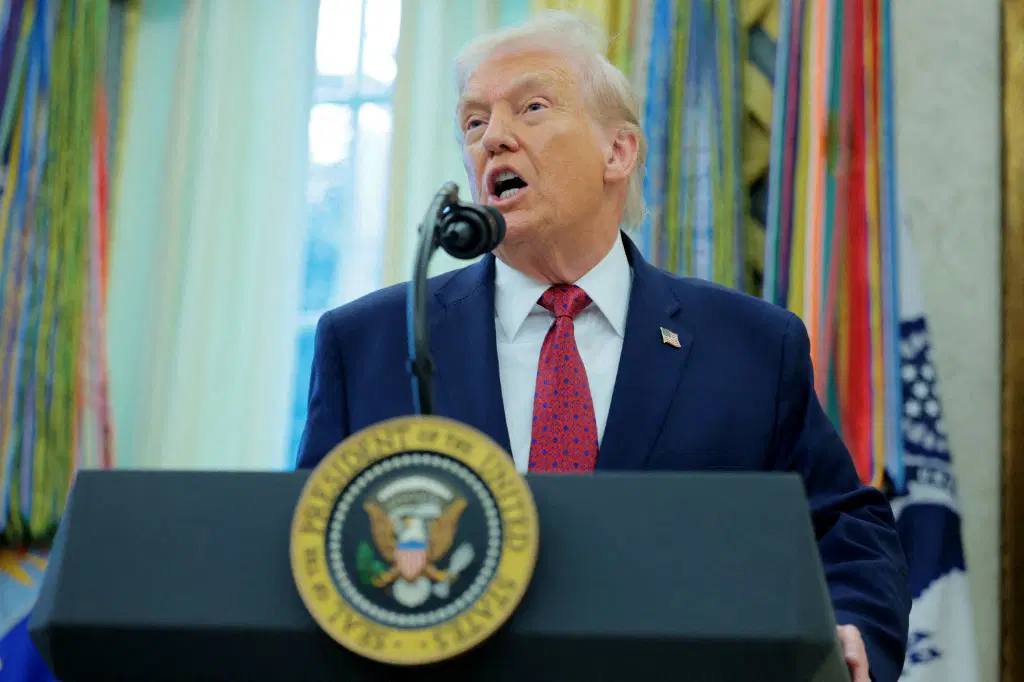





President Donald Trump has announced sweeping new tariffs on key European allies, intensifying pressure on countries opposing the United States’ proposed acquisition of Greenland.
Under the plan, the U.S. will impose a 10 percent tariff on imports from Denmark, Germany, France, and the United Kingdom starting February 1.
The administration says the rate will rise to 25 percent in June if no agreement is reached, with the possibility of further increases until the countries revise their position.
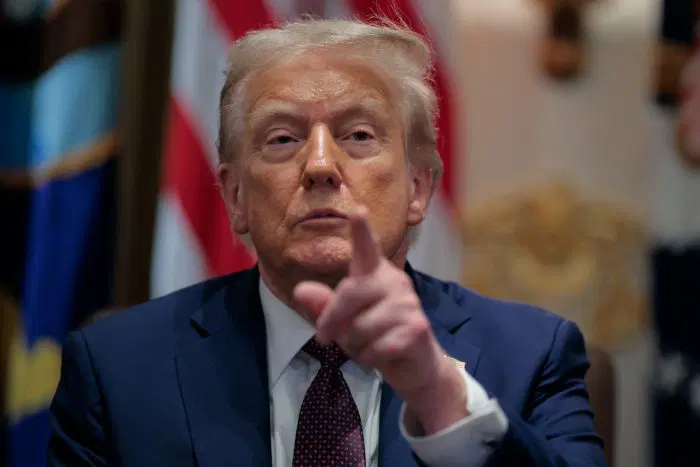
The president emphasized that the tariffs are directly linked to opposition against U.S. efforts to acquire Greenland, signaling that trade pressure will remain a key negotiating tool. Trump said the measures aim to compel cooperation from governments resisting Washington’s strategic objectives.
He defended the strategy by citing past examples, including Mexico during his first term, when tariff threats led to swift policy actions such as deploying troops to the northern border. Trump argued that tariffs have proven effective in high-stakes international negotiations and can deliver rapid results.
European governments have not yet issued a unified response, but the announcement raises the likelihood of increased trade tensions between the United States and its traditional allies.
Economists caution that rising tariffs could disrupt transatlantic trade and strain diplomatic relations if the dispute escalates.
The administration says it will closely monitor reactions from the affected countries and adjust tariff levels as needed.
For now, Trump signals that the pressure campaign will continue until an agreement is reached, keeping global markets and diplomatic observers on edge for further developments.