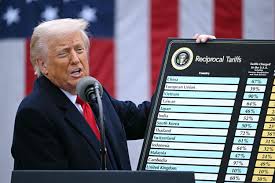
United States President, Donald Trump, has followed through on his pledge to raise tariffs on Indian imports, doubling them to 50 per cent.
The move threatens to strain ties with one of Washington’s key trading partners while driving up costs for American consumers.
The tariff escalation comes only weeks after Trump imposed a new 25 per cent baseline duty on Indian goods. With this increase, levies on imports from the world’s fifth-largest economy are now among the steepest the United States enforces globally.
According to Trump, the latest measure is aimed at penalizing India for purchasing Russian oil and “helping Russia finance its war with Ukraine.”
In recent weeks, Trump has also met separately with Russian President Vladimir Putin and Ukrainian leader Volodymyr Zelenskyy in a bid to negotiate peace, though the talks remain stalled.
U.S. companies and households are already grappling with higher costs from Trump’s broader tariff policies, while a cooling labour market adds to the pressure. Analysts warn that the heavier taxes on Indian products could amplify these challenges.
Earlier in August, New Delhi signaled it would hit back if Washington went ahead with its plan. India has since accused the Trump administration of unfairly singling it out, noting that “other countries that import oil from Russia aren’t facing such levies.” While China remains the largest buyer of Russian oil, its products face a 30% minimum tariff.
Trump, however, has warned that additional penalties may be imposed on other countries tied to Russian oil purchases.
Despite frictions, U.S.–India trade has grown rapidly over the past decade. Commerce Department figures show that last year America imported $87 billion worth of goods from India, while exporting around $42 billion to the South Asian nation.
As tariffs on Chinese goods piled up under Trump, many U.S. businesses turned to India as an alternative hub for manufacturing.
India’s leading exports to the United States include pharmaceuticals, communications gear such as smartphones, and apparel.
Notably, smartphones are excluded from the new 50% “reciprocal” tariff. In line with Trump’s other tariff regimes, sectoral duties will not stack, meaning Indian steel and aluminum products, for instance, will be charged at 50% rather than 100%.
On the flip side, American exports to India mainly consist of petroleum products, chemicals, and aerospace equipment. These industries could be directly exposed should New Delhi follow through with retaliatory tariffs.