


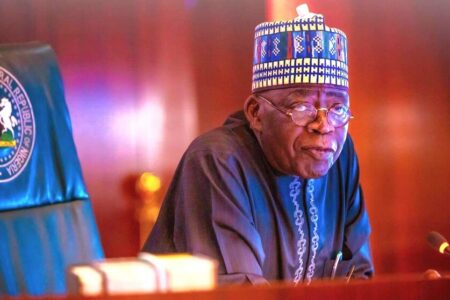
A former Speaker of the Ondo State House of Assembly, Victor Olabimtan, has commended President Bola Tinubu for what he described as courageous and far-reaching economic reforms introduced by his administration.
Olabimtan made the remark on Sunday while assessing the President’s performance in key sectors considered critical to his re-election prospects.
He stated that most of the policies implemented by President Tinubu have helped to stabilise Nigeria’s economy after years of fiscal strain and are now beginning to deliver tangible benefits to citizens.
According to Olabimtan, the Tinubu administration inherited an economy that was in deep crisis.
He explained that the situation was characterised by unsustainable subsidy payments, distorted foreign exchange practices, rising public debt and declining investor confidence.
Olabimtan noted that a recent report showed the Nigerian economy reached a major turning point in 2024 following the introduction of bold policy reforms by the current administration.
He identified the removal of petrol subsidy and the elimination of dollar arbitrage in the foreign exchange market as some of the most significant steps taken by the government to halt economic decline.
Olabimtan acknowledged that the reforms initially imposed hardship on Nigerians but stressed that they were necessary to correct longstanding structural imbalances in the economy.
He said: “The reality is that the economy was on its knees when President Tinubu assumed office. What we are seeing today is the outcome of tough but necessary decisions that have helped restore stability.”
The former Speaker also described the naira-for-crude policy as one of the most strategic economic interventions introduced by the administration.
He explained that the policy, which was introduced on October 1, 2024, allows local refineries to purchase crude oil in naira instead of dollars.
According to him, the initiative is aimed at reducing pressure on foreign exchange demand and strengthening the value of the local currency.
Olabimtan stated that the policy is projected to save Nigeria approximately $7.32 billion annually.
He added that it would also reduce the country’s monthly foreign exchange expenditure on petroleum imports from about $660 million to $50 million.
According to him, the initiative is designed to boost local refining capacity, encourage private investment in refineries such as the Dangote Refinery, and enhance Nigeria’s overall energy security.
Olabimtan further explained that by enabling domestic refineries to source crude oil locally and sell refined products in naira, the policy helps to retain value within the domestic economy.
He said the initiative limits capital flight, contributes to the stabilisation of fuel prices and strengthens economic resilience.
He added that the policy is already easing the hardship caused by the removal of fuel subsidy and is gradually restoring confidence in the Nigerian economy.

