
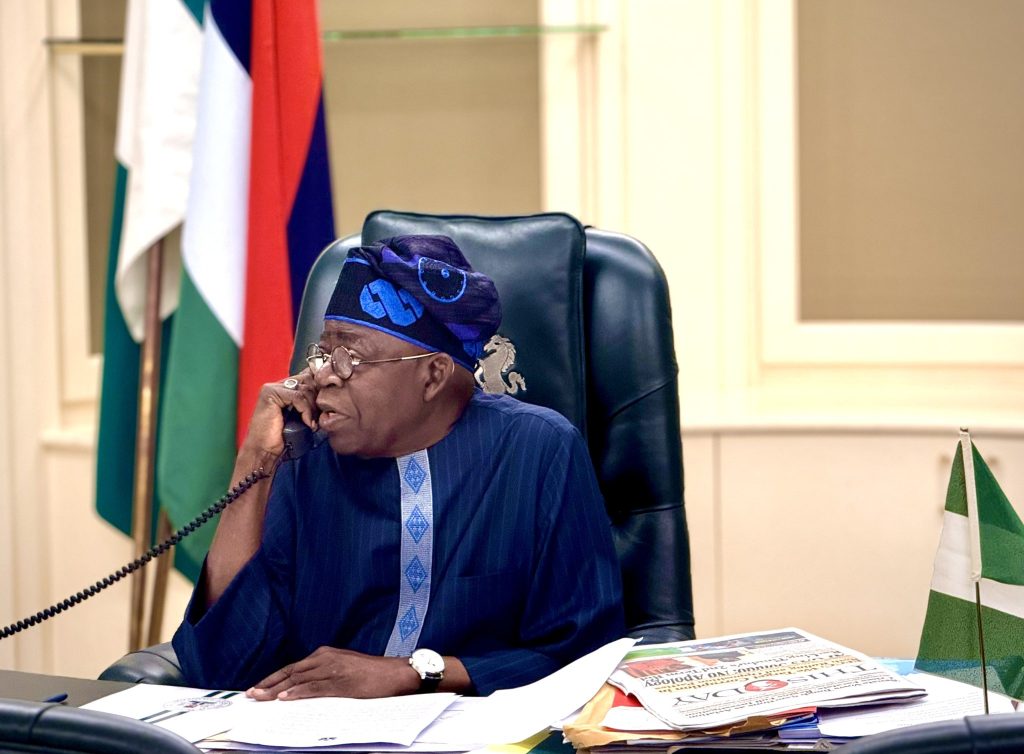
President Bola Tinubu has praised the successful conclusion of a 1.26 billion dollar financing agreement for Phase 1, Section 2 of the Lagos–Calabar Coastal Highway, describing the development as a significant boost to Nigeria’s ongoing infrastructure expansion efforts.
The commendation was contained in a statement released on Friday by the President’s Special Adviser on Information and Strategy, Bayo Onanuga, who disclosed that the funding deal would guarantee uninterrupted construction activities on the ambitious coastal highway project.
Tinubu specifically lauded the Federal Ministry of Finance, the Ministry of Works, and the Debt Management Office for their joint efforts in securing the financing, noting that their collaboration underscored the administration’s determination to deliver critical national infrastructure.
Emphasising the long-term impact of the project, Onanuga stated, “The Lagos–Calabar Coastal Highway is one of President Bola Tinubu’s best gifts to Nigeria. Those who have condemned this historic project will be ashamed of themselves when the Tinubu administration completes the road.”
According to the statement, the President said the financing milestone reflects his administration’s commitment to adopting innovative funding mechanisms for major national projects, stressing that the coastal highway remains a central pillar of the government’s economic and infrastructure development agenda.
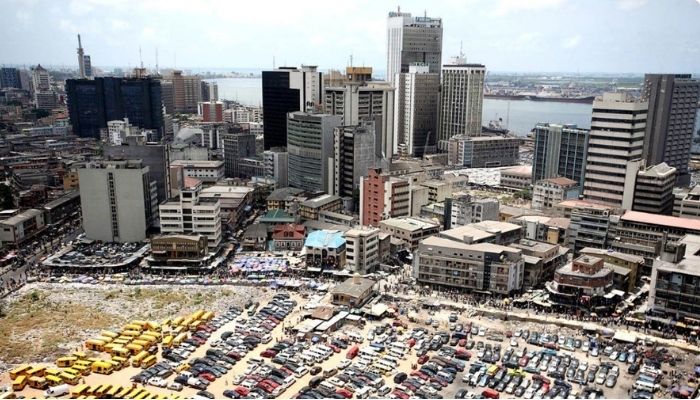
Phase 1, Section 2 of the Lagos–Calabar Coastal Highway covers approximately 55.7 kilometres and stretches from Eleko in the Lekki axis of Lagos State to Ode-Omi.
“This section is expected to strengthen key economic corridors, improve logistics efficiency, and enhance national trade connectivity. The financing follows an earlier 747 million dollars secured for Phase 1, Section 1, reinforcing the project’s scalability and attractiveness to international financiers,” the statement read.
The funding arrangement was fully underwritten by First Abu Dhabi Bank, with risk mitigation support provided by the Islamic Corporation for the Insurance of Investment and Export Credit, marking ICIEC’s first transaction in Nigeria since the implementation of recent institutional and regulatory reforms.
The statement further noted that the structure of the deal reflects increasing investor confidence in Nigeria’s reformed investment climate.
SkyKapital acted as the Lead Financial Adviser on the transaction, while Earth Active, a United Kingdom-based firm, provided environmental and social advisory services in compliance with international environmental, social and governance standards.
Legal advisory responsibilities were handled by Hogan Lovells as International Counsel and Templars as Nigerian Legal Counsel.
The statement also quoted the Minister of Finance and Coordinating Minister of the Economy, Wale Edun, who described the financing deal as a landmark moment in Nigeria’s infrastructure development journey.
He said, “The funds would be deployed responsibly to ensure timely delivery of the project, adding that the transaction ranks among the largest ICIEC-supported deals since the institution’s inception. Construction of the highway is being carried out by Hitech Construction Company Limited, whose progress on-site has earned commendation from lenders for engineering quality and execution speed.”
The Lagos–Calabar Coastal Highway is a proposed 700-kilometre interstate road designed to link Lagos in the South-West with Calabar in the South-South region of the country.
The project is a flagship initiative under President Bola Tinubu’s Renewed Hope Agenda and is intended to transform transportation, trade and economic integration along Nigeria’s coastline.
By securing funding for Section 2 after already obtaining 747 million dollars for Section 1, the Federal Government says it is demonstrating project scalability and proving to international investors that the highway is financially viable rather than a conceptual proposal.
Despite the government’s position, critics have raised concerns about the project’s overall cost, the absence of an open competitive bidding process for the award to Hitech Construction Company, and the demolition of businesses along parts of the Lagos coastline.
The Tinubu administration, however, maintains that the coastal highway will unlock Nigeria’s Blue Economy by maximising the economic potential of the nation’s coastline through fishing, tourism and maritime trade.
The government also estimates that the road will drastically reduce travel time between the South-West and the South-South regions, which currently depend largely on ageing and deteriorating inland road networks.