
President Bola Tinubu on Thursday disclosed that state governors have resolved, on their own initiative, to reduce the cost of transportation nationwide.
He said a joint federal-state committee would be established immediately to ensure that cheaper Compressed Natural Gas translates into lower transport fares for commuters from October 1, 2026.
The disclosure was made in a personal statement titled ‘Cheaper Fuel Must Mean Cheaper Transport Fares President Tinubu, Governors Move to Cut Transport Fares Nationwide.’
The President said his discussion with the Nigeria Governors’ Forum on Thursday afternoon produced a firm commitment from governors to leverage the cost benefits of CNG and electric vehicles to bring down transportation costs in their states.
He stated, “I am pleased with my discussion with the Governors’ Forum this afternoon. The governors have, on their own initiative, resolved to take immediate measures to bring down the cost of transportation in their states, with a strong focus on leveraging the cost benefits of CNG and electric vehicles.”
He disclosed the scale of the Federal Government’s ongoing investment in the energy transition through the Presidential CNG Initiative.
“The Federal Government is already investing significantly in this energy transition.
“Through the Presidential CNG Initiative, over 120,000 vehicles have been converted nationwide, with more than 100,000 additional conversion kits in the works.
“At the same time, we continue to expand conversion centres and refuelling infrastructure nationwide,” he added.
Tinubu said the Midstream and Downstream Gas Infrastructure Fund was currently financing more than 100 gas projects across the country.
These include 15 CNG mother stations and 86 daughter stations.
He recalled that he had inaugurated four of these projects in Lagos, Abuja and Owerri in May.
“This included a 15-station refuelling network in Lagos and an Abuja facility that can serve 1,000 cars and tricycles and 50 trucks and buses a day,” Tinubu added.
He announced a further expansion of the programme.
“I have also directed the additional rollout of another 500 CNG refuelling stations nationwide, in addition to the 500 stations ordered earlier in the year by the Fund, bringing the programme to 1,000 stations across the country,” he said.
Explaining the rationale for placing the responsibility partly in the hands of state governments, Tinubu argued that intra-state transport was where the impact of high fuel costs is felt most directly by ordinary Nigerians.
He said this was also where states hold the greatest regulatory leverage.
According to the President, “Intra-state transport is where Nigerians feel the cost most directly, and it is where the states hold the levers. I am encouraged that our Governors are moving to bring these benefits closer to the people they serve.”
He disclosed that a joint federal and state committee would be established immediately to begin implementing the measures.
He also cited the scale of potential savings, saying the economics of CNG adoption left no justification for fares to remain unchanged.
“We have agreed to set up a joint federal and state committee to begin implementing these measures immediately. A vehicle running on CNG spends 60 to 80 per cent less on fuel than one running on petrol.
“From October 1, our goal is that Nigerians begin to partake in those savings through lower transport fares. We have agreed that cheaper fuel should result in cheaper fares,” he said.
The President called for coordinated action across all tiers of government to deliver on the commitment.
“Each tier of government must keep doing its part and work together for the benefit of every Nigerian. Nigeria First,” he stated.
Thursday’s announcement by the President comes days after Tinubu appealed to stakeholders that the savings from CNG-conversions should be passed to commuters through reduced fares.
Addressing journalists on Wednesday after meeting President Tinubu at Aso Rock, Director-General of the National Automotive Design and Development Council, Joseph Osanipin, disclosed that the number of licensed CNG retail firms nationwide had risen from four to 81.
He noted that fleet operators continued to resist transferring the benefits of cheaper fuel to passengers.
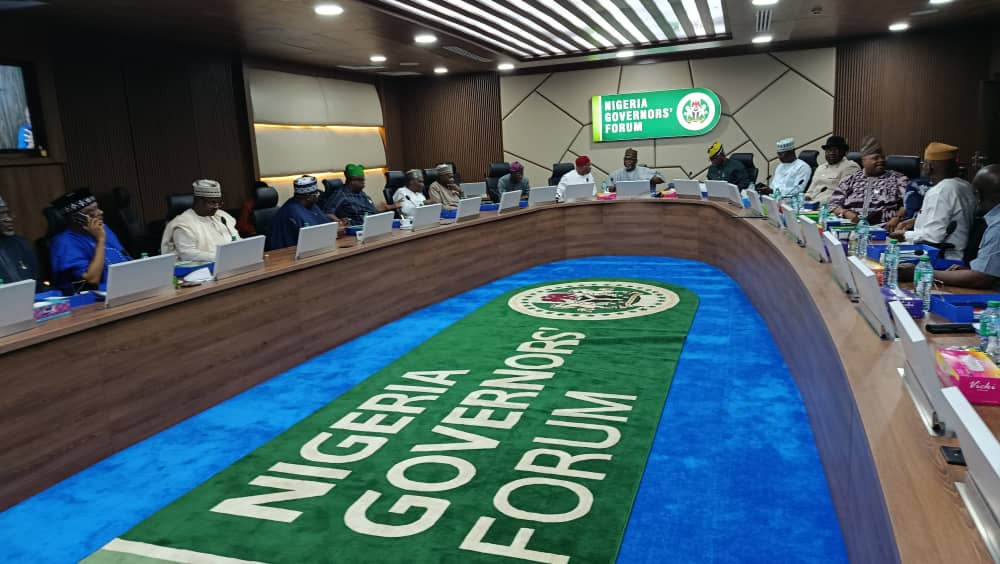
Earlier on Thursday, the NGF threw its weight behind a proposed National Affordable CNG Transit Programme aimed at reducing transportation fares and easing the impact of fuel subsidy removal on Nigerians.
The governors said the initiative, which is being developed as a state-led programme in partnership with the private sector, would leverage the lower operating cost of compressed natural gas to bring down the cost of public transportation.
The position was contained in a communiqué issued at the end of the NGF’s third meeting held on Wednesday night and ended in the early hours of Thursday in Abuja.
The communique was signed by the NGF Chairman and Kwara State Governor, AbdulRahman AbdulRazaq, and read by the Bayelsa State Governor, Douye Diri, after the meeting.
According to the governors, the proposed NACTP would involve state support for CNG vehicle conversions, vehicle fleets and related infrastructure.
Participating transport operators would in turn commit to fare reductions.
The forum said it recognised the potential of the initiative to reduce the burden of transportation costs on citizens.
It noted, however, that its financing and implementation framework would require further consideration.
Speaking during a question-and-answer session after the meeting, Diri said the governors considered transportation a critical part of the wider cost-of-living crisis.
He said this was because increases in transport fares affect the prices of goods and services.
“Transportation is key. Transportation is key to several other factors,” he said.
He explained that the cost of moving food and other commodities from one location to another was ultimately reflected in the prices paid by consumers.
“If, for instance, you are talking about foodstuffs—increase in the cost of foodstuffs, they will tell you that ‘I’m moving from point A to point B, the transport cost is XY.’ And so for that reason, the cost of my yam, the cost of my garri is this,” Diri said.
He said reducing transportation costs through CNG would therefore have a wider effect on the economy.
“So, by the time you reduce the cost of transport, as I said earlier, it will have a multiplier effect,” he added.
The governor linked the initiative directly to the removal of petrol subsidies, saying the objective was to cushion the impact of the policy on ordinary Nigerians.
“That’s because there is now the removal of subsidies. And the impact is expected to be on our people—the very common man that we all talk about,” he said.
The governors’ endorsement of the CNG programme comes as the removal of petrol subsidy continues to shape public debate over the rising cost of living, particularly transportation and food prices.
The Federal Government’s decision to end the petrol subsidy in 2023 triggered a sharp increase in fuel prices and transportation costs.
The effects have extended across the economy as businesses and households adjusted to higher energy and logistics expenses.
The development has also remained a major political issue, with some opposition actors calling for a return to petrol subsidies as a means of reducing hardship.
Asked whether the NGF had discussed the growing political debate over subsidy removal and proposals by some political stakeholders to restore the subsidy, Diri said the issue had been addressed through the Forum’s consideration of transportation costs.
He said the proposed CNG intervention was intended to provide a practical response to the transport component of the hardship rather than reverse the subsidy policy.
The governor was also asked whether the NGF would accept criticism that state governments had not been sufficiently accountable for funds accruing to sub-national governments following the removal of the subsidy.
“That cannot be true. That cannot be true,” Diri replied.
“But we’ll leave that debate for another day,” he added.
The Forum’s communiqué did not provide a specific timeline for implementation of the NACTP.
Asked when the programme would commence, Diri said the details would be determined through further discussions.
“Those details will be worked out between the Forum and those who have come to present to the Forum,” he said.
The NACTP is expected to focus on making CNG-powered transportation more accessible by supporting vehicle conversions, fleet acquisition and the development of infrastructure needed to sustain the system.
The governors also received a presentation from the Minister of Industry, Trade and Investment, Jumoke Oduwole, on opportunities for states to participate in the Creative Africa Nexus Weekend 2026 and the Intra-African Trade Fair 2027, both scheduled to take place in Lagos.
The Forum said the events could provide states with opportunities to showcase investment-ready projects, promote local exports and tourism, and connect state-based micro, small and medium enterprises with African and international investors and buyers.