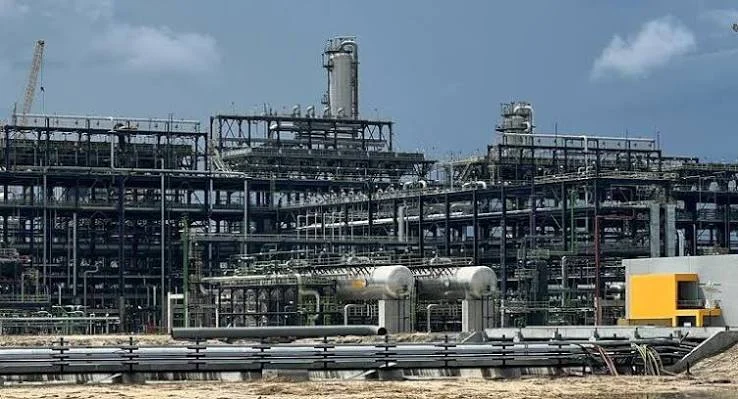


President Bola Tinubu has tasked the management of Nigeria Liquefied Natural Gas with converting the country’s vast gas reserves into tangible economic benefits, following the flaring of more than 203.9 billion standard cubic feet of natural gas in 2025.
The President gave the charge on Wednesday at the State House, according to a statement issued by his Special Adviser on Information and Strategy, Bayo Onanuga, on August 26, 2026.
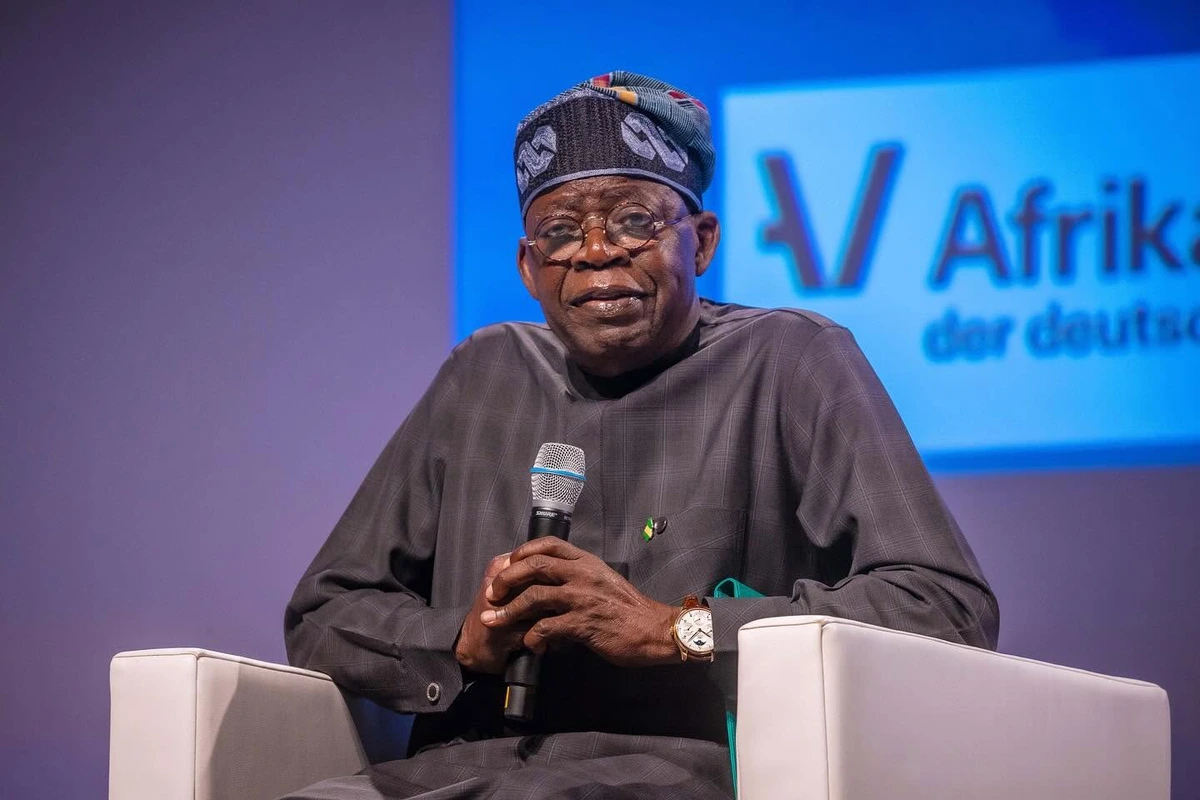
He received members of the NLNG Board, led by its Managing Director and Chief Executive Officer, Engineer Adeleye Falade.
Tinubu urged the company to take all necessary steps to ensure Nigeria maximises the economic value of its gas reserves instead of allowing the resources to be flared.
“I am inspired to understand that you are not limiting yourself to the gradual objective of upgrading.
“My major concern is the domestic utilisation, where you must be able to take out the flaring and convert potential environmental liability to what could be strategically and economically beneficial to the consumers in the country,” the President added.
The President acknowledged NLNG’s contribution to boosting government revenue by leveraging international demand for Nigerian gas, but urged the company to also “help us back home” by ensuring greater benefits for the domestic economy.
He commended NLNG for delivering strong returns on investment and assured the management team of his commitment to providing the necessary incentives to enable the company to maximise its potential for the benefit of Nigerians.
He also charged the company to explore ways of domesticating some energy requirements and reviewing pricing mechanisms to ensure that ordinary Nigerians feel the impact of the country’s gas resources.
In his remarks, NLNG’s Managing Director and Chief Executive Officer, Engineer Adeleye Falade, said the board visited the President to brief him on the company’s operations since he assumed office in April 2026.
According to him, NLNG has generated more than $150 billion since inception, with its shareholders, including the Nigerian government, receiving about $47 billion in dividends. Nigeria holds a 49 per cent stake in the company.
Falade also said NLNG had previously operated at about 60 per cent capacity due to the country’s inability to produce crude oil at optimal levels, resulting in only four of its six available trains being operational.
According to him, “NLNG has generated over $150 billion since inception, with shareholders, including Nigeria, receiving about $47 billion as dividends,” while “Nigeria has a 49 per cent stake in the organisation.”
NLNG had previously operated at about 60 per cent capacity because the country was unable to produce crude oil at optimal levels, leaving only four of its six available trains in operation.
“Due to increased oil production from positive developments in the oil and gas sector, capacity has been increased to five trains, with more improvements expected,” he was quoted as saying.
He told the President that, for now, all LPG production, commonly known as cooking gas, is being directed to the domestic market.
According to the Nigerian Upstream Petroleum Regulatory Commission’s full-year 2025 Gas Production Status Report, Nigeria flared more than 203.9 billion standard cubic feet of natural gas in 2025, despite maintaining an overall gas utilisation rate of above 92 per cent.
NUPRC data showed that the country produced approximately 2.71 trillion standard cubic feet of gas in 2025, comprising 1.46 trillion scf of associated gas and 1.25 trillion scf of non-associated gas. Of the total production, about 2.50 trillion scf was utilised for field operations, domestic supply and exports.