



Nigeria’s cotton, textile, and garment industry experienced a continued downward trend in 2025.
The sector’s contribution to the nation’s Gross Domestic Product declined to N4.384 trillion.
This reflects ongoing structural challenges facing the industry.
Data from the National Bureau of Statistics indicates a steady decline in the sector’s output over the past three years.
The contribution stood at N4.548 trillion in 2023. It dropped to N4.476 trillion in 2024. It then fell further to N4.384 trillion in 2025. This represents a 3.6 per cent decline between 2023 and 2025.
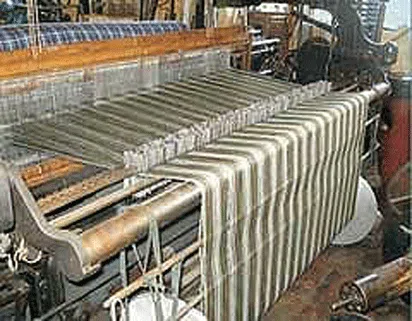
The textile sector, which was once a major economic pillar with over 180 textile mills in the 1980s, is now in severe decline. Fewer than 20 mills remain operational.
Industry analysts attribute this to high production costs, unstable power supply, foreign exchange constraints, and the rising influx of cheaper imported textiles. These factors continue to squeeze local manufacturers.
The latest figures show the sector lost about N164 billion in output value within the two-year period.
This highlights the intense pressure on domestic operators struggling to stay competitive.
Operators have repeatedly warned that the operating environment for textile manufacturers has worsened.
Several firms have scaled down production as a result. Others operate far below their installed capacity.
The federal government has taken steps to rejuvenate the industry. It unveiled the Nigeria Industrial Policy 2025.
This includes establishing a Cotton, Textile and Garment Development Board.
There is also a push to enforce policies like Executive Order 003. The order promotes the patronage of locally produced textiles by government agencies.
The National Union of Textile, Garment and Tailoring Workers of Nigeria recently commended the government’s move to revive the industry.
In a statement, President of NUTGTWN, Peters Godonu, described the proposed board as a landmark initiative signalling government’s commitment to addressing longstanding structural challenges in the sector.
“These bold and strategic initiatives represent far-reaching measures aimed at accelerating Nigeria’s industrialisation drive and revamping the once vibrant but now challenged textile and garment industry,” he stated.