



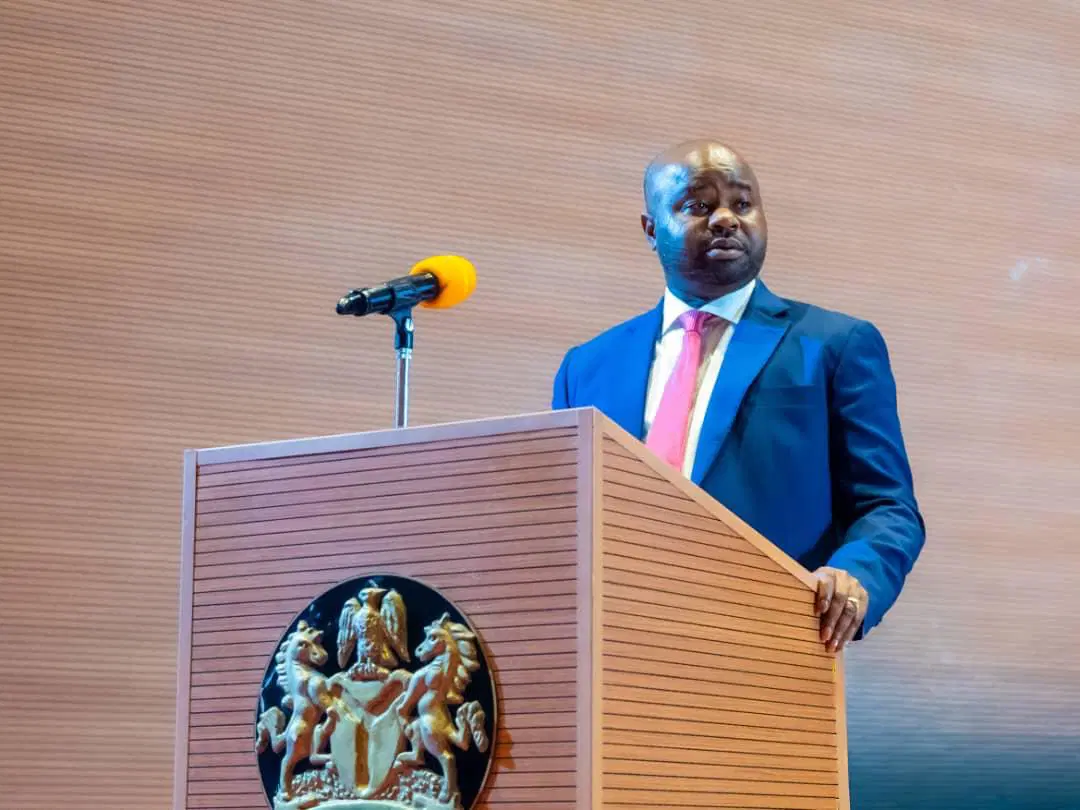
Nigeria’s newly established Nigeria Revenue Service has said that its emergence as a replacement for the defunct Federal Inland Revenue Service represents a major overhaul of the country’s revenue administration framework rather than a mere change of name.
The Executive Chairman of the NRS, Dr Zacch Adedeji, made this known during a television interview monitored in Abuja, where he explained the intent and scope of the reforms introduced under the new tax administration structure.
The News Agency of Nigeria reported that the provisions of the recently enacted tax reform laws formally changed the nomenclature of Nigeria’s apex tax authority from the Federal Inland Revenue Service to the Nigeria Revenue Service.
According to Adedeji, the transition from FIRS to NRS goes beyond branding, stressing that it signifies a complete institutional upgrade aimed at modernising how revenues are administered in the country.
“NRS is not branding. It is a total institutional upgrade moving from fragmented revenue administration to a modern, digitalised, centralised and intelligence-driven system.”
He explained that under the new framework, several tax and revenue-related functions that were previously dispersed across different agencies have now been consolidated within the NRS, with greater emphasis placed on data integration, automation and a reduction in human discretion.
Adedeji also dismissed claims suggesting that Nigeria’s newly enacted tax reform laws were altered after they had been passed by the National Assembly, describing such allegations as unfounded.
“Only the officially gazetted Acts carry legal authority and are binding on taxpayers and administrators,” he said.
The NRS boss further clarified that an Act of the National Assembly only becomes effective after receiving Presidential assent and being officially gazetted, noting that the gazetted version remains the authoritative reference in the event of any dispute.
“Revenue agencies, courts, and taxpayers are therefore guided solely by the gazetted law, not draft bills, committee reports or chamber debates.
“Neither the executive nor the revenue authority has any incentive or legal capacity to alter the law after passage,” he said.
Adedeji added that the ongoing overhaul of the Nigeria Revenue Service is designed to support the Federal Government’s broader fiscal objectives and strengthen the country’s revenue base.
According to him, Nigeria’s tax-to-GDP ratio has shown improvement in recent years, rising to approximately 13.5 per cent as of October 2025.
“But it remains below the African average and well short of levels seen in peer emerging markets,” he said.
He stated that the overarching objective of the reforms is to focus taxation on profits and returns rather than discouraging capital formation or investment.
“We are not going to tax poverty; we want to tax prosperity,” he said.