





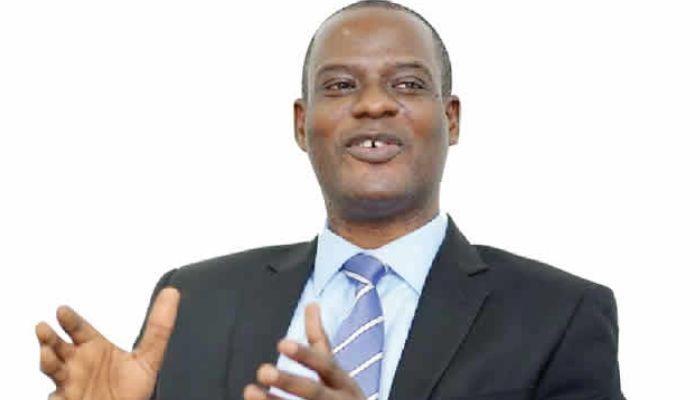
Chairman of the Presidential Fiscal Policy and Tax Reforms Committee, Mr. Taiwo Oyedele, moved to quell public anxiety yesterday regarding the ongoing tax reforms.
He strongly dismissed trending social media claims that the government intends to deduct money directly from citizens’ bank accounts, calling such warnings “false, dangerous and capable of destabilising the economy.”
Speaking at a media workshop focused on the new consolidated tax law, Mr. Oyedele attributed the circulation of these warnings to a combination of ignorance and deliberate misinformation.
He made a definitive statement on the government’s limited powers, declaring, “Let me say this clearly: nobody — not FIRS, not CBN, not any government agency — has the power to debit your bank account.” He further reassured the public, “Whether you have ₦ 50,000 or ₦ 50 million, nobody is taking any money from your account. It is simply not true.”
Oyedele clarified that the allegations emerged due to the consolidation of several major tax statutes into a single code, which was mistakenly interpreted by some as an introduction of new, stringent enforcement powers. He explained that the only legal method for recovering unpaid taxes remains a court-ordered garnishee, which he characterized as “a long legal process that is almost never used.”
He added a critical detail about the stringent process: “Even in extreme cases where someone owes hundreds of millions and refuses to pay, the government cannot just wake up and remove money.” He detailed the required steps: “They must assess you, notify you, allow objections, conclude the process, go to court, and get a judge’s order. Without that, nobody can touch your account.”
The Tax Reform Chair asserted that in his nearly thirty years of experience in tax administration, he has “never seen a single instance where money was removed from an account without due judicial process.” He cited a previous attempt under former FIRS Chairman, Babatunde Fowler, to place post-no-debit orders on accounts suspected of tax evasion, noting its failure to recover any funds. He concluded by distancing the current reforms from that past attempt, saying, “That process didn’t succeed, and it created unnecessary panic.” He firmly stated, “Nobody is repeating that mistake.”
Addressing another major misconception, Mr. Oyedele clarified the rules around banks reporting transactions. He pointed out that the 2020 Finance Act already mandates accounts used for business purposes to have a Tax Identification Number.
Furthermore, he highlighted that the new reform actually increases the threshold for mandatory reporting from ₦ 10 million to ₦ 25 million, which he calculated translates to “almost ₦ 100 million a year before any report is triggered.” He also used NIBSS data to reassure smaller account holders: “NIBSS data shows that 98 percent of bank accounts in Nigeria have less than ₦ 500,000.” He stressed, “Those accounts will never be reported. This provision is not new — it has been in place for five years.”
The tax reform chair issued a warning that the persistent, unfounded rumours could provoke harmful panic withdrawals, which he stated would be detrimental to the economy. He cautioned, “One thing that can damage the economy very quickly is people rushing to withdraw their money out of fear.” He reassured the public once more that “Nothing in the law authorises the government to debit accounts.” His final appeal was for public assistance: “Please help us educate others so we don’t create a problem where none exists.”
Mr. Oyedele underscored that the fundamental objective of the reform is to simplify compliance, effectively expand the tax net, and significantly lessen the financial burden on households and small businesses. He maintained that the reform’s purpose is not punitive: “This reform is not to punish anybody.” Instead, he said, “It is to make life easier, reduce double taxation, and support economic recovery.” To combat misinformation, he revealed that his committee is collaborating with the National Orientation Agency to produce digital explainers and translations of the new law in major Nigerian languages.

