

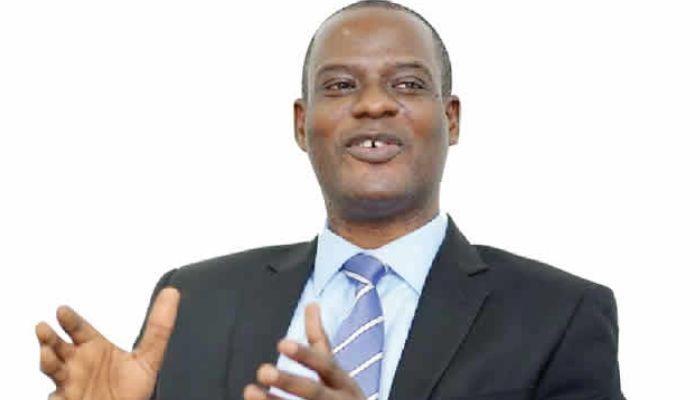
Taiwo Oyedele, Chairman of the Presidential Committee on Fiscal Policy and Tax Reforms, has said the Federal Government will continue to subject Nigeria’s tax laws to periodic reviews to ensure they remain effective and responsive to national needs.
He made the clarification against the backdrop of recent allegations that some laws passed by the National Assembly were altered, stressing that the government remains open to reviewing any law where the need arises.
Oyedele spoke on Friday in Lagos while briefing journalists after a meeting with President Bola Tinubu, held ahead of the implementation of the Nigerian Tax Act and the Nigeria Tax Administration Act.
According to him, the Federal Government is prepared to collaborate with the National Assembly whenever legislative intervention becomes necessary, adding that plans to commence the remaining tax laws would not be affected.
“The Federal Government is committed to working with the National Assembly if and when any action is required. Therefore, the plan to commence the remaining two tax laws on January 1, 2026, will go ahead as scheduled,” he said.
Oyedele explained that the tax reform bills underwent extensive legislative scrutiny, spending nine months at the National Assembly between October 2023 and June 2025, while preparations for implementation began immediately from the outset.
“Since the laws were signed, we have had about six months of preparation, capacity building, system upgrades and sensitisation,” he said.
He described the tax reforms as an evolving process rather than a one-off exercise, noting that perfection is achieved gradually through continuous improvement.
“You would agree that this kind of reform is a work in progress. You never get to perfection; you get better as you go along.
“One of the reasons why two of the tax laws took effect about six months ago was to allow institutions to start getting ready.
“For example, the Office of the Tax Ombudsman cannot be set up and begin operations on the same day. All of this combined, engagement with professionals and the organised private sector, is why we continue with the consultations we have been doing.
“We believe we are in a good state to commence implementation.”
Oyedele said the meeting with President Tinubu was aimed at providing a comprehensive update on the implementation status of the tax reform laws.
“As you are already aware, there are four tax laws. Two of them, the Nigerian Revenue Service (Establishment) Act and the Joint Revenue Service (Establishment) Act, commenced on June 26, 2025.
“The remaining two laws, the Nigerian Tax Act and the Nigerian Tax Administration Act, are scheduled to commence on January 1, 2026,” he said.
Addressing concerns that the reforms could worsen economic hardship, Oyedele dismissed such claims, stating that President Tinubu’s tax reforms were introduced to drive inclusive economic growth and shared prosperity.
He noted that the reforms were deliberately structured to provide relief for individuals and businesses across the country.
“About 98 percent of workers at the bottom of the income ladder will either pay zero tax or lower taxes. About 97 percent of small businesses will be exempt from corporate income tax, VAT and withholding tax, while large businesses will see a reduction in the taxes they pay,” he said.
He added that the committee was optimistic about the progress recorded so far and the full commencement of the laws next year.
“We are excited about the progress we are making and are looking forward to January 1, 2026.”
Speaking on revenue expectations, Oyedele said the reforms were not designed to generate immediate revenue for the government.
“The intention of this tax reform is not immediate revenue generation. Over time, revenue will come from economic growth, not because tax rates have gone up, but because the tax base has expanded,” he said.
He further stated that the reforms have already helped eliminate wasteful and distortionary incentives that negatively affect the economy.
“We expect that as a result of this transformative tax reform, awareness of tax obligations will increase, tax culture will improve, and compliance will rise.
“When people who were not paying taxes before begin to pay, and these are not low-income earners, you not only get more revenue, you also achieve greater fairness in society,” he said.