





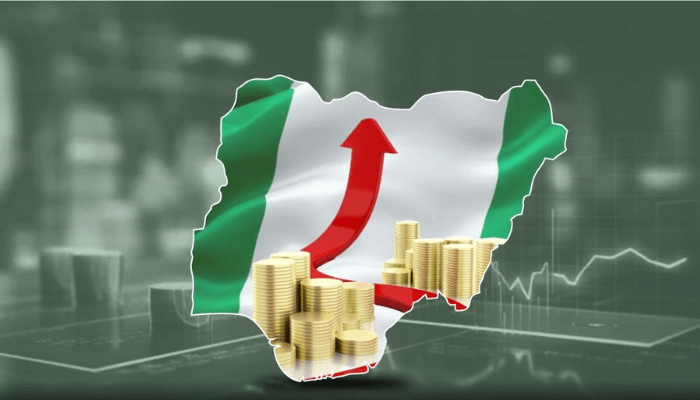
Ten Nigerian states are planning to raise about N4.287tn from loans, bonds, grants, capital receipts and public-private partnerships to finance capital projects contained in their 2026 budgets.
The states, Lagos, Abia, Ogun, Enugu, Osun, Delta, Sokoto, Edo, Bayelsa and Gombe, collectively presented budgets totalling N14.174tn to their respective Houses of Assembly.
An analysis of the proposed budgets by The PUNCH shows a growing dependence on non-recurring financing sources beyond statutory federal transfers. These sources include borrowing, grants and partnerships, as states look beyond allocations from the Federation Accounts Allocation Committee, value-added tax receipts and internally generated revenue to fund expansive infrastructure and development programmes.
Economists have attributed Nigeria’s increasing reliance on borrowing to weak management of public funds rather than insufficient revenue. They argue that budgets, which should serve as binding guides for government spending, are frequently disregarded. Poor oversight, revenue leakages and misappropriation have, in their view, forced governments to turn to loans. While borrowing can support development when prudently managed, experts warn that persistent and unchecked borrowing could create long-term debt burdens and shift present governance failures onto future generations.
In Lagos State, which has the largest subnational budget in the country, Governor Babajide Sanwo-Olu proposed a N4.237tn budget for 2026. Of this amount, N3.12tn is expected from internally generated revenue and federal transfers. The balance of N1.117tn, representing 26.4 per cent of the budget, is to be sourced through loans and bonds to fund capital expenditure. Despite Lagos generating revenue comparable to that of some smaller African countries, borrowing remains central to financing its large-scale infrastructure ambitions.
Former Vice-Chancellor of Crescent University, Prof Sheriffdeen Tella, said states should operate within their financial capacity and place greater emphasis on improving internally generated revenue.
“States were not originally meant to borrow because they are largely dependent on allocations from the federal government,” he said, noting that weak fiscal discipline at the federal level has encouraged similar behaviour among states.
He added that extensive borrowing by the Federal Government has reduced its moral authority to restrain states, creating a system in which all tiers of government accumulate debt, with long-term consequences for future generations.
Abia State’s proposed N1.016tn budget highlights the fiscal pressures faced by smaller and less commercially oriented states. Under Governor Alex Otti, who is overseeing efforts to reverse years of infrastructural neglect, the state expects to raise N607.2bn from FAAC allocations, value-added tax, grants and other federal revenue sources. This leaves a funding gap of N409bn, or 40.3 per cent of the budget, which the state plans to bridge through borrowing and other non-recurring financing.
Despite these challenges, Abia recorded measurable progress in 2025, emerging as one of the leading states in domestic debt reduction. As of March 31, 2025, the state’s domestic debt stood at N48.67bn, representing a 57.2 per cent decline compared to the previous year. By the second quarter of 2025, the Debt Management Office reported the figure at N48.6bn.
Ogun State’s N1.669tn 2026 budget, tagged the “Budget of Sustainable Legacy” by Governor Dapo Abiodun, projects N509.88bn from internally generated revenue and N554.81bn from federal transfers. However, loans and grants amounting to N518.9bn, or 31.1 per cent of the budget, are expected to fund capital projects.
In the first half of 2025, Nigeria’s total state external debt rose slightly to $4.812bn, with Ogun State contributing $21.8m to the increase.
Prof Tella said the continued resort to borrowing reflects poor revenue management rather than a lack of income, stressing that Nigeria’s core fiscal challenge lies in revenue leakage and misappropriation.
“As far as I am concerned, revenue is not Nigeria’s problem. The problem is the stealing of the revenue,” he said, adding that funds meant to strengthen government finances are often diverted, making borrowing appear unavoidable.
Enugu State plans to spend N1.62tn in its 2026 budget, representing a 66.5 per cent increase compared to 2025. While N870bn from internally generated revenue and N387bn from federal allocations are expected to cover recurrent expenditure and some development projects, N329bn, or 20.3 per cent of the budget, will come from loans and capital receipts.
According to the Debt Management Office, Enugu State recorded the highest domestic debt stock in the South-East as of the second quarter of 2025, standing at N180.5bn. This figure is more than ten times that of Ebonyi State, the least indebted in the region, with N15.8bn.
Assistant General Secretary of the Nigeria Labour Congress, Chris Onyeka, criticised the budgeting process, describing it as ineffective.
“Budgeting in Nigeria does not make any sense to some of us. It no longer makes sense at all,” he told our correspondent. “When budget performance is at 30 per cent, what is the point? When budgets are violated and not implemented, extra-budgetary expenses become the order of the day.”
Onyeka questioned the enforceability of budgets, arguing that weak implementation has stripped them of their authority as binding legal instruments.
He explained that budgets are meant to outline expected revenue and planned expenditure and, once passed by the legislature, should be strictly adhered to by the executive. “If you go outside the law, it means you have broken the law, and when laws are broken, there should be consequences,” he said.
Osun State’s N723.45bn budget depends on N421.25bn in recurrent revenue, while N286.01bn, representing 39.5 per cent of the budget, will be sourced from capital receipts. Under Governor Ademola Adeleke, the state significantly reduced its debt profile in 2025. External debt declined from $91.78m to $75.14m, a reduction of 18.13 per cent. Domestic debt also fell from N148.37bn in 2022 to N83.32bn in 2025, representing a N65bn or 43.84 per cent reduction.
In Delta State, projected internally generated revenue of N250bn, combined with N720bn in federal transfers, still leaves N694bn, or 41.7 per cent of its N1.664tn budget, to be funded through loans and grants. Sokoto State’s N758.7bn “Budget of Socio-Economic Expansion” will source N233.8bn, or 30.8 per cent, from grants, aid and capital development funds. Edo State plans to finance N299bn, representing 31.8 per cent of its N939.85bn budget, through loans, grants and public-private partnerships.
Onyeka said violations of budgetary provisions often attract no sanctions, creating selective accountability. He argued that laws tend to be enforced against ordinary citizens and workers, while government officials face little or no consequences for breaches.
He said this lack of accountability erodes public confidence in the budgeting process and weakens fiscal discipline. On borrowing, Onyeka noted that debt in itself is not a crime, provided it is properly utilised to stimulate economic activity and promote growth.
Bayelsa State plans to fund N74.9bn, or 7.4 per cent of its N1.01tn budget, through loans and grants. Gombe State’s N535.7bn “Budget of Consolidation” is the most reliant on borrowing, with N325.5bn, representing 60.8 per cent, expected from loans and capital receipts.
Under Governor Sheriff Oborevwori, Delta State reduced its domestic debt in 2025 through repayments rather than fresh borrowing. As of June 30, 2025, domestic debt stood at N204.67bn, down slightly from N204.72bn in March. Analysts also noted a second-quarter reduction of N93.92bn. While Delta remains among the more indebted states, the decline signals some fiscal caution.
Bayelsa State maintained one of the lowest domestic debt profiles nationwide as of mid-2025 under Governor Douye Diri. Domestic debt fell to N65.99bn by June 30, 2025, from N73.53bn in March, reflecting a N7.54bn reduction in the second quarter. The state remains the least indebted in the South-South zone.
Prof Tella also criticised how savings from reforms such as fuel subsidy removal and naira devaluation have been handled, alleging that the gains are shared among different tiers of government without clear evidence of impact at the state level.
He said the absence of public accountability and sustained civic pressure has allowed the situation to persist, weakening fiscal sustainability and public trust.
Last week, fiscal expert Aliyu Ilias warned that states with low internally generated revenue are particularly exposed to fiscal risks. He said more than one-third of budgets in several states depend on non-recurring funds, a situation that could undermine sustainability if borrowing plans or external funding fail to materialise on schedule.
Managing Director of Optimus by Afrinvest, Dr Ayodeji Ebo, said, “Relying heavily on loans and grants for capital projects exposes states to funding delays and increases debt servicing obligations. For long-term sustainability, states must focus on building durable local revenue sources rather than depending excessively on external inflows.”

