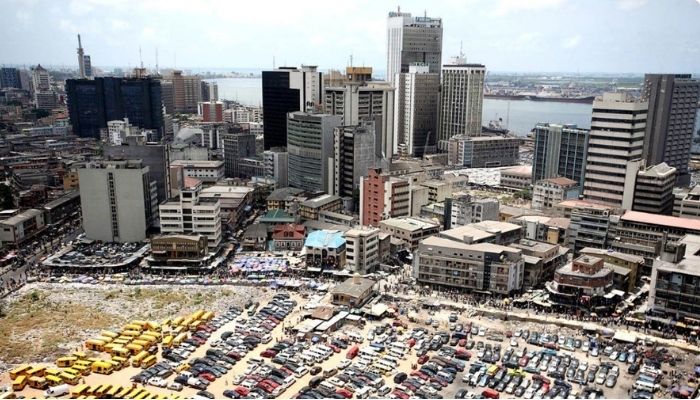



Stakeholders in Nigeria’s maritime sector have raised concerns that the country is losing billions of naira due to container blockages at Lagos ports, a situation that has sparked widespread outrage and renewed calls to end the duplication of port clearance procedures by the Maritime Police.
They further alleged that officers of the Maritime Police have been directly responsible for orchestrating several of these container blockages.
Container blockage occurs when cargo containers are detained, delayed, or restricted within a port or along the logistics chain, even after arriving for clearance and, in some cases, after receiving approval from relevant authorities.
Such blockages prevent containers from being moved out of the port or delivered to their intended destinations.
The experts, speaking in Lagos during a stakeholders’ engagement organised by the Nigerian Shippers’ Council on Saturday, accused officers of the command of detaining containers that had already been cleared at the ports, often citing various reasons for the hold-up.
Stakeholders representing freight forwarding associations, truck owners, terminal operators, and importers reported that over 1,500 containers, valued at billions of naira, are allegedly being blocked each month by police officers using vessel manifests, resulting in significant financial losses for the affected parties.
They noted that once cargoes have been examined and cleared by the Nigeria Customs Service and other relevant agencies, any post-clearance interceptions undermine process integrity and expose gaps in regulatory coordination.
They emphasized that such actions subject importers to excessive demurrage and storage charges, increase the risk of contract defaults, and erode global trading partners’ confidence in Nigeria’s port system.
The General Manager of Port and Terminal Multiservices Limited, Mr. Babatunde Keshiro, identified the core problem as a lack of sincerity of purpose and the prevalence of parallel authority.
“Whatever concerns or reservations they observe on these cargoes should be raised during the examination. Once the cargo has been cleared and exited the ports, there shouldn’t be any ploy to delay it. No letter, no sanction should arise after that. I want to draw the attention of industry stakeholders to the Executive Order that was given in 2022, directing the stoppage of this practice of intercepting already cleared and released containers,” Keshinro stated.
The Apapa Chapter Chairman of the Association of Nigerian Licensed Customs Agents, Emeka Chukwumalu, stated that the Police should be prepared to bear the financial consequences of demurrage whenever containers are blocked after clearance.
Similarly, the PTML Chapter Chairman of the National Council of Managing Directors of Licensed Customs Agents, Abayomi Duyile, accused shipping companies of facilitating the practice by releasing cargo manifests to the Police, describing it as “illegal and contrary to international shipping standards.”
Other speakers, including Chief Remi Ogungbemi, President of the Association of Maritime Truck Owners, and representatives of joint freight forwarding associations, echoed concerns that post-clearance container blockages disrupt port operations and shift inefficiencies onto port users.
In response, the organiser of the event, Dr. Pius Akutah, Executive Secretary and Chief Executive Officer of the Nigerian Shippers’ Council, stated that the NSC’s engagement with security agencies is aimed solely at protecting cargo interests and ensuring safety within the port environment.
“Our role is not to complicate your business or impose additional costs. We work with the Police to secure cargoes, but we also intervene when stakeholders complain, and many such complaints are promptly resolved,” Akutah said.
Head of the Complaints Unit at the NSC, Dr Bashir Ambi, said, “I have been having sleepless nights because our reputation is being damaged. Let me state it clearly: the Complaints Unit of the NSC has never and will never collect a kobo for its services. Rather, we are constantly engaging, and in fact confronting, the Maritime Police over the issue of blocking containers that have already been cleared at the ports.”
He urged stakeholders to avoid paying unreceipted fees and to submit petitions with supporting evidence through the NSC for proper redress.
Reacting to the accusations, the Police Public Relations Officer of the Maritime Police Command, Assistant Superintendent of Police Adebayo Rasheed, defended the practice, stating that container blockages are intelligence-driven and necessary for national security.
Rasheed cited recent interceptions of arms and tramadol hidden in already cleared containers, assuring stakeholders that the Police would not compromise security for trade facilitation.
He also urged anyone with evidence of extortion to submit petitions to the appropriate authorities, emphasizing, “Blocking of containers by the Police cannot be stopped.”