


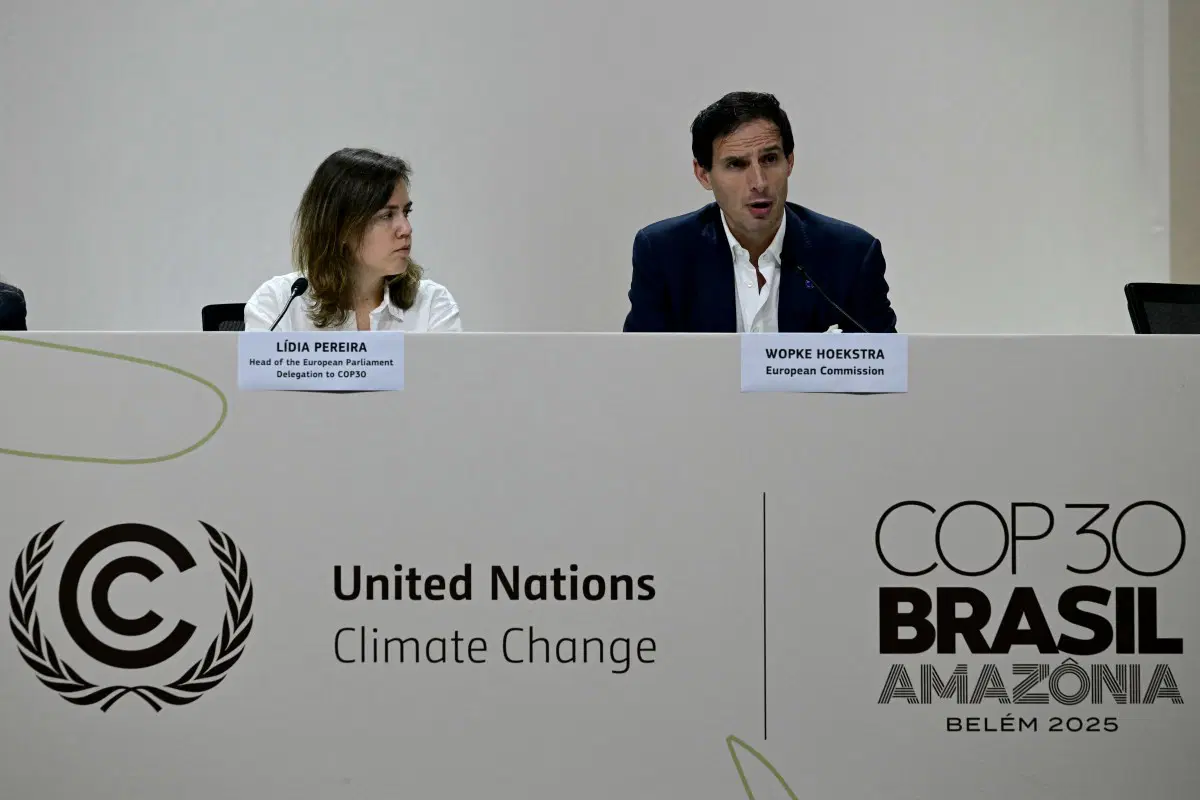
A dispute over the definition of gender is threatening to complicate the outcome of the COP30 climate talks currently taking place in Brazil.
This follows an action by six governments to append their own interpretations as footnotes to a crucial negotiating text.
The governments involved in this effort are Paraguay, Argentina, Iran, Indonesia, Malaysia, and the Holy See. Negotiators have expressed concern that this move aims to obstruct the official recognition of trans and non-binary people. It is feared that this would establish a “harmful precedent” that could potentially spread into other decisions shared by the UN’s climate change body.
An anonymous source close to the issue, who stated they were not authorized to discuss the sensitive matter, described the atmosphere, saying Wednesday, “frustration within rooms.” The source added, “It’s become a bit ridiculous — we have six footnotes right now; should we have 90?”
Mexico’s environment secretary, Alicia Barcena, whose country is led by the progressive President Claudia Sheinbaum, conveyed her strong disagreement to AFP, stating, “We do not agree at all with what some countries are putting in the agenda footnotes.” She emphasized the perceived negative trajectory of the talks, adding, “We feel we are going backwards — we should never go backwards.”
Due to the extreme sensitivity of the matter, the COP30 Brazilian presidency has escalated the issue beyond technical negotiations to a higher political level. Ministers are now engaged in efforts to reach a compromise on the definition.
The core text at stake is a revamped Gender Action Plan, designed to provide guidance for the next decade of work, including strategies for integrating gender considerations across all climate programs. The UN highlights that women and girls face disproportionate impacts from climate change, largely because they constitute the majority of the global poor and depend heavily on local natural resources for their sustenance.
Despite decades of commitments to gender equality, the Women’s Environment and Development Organization reports that women account for only 35 percent of the delegates attending COP30 in Belem. The first formal GAP was adopted in 2017 and strengthened two years later in 2019. COP30 is now focused on finalizing its upcoming, more ambitious iteration.
The use of footnotes exposes the red lines that various parties have drawn around the term “gender.” Some of these positions are long-held, while others are connected to a growing right-wing political sentiment opposed to what they term “wokeism.” The Holy See, for example, has footnoted its position that it understands gender as “grounded on the biological sexual identity that is male and female.”
Argentina, a predominantly Catholic nation led by President Javier Milei—a staunch ally of US President Donald Trump—has been actively rolling back policies related to gender-equality and LGBT rights, and has publicly attacked the “cancer” of “wokeism.”
A source involved in the talks argued that it is unnecessary to redefine the term, given that parties already have the flexibility to interpret decisions based on their national circumstances. Bridget Burns, the executive director of the Women’s Environment and Development Organization, told AFP that allowing this practice does more harm than good, stating, “Allowing countries to attach their own interpretations to agreed language does not protect national sovereignty. It undermines multilateralism itself.”
Burns further elaborated on the potential for fragmentation, saying, “If every Party could footnote core terms like finance, ambition or equity, we would have no negotiation left — only fragmentation. Gender equality is an agreed principle under this Convention — it needs no qualification.”
One possible resolution suggested by a source is for the opposing countries to deliver formal statements after the decision is adopted, which would ensure their positions are included in the official record without compromising the main text.