


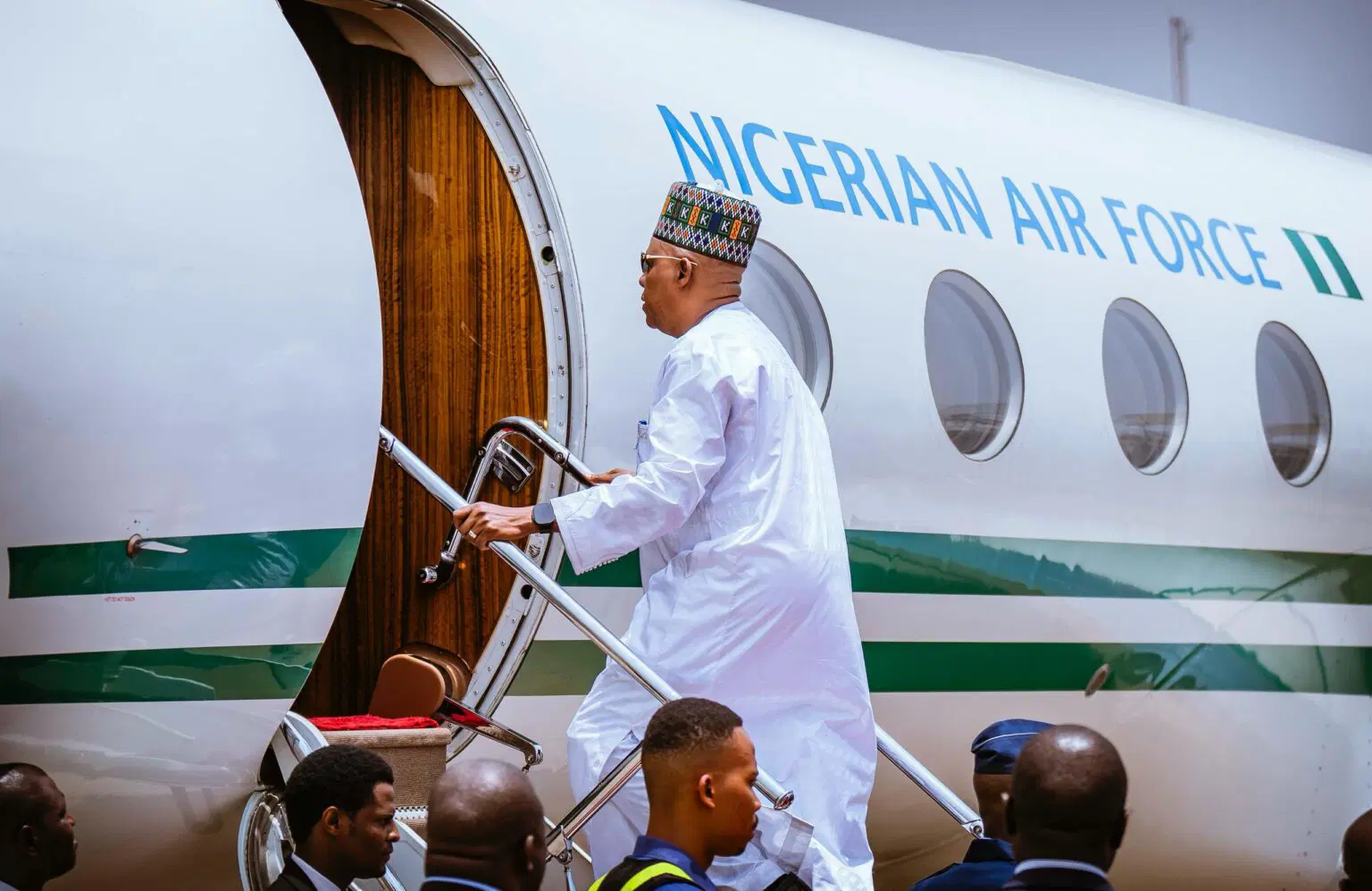
Vice President Kashim Shettima on Friday departed Abuja to represent President Bola Tinubu at the G20 Leaders’ Summit scheduled to hold in Johannesburg, South Africa.
This travel follows a postponement of President Tinubu’s earlier planned trip to Johannesburg, South Africa, due to the need to await further security briefings on the recent security incidents in Kebbi and Kwara states.
The invitation for Nigeria to participate in this year’s edition was extended by South African President, Cyril Ramaphosa, who also serves as the current President of the G20 group.
The summit is scheduled to take place from Saturday, November 22nd, to Sunday, November 23rd, at the Johannesburg Expo Centre.
The G20 summit brings together leaders from the world’s top 20 economies. These participants also include the European Union, the African Union, and major financial institutions, among others. The Vice President is scheduled to return to Nigeria at the end of the summit’s engagements.
G20 Summit Agenda and Priorities
The G20 Leaders’ Summit in Johannesburg, hosted by South Africa, operates under the theme “Solidarity, Equality, Sustainability.” This theme reflects a commitment to building on the work of previous Global South presidencies (Indonesia, India, and Brazil) and prioritizing a more inclusive global system.
The two-day summit will feature three main plenary sessions dedicated to key global priorities:
Inclusive and Sustainable Economic Growth
This session focuses on building resilient economies and addressing challenges that hinder development, with a specific focus on:
The role of trade in sustainable development; Financing for development, particularly for low- and middle-income countries; Addressing the global debt burden and ensuring debt sustainability for poor nations.
A Resilient World
This session examines the G20’s contribution to tackling significant global and environmental risks, including:
Disaster Risk Reduction and strengthening disaster resilience and response; Climate Change and the necessity of action; Just Energy Transitions and mobilizing finance to support this shift, including increasing the quality and quantity of climate finance flows to developing countries; The stability of Food Systems.
A Fair and Just Future for All
The final session focuses on shaping an equitable future by discussing issues such as:
The role of Critical Minerals for inclusive growth and sustainable development; Promoting Decent Work globally; The impact and governance of Artificial Intelligence and innovation for sustainable development.
South Africa, as the G20 President, has consistently used its position to advocate for African developmental interests, aiming to shift development from aid to investment-driven growth.