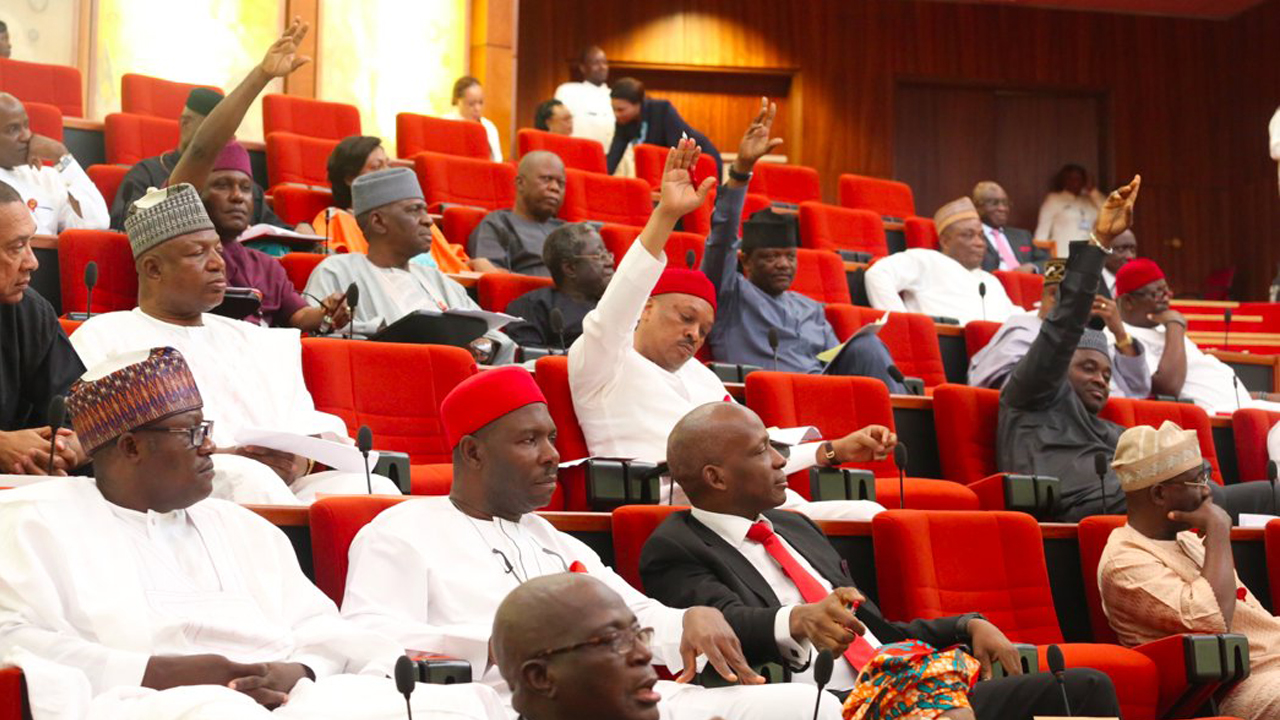
The Nigerian Senate has rejected a proposal seeking the revival of the national carrier, Nigeria Air, prompting Senate President Godswill Akpabio to call for fresh legislative efforts to establish a viable national airline.
The development followed deliberations on a motion concerning Nigeria’s Bilateral Air Services Agreement with China during plenary on Tuesday, November 3, 2026. An additional prayer seeking the revival of Nigeria Air was subsequently subjected to a voice vote but was rejected by lawmakers.
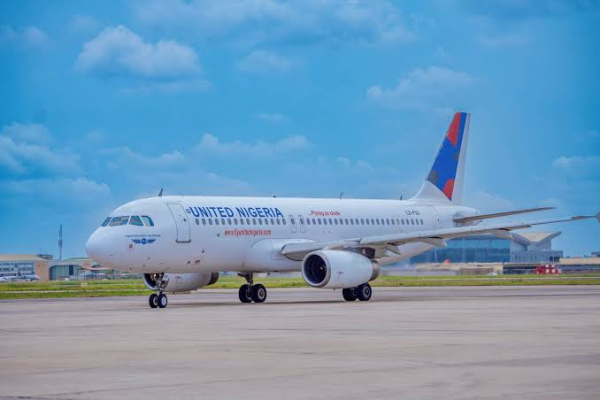
Nigeria Air was a proposed national carrier launched under former President Muhammadu Buhari’s administration in partnership with Ethiopian Airlines. However, the project was suspended following allegations of irregularities and concerns over the terms of the partnership.
Following the rejection of the proposal, Akpabio initially described the matter as a dead issue, arguing that there was no need for lawmakers to devote further time to discussing it.
“It’s so simple. We don’t have to waste time discussing dead issues,” he said.
However, Akpabio later maintained that Nigeria still needed a national carrier, urging another senator to sponsor a fresh motion to enable the country to revisit the proposal.
“Somebody should bring a motion that will enable Nigeria to revive its own airline. Nigeria should have Nigerian Airways. A national carrier should birth in this country carrying Nigerian flag as it used to be,” Akpabio said.
He recalled that the defunct Nigeria Airways once had about 32 aircraft on the ground, with approximately 40 others operating across various routes.
Akpabio also raised concerns about the difficulty of securing private aircraft for charter services and the pressure on domestic airlines during the December festive travel period.
The debate over the proposed national carrier arose during deliberations on a substantive motion concerning Nigeria’s Bilateral Air Services Agreement with China, sponsored by the Senate Chief Whip, Senator Tahir Monguno.
The motion called for a review and enforcement of the agreement to ensure reciprocal access for Nigerian airlines to operate direct flights to China.
Monguno said more than one million Nigerians live in China, while over 500,000 Chinese nationals reside in Nigeria. He argued that direct air connectivity would reduce travel time, improve supply chain efficiency, boost trade and curb foreign exchange outflows associated with international travel.
Senator Abdul Ningi questioned whether Nigeria was deriving commensurate benefits from its relationship with China, considering the Asian country’s growing influence in the global economy.
Akpabio also warned that Nigeria might need to reconsider the privileges extended to Chinese airlines if Nigerian carriers were denied reciprocal access to operate direct flights to China.
The Senate subsequently urged the Ministry of Aviation and Aerospace Development to renegotiate the agreement to facilitate direct commercial flights between Nigeria and China.