


The Accountant-General of the Federation, Shamseldeen Ogunjimi, faced intense scrutiny on Thursday.
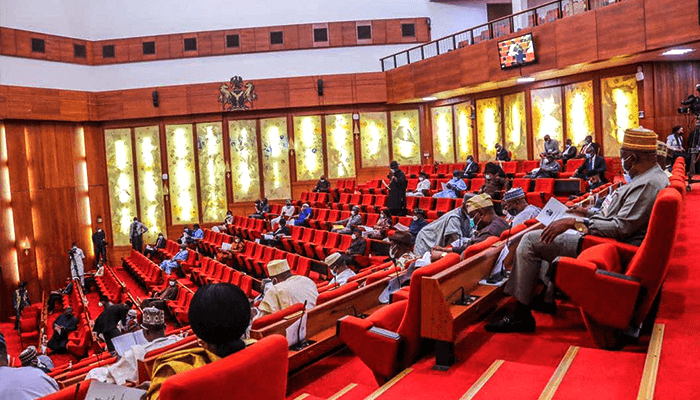
The Senate Committee on Finance declined to consider the 2026 budget proposal of his office.
The decision stemmed from poor budget releases and mounting unpaid liabilities to contractors.
The AGF heads Nigeria’s Treasury House.
He is responsible for the custody, management, and disbursement of public funds.
He appeared before the committee amid growing complaints from MDAs, statutory bodies, and government contractors.
These complaints focused on delayed and zero capital releases.
Under Nigeria’s public finance structure, MDAs rely on releases from the Office of the Accountant-General to execute approved capital projects.
These projects include road construction, school rehabilitation, health infrastructure, power installations, and constituency projects.
Lawmakers stated that many MDAs recorded little to no capital releases in 2025.
This has resulted in projects being stalled nationwide.
From his opening remarks, Sani Musa (APC, Niger East), Chairman of the Committee, set a combative tone.
He accused the AGF’s office of being “unfriendly” to the committee.
He warned that the situation must change.
“We are not going to take your budget until we are satisfied that your office is ready to do things that will make things work for Nigerians through expected assurances from you,” Musa said.
He added, “One of the issues that must be urgently resolved is the envelope budgeting system being used by the federal government on a yearly basis but not producing desired results, requiring an alternative model like performance based one.”
Lawmakers expressed frustration over poor implementation of the 2024 and 2025 budgets.
This included zero capital allocations to many Ministries, Departments, and Agencies (MDAs), statutory bodies, and key institutions.
Danjuma Goje (APC, Gombe Central) said the Senate and Nigerians were embarrassed by the situation.
“Here at the National Assembly, we have never seen contractors bombarding us on a weekly basis for intervention on non-payment of executed contracts,” Goje said.
Across several states, contractors handling classroom blocks, primary healthcare centres, rural electrification, water projects and road construction have reportedly abandoned sites due to non-payment.
Others face mounting interest obligations to banks.
He questioned the government’s revenue claims following the removal of fuel subsidy and the harmonisation of the foreign exchange market.
“Impression given to Nigerians by the government is that with the removal of subsidy and harmonisation of the forex market, more revenue or more money, where is the money now?
“Why are contractors owed? And why was there zero allocation for capital votes of most of the MDAs in 2025?” he queried.
Describing the situation as “very embarrassing and baffling,” Goje further demanded clarity on funds reportedly generated by revenue agencies.
Muntari Dandutse (APC, Katsina South) also raised concerns over reports that revenue agencies generated N28 trillion, yet contractors remain unpaid.
“Even the introduced Centralized Payment System is not helping matters at all. The system is very compromised and seriously affecting the integrity of the government,” Dandutse said, asking, “What happened to the N28trillion?”
Other senators, including Abdul Ningi (PDP, Bauchi Central), Asuquo Ekpenyong (APC, Cross River South), Adams Oshiomhole (APC, Edo North), Aminu Abbas (PDP, Adamawa Central) and Patrick Ndubueze (APC, Imo North), urged the AGF to advise President Bola Tinubu to guard against internal sabotage within the system.
The committee also cited complaints from agencies such as the Nigerian Bulk Electricity Trading Company and the Fiscal Responsibility Commission.
These complaints concerned poor releases in the 2025 budget and outstanding liabilities carried over from 2024.
Lawmakers noted that the funding gaps have made it difficult for the government to settle over N2.2 trillion owed to contractors.
Several statutory transfers, security agencies, and even INEC have reportedly been affected.
They faulted the “envelope” method of disbursement operated by the Treasury House.
They called for a shift to a performance-based funding model.
The Centralized Payment System was introduced to streamline federal disbursements through the Treasury.
It was designed to improve transparency and eliminate duplication.
However, lawmakers argued that its implementation has slowed down payment processing.
This has created bottlenecks that affect project execution nationwide.
Responding, Ogunjimi attributed the crisis to indiscriminate contract awards by MDAs without cash backing.
He said the development necessitated a directive banning MDAs from awarding contracts without available funds.
“Yes, as the Accountant General of the Federation, my office is expected to disburse funds to relevant agencies at the appropriate time, but that can only be done if the fund is available because I must have the funds before I can disburse,” he said.
“I also want to remind us that ‘Ways and Means’ used in the past for such funding is no more for the good of the Nation’s economy.”
The AGF admitted that the Centralized Payment System had encountered operational challenges.
He explained that while the issues “were not envisaged,” they are being addressed.
He noted that the payment platform is currently undergoing expansion to enhance its capacity for seamless operations.
He also accused some MDAs of failing to remit revenues and taxes, while awarding contracts that are not cash-backed.
Appealing to the committee to reconsider its stance on his office’s 2026 budget, Ogunjimi maintained that his office can only disburse funds that are actually released to it.
Following the heated exchanges, the committee proceeded into a closed-door executive session with the AGF.
The session aimed to further interrogate the issues and seek clarifications.
The Senate had earlier threatened not to consider or pass the 2026 budget proposal of the Office of the Accountant-General of the Federation until concerns over poor releases and unpaid contractor liabilities are satisfactorily addressed.