


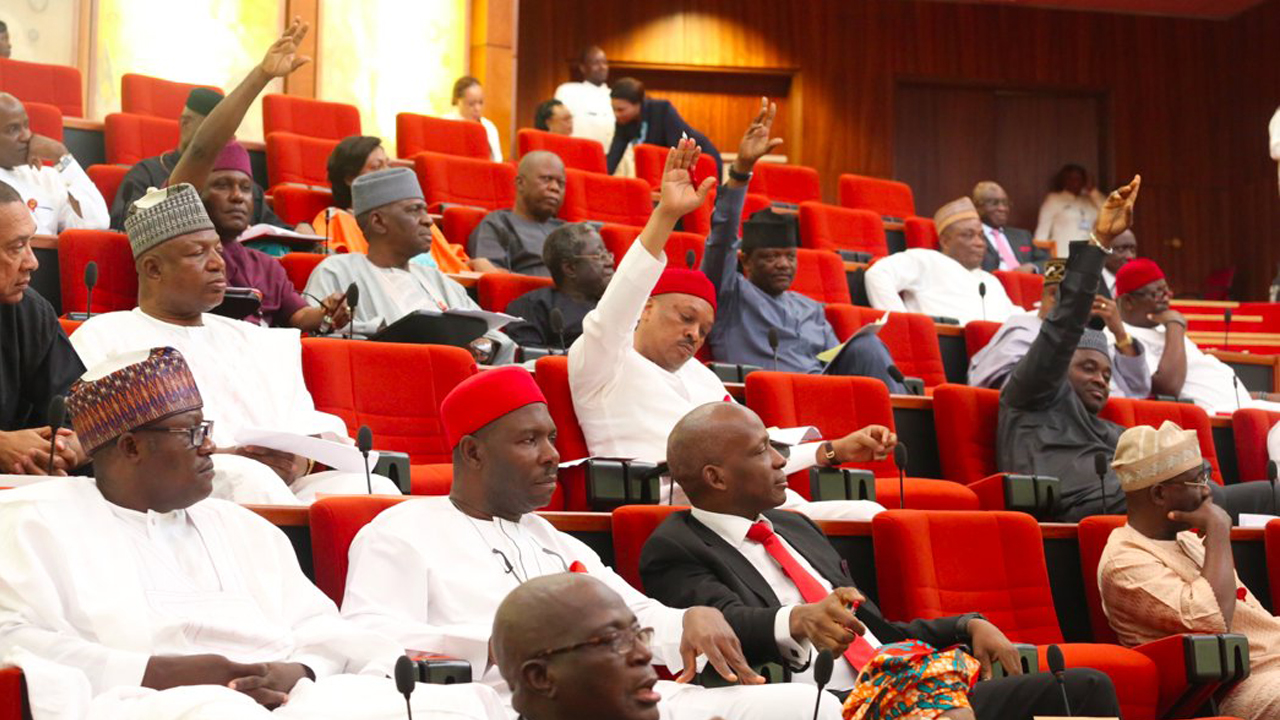
The Senate on Thursday passed the Federal Road Safety Corps (Amendment) Bill, 2026.
The bill proposes a N50,000 fine for anyone convicted of hawking, trading or preaching inside commercial vehicles.
The legislation seeks to strengthen road safety enforcement and curb practices considered capable of distracting drivers. It now awaits presidential assent.
If signed into law, the bill will impose a N50,000 fine, six months imprisonment, or both, on motorists who refuse to cooperate with officials of the FRSC during roadside breath tests conducted on reasonable suspicion.
The amendment forms part of a broader review of the FRSC Act aimed at increasing compliance with traffic regulations, reducing road crashes and enhancing safety on Nigerian roads through stiffer penalties for traffic offences.
Under the proposed law, anyone found hawking, trading or preaching inside a commercial vehicle commits an offence and, upon conviction, will be liable to a N50,000 fine.
Lawmakers said the provision was introduced to discourage distractions in commercial vehicles and improve the safety of commuters.
The bill also raises the penalty for driving under the influence of alcohol or intoxicating drugs from N5,000 to N100,000.
Convicted offenders also risk up to two years imprisonment or both.
Motorists who refuse to cooperate with FRSC personnel conducting preliminary roadside breath tests based on reasonable suspicion will equally face a N50,000 fine, six months imprisonment, or both.
The proposed amendment further increases the penalty for disobeying traffic lights, road signs, pavement markings and other traffic control devices to N100,000.
Similarly, speed limit violations, previously punishable with a N5,000 fine, will now attract a N100,000 penalty.
Reckless driving will also be punishable with a N100,000 fine, up to two years imprisonment, or both.
The revised schedule of offences contained in the amendment lists 52 traffic violations and their corresponding penalties.
According to the Senate, the review is aimed at strengthening the FRSC’s enforcement powers, improving compliance with traffic regulations and enhancing safety on Nigerian roads.