





The Securities and Exchange Commission has unveiled an ambitious agenda for 2026 focused on mobilising long-term capital to address Nigeria’s persistent infrastructure deficits.
The new roadmap follows a year in which corporate entities relied heavily on short-term financing instruments, particularly commercial papers, to meet their funding needs.
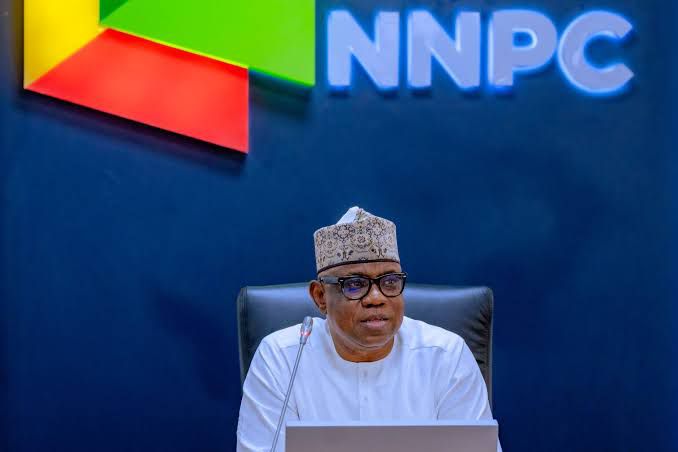
In a New Year message delivered in Abuja on Thursday, the Director-General of the Commission, Dr Emomotimi Agama, said the SEC would prioritise the deployment of patient capital into critical sectors such as road construction, power generation, rail development, housing, and agriculture.
He noted that achieving this strategic shift would require the modernisation of regulatory frameworks to make the capital market more accessible and attractive to long-term issuers.
According to Agama, facilitating the issuance of infrastructure bonds, municipal bonds, green bonds, and infrastructure-focused funds would form a major part of the Commission’s 2026 pipeline.
He explained that the overarching objective is to channel stable and sustainable capital into projects that are critical to national development.
“Our goal is to attract long-term domestic and international capital into roads, power, rail, housing, and digital infrastructure, while making it easier for state governments and infrastructure companies to access the market efficiently,” he said.
Nigeria’s infrastructure deficit has been estimated by various government and private-sector studies at over 100 billion dollars.
The Infrastructure Concession Regulatory Commission, a federal government agency, has stated that Nigeria would require about 100 billion dollars annually over several decades to bridge the infrastructure gap and stimulate economic growth through improved infrastructure provision.
The expanding deficit is evident in deteriorating road networks, unreliable power supply, limited rail connectivity, a housing shortfall estimated at over 20 million units, and slow broadband penetration.
The SEC believes that increased mobilisation of long-term financing is essential to reversing years of underinvestment across these key sectors.
As part of its expanded agenda, the Commission plans to promote the listing of agribusinesses and create tailored listing windows for agricultural cooperatives and companies operating across the agricultural value chain.
It also intends to expand commodity-linked instruments aimed at reducing pricing risks, improving farmers’ incomes, and strengthening national food security.
“We will de-risk agriculture through commodity exchanges, agricultural investment trusts, and innovative financial instruments that allow Nigerians to own a stake in the nation’s breadbasket,” Agama stated in his New Year message.
In the housing sector, the Commission plans to revive Real Estate Investment Trusts and introduce affordable housing bonds, which the Director-General said would “unlock capital for mass housing delivery” while expanding investment opportunities.
Agama also disclosed that the SEC is reviewing its rules to attract more listings from small and medium-sized enterprises in manufacturing, automotive, pharmaceuticals, and finished goods.
He said the initiative is expected to provide patient capital to struggling factories, reduce Nigeria’s reliance on imports, and strengthen the Made-in-Nigeria value proposition.
On the power sector, Agama said the Commission would support capital raising through infrastructure bonds, green energy bonds, project-backed securities, and public–private investment vehicles.
These instruments will be targeted at grid expansion, renewable energy projects, embedded power generation, and Nigeria’s broader energy transition objectives.
Agama further said that 2026 represents more than a change in the calendar, describing it as an opportunity to redefine the role of the capital market in national development.
“We look back at a year of transformation and forward to a future where our capital market becomes the definitive solution provider for Nigeria’s most pressing economic and developmental needs,” he said.
With Nigeria’s infrastructure and financing gaps continuing to widen, the SEC’s 2026 roadmap signals a deliberate shift toward long-term capital formation, which is widely regarded as a critical requirement for sustainable economic growth.
The Commission’s strategic pivot follows a 2025 market cycle that was largely dominated by short-term capital raises, reflecting the liquidity pressures facing corporates and financial institutions.
During the year, dozens of companies turned to commercial papers, typically with tenors ranging from 90 to 270 days, to fund operational expenses amid difficulties accessing long-term financing in a high-interest-rate environment.
As of October 2025, the SEC had approved commercial paper programmes valued at over 1.3 trillion naira.
Market analysts have cautioned that the growing mismatch between short-term funding structures and long-term investment needs has heightened refinancing risks and limited investment in sectors that require patient capital, particularly infrastructure, manufacturing, and power.
The SEC’s renewed focus for 2026 appears designed to correct this imbalance and reposition the capital market as a catalyst for long-term national development.

