






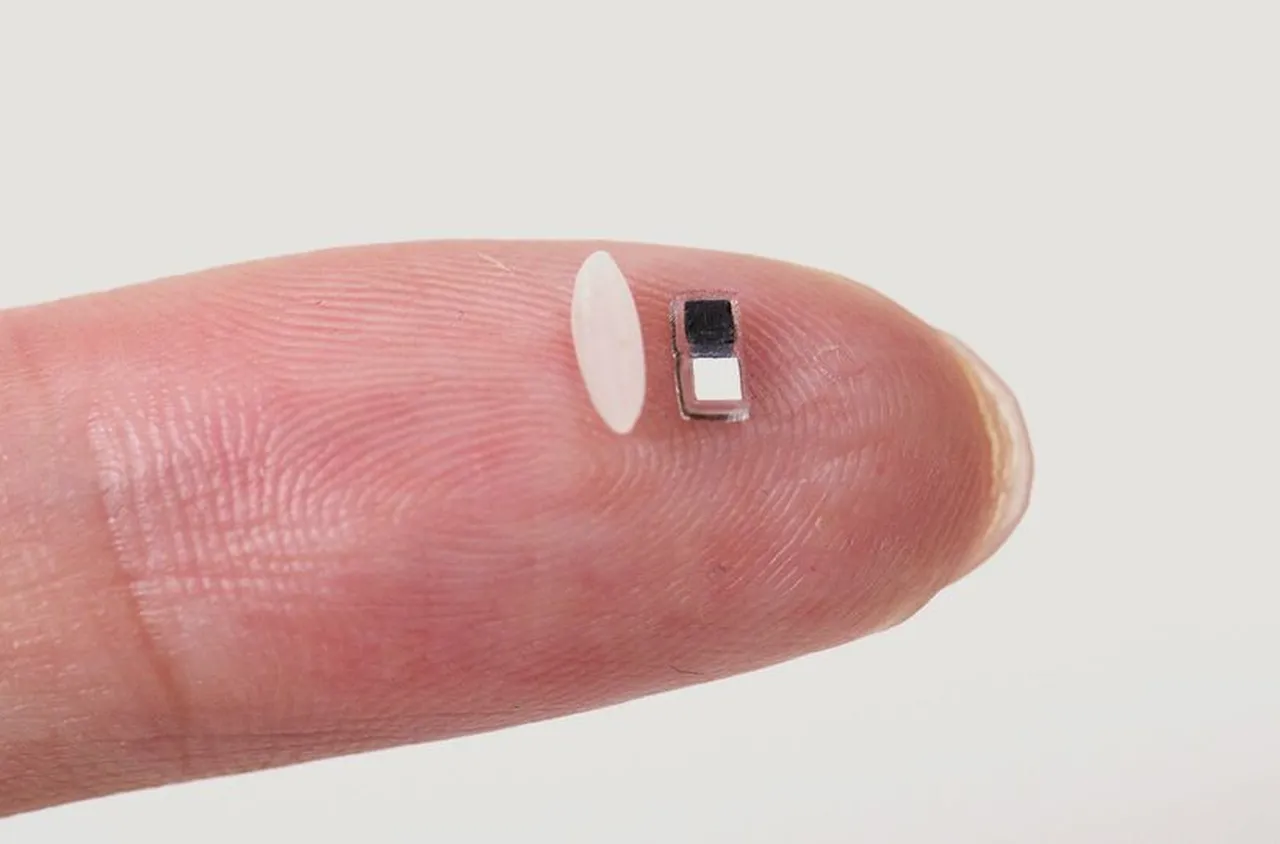
Scientists have developed a brain implant smaller than a grain of rice, a milestone that could reshape the neurotechnology sector.
Known as a microscale optoelectronic tetherless electrode, the device is far smaller than current implants and can be adapted for use in other sensitive areas of the body, according to the report.
“As far as we know, this is the smallest neural implant that can measure electrical activity in the brain and transmit it wirelessly,” said co-author Alyosha Molnar, an electrical engineer at Cornell University.
The MOTE implant, built with an aluminium gallium arsenide semiconductor diode, can both emit light to transmit data and harvest light for power.
It operates using transmission methods similar to those in standard microchips, enhanced by an optical encoder and a low-noise amplifier.
Data is transmitted via pulse position modulation, a technique commonly employed in satellite optical communications.
Molnar emphasised that the implant can transmit data efficiently while using minimal power, highlighting its potential for long-term medical applications.
The device was initially tested in lab-grown cell cultures before being implanted in the barrel cortex of mice, a brain region that processes sensory information from whiskers.
“One of the motivations for doing this is that traditional electrodes and optical fibres can irritate the brain. The tissue moves around the implant and can trigger an immune response. Our goal was to make the device small enough to minimise disruption while still capturing brain activity faster than imaging systems, and without needing to genetically modify neurons for imaging,” Molnar stated.
MOTE’s potential goes beyond brain monitoring, with possible applications in other sensitive regions like the spinal cord.
Molnar’s team suggests its design could be incorporated into synthetic skull plates or modified to capture signals from diverse tissues, expanding its scope in medical technology.

