

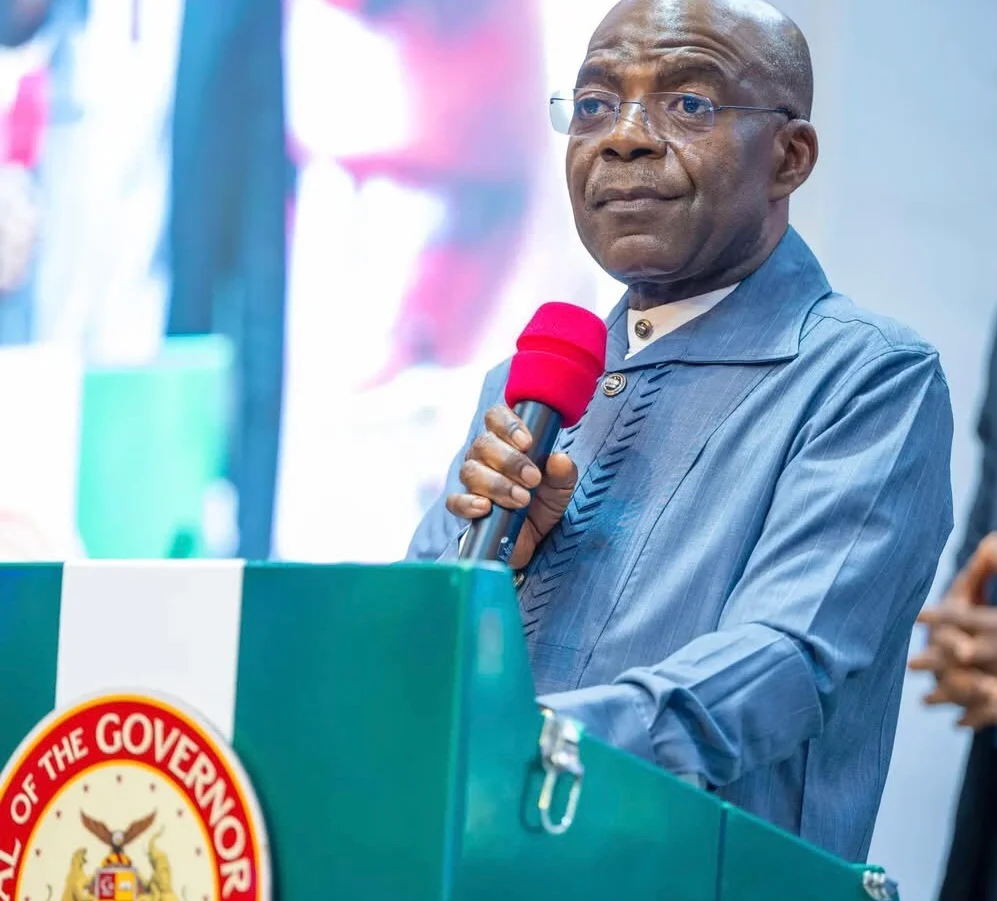



The Group Managing Director of Sahara Power Group, Kola Adesina, stated that Nigeria’s power sector is entering a more stable phase poised to attract investors, thanks to Federal Government reforms and the gradual resolution of longstanding legacy debts that have historically limited growth across the electricity value chain.
He further disclosed that Sahara Power is progressing with plans to raise its dispatched generation capacity to between 6,500 and 7,000 megawatts, while also spearheading the launch of a data centre to drive expansion and innovation in its operations.
He stated that the group plans significant investments in both gas and renewable energy to expand generation capacity over the next three to five years, aiming to provide “sustainable, affordable, and reliable power for homes and businesses.”
Adesina added in an interview that recent infrastructure and macroeconomic policies under President Bola Tinubu have brought clarity and predictability, positively influencing investment decisions in the sector.
He noted that the administration’s approach has helped tackle structural bottlenecks that previously eroded investor confidence.
Adesina also revealed that Sahara Power has already repaid $438 million—about 73 per cent of its original $600 million loan—despite persistent liquidity challenges in the sector.
He emphasized that the Federal Government’s ongoing legacy debt settlement programme is vital for relieving pressure on power companies, gas suppliers, and lenders, while paving the way for fresh capital inflows.
He explained that better policy coordination, relative exchange rate stability, easing inflation, and moderated interest rates are enabling power sector operators to plan with greater confidence.
Adesina added that these developments, together with closer collaboration among government agencies, regulators, financiers, and industry stakeholders, are creating a foundation for sustained growth and operational stability in Nigeria’s electricity market.
He noted that Sahara Power has conducted extensive scenario planning and aligned its strategic objectives with what he described as the president’s bold, long-term, and visionary infrastructure plan, highlighting the administration’s uncommon resolve in addressing structural bottlenecks that have historically limited investment, especially in the energy value chain.
The GMD noted that removing long-standing impediments has helped reposition Nigeria as a more credible destination for long-term investment. He further highlighted macroeconomic improvements as a key factor reshaping business expectations, citing clearer policy reforms in the power sector, greater stability in the foreign exchange market, a slowdown in inflation, and the resulting moderation of interest rates—developments that now allow investors to plan with greater certainty.
“We have done a series of scenario planning and will anchor our strategic objective on the bold, clear-sighted, long-term-oriented infrastructure plan of President Bola Tinubu. Mr President has demonstrated courage in confronting age-long bottlenecks, clearing the way for investor confidence, thereby engendering significant growth and development of the power sector and Nigeria’s economy in general.
“With clear positive policy reforms in the sector, stability in the exchange rate, significant reduction in the inflation rate, and the associated moderated interest rate, we, as well as other investors in the sector, can now easily plan with a higher sense of predictability and conviction,” he stated.
Adesina emphasized that, from legacy debt resolution to technology-driven expansion, Nigeria is on a path to overcome its challenges and emerge as a transformational power hub in Africa.
“We are witnessing unprecedented collaboration involving the Federal Government, the power ministry, regulatory agencies, power entities, the CBN, banks, and multilateral financial and development agencies, and other stakeholders in the power sector. We believe that this trend will continue in 2026, and this will spur sector-wide growth that will translate to greater efficiency, sustainability, and more power for Nigerians,” he said.
Adesina praised the Federal Government for addressing liquidity challenges in the power sector through the ongoing legacy debt settlements, noting that the move is set to attract new investments and stabilise the industry for sustained growth.
He also highlighted that significant progress has been made in metering and service delivery, emphasizing that enhanced collaboration between regulators and operators will further optimise the electricity value chain, directly benefiting end-users through more reliable power supply.