








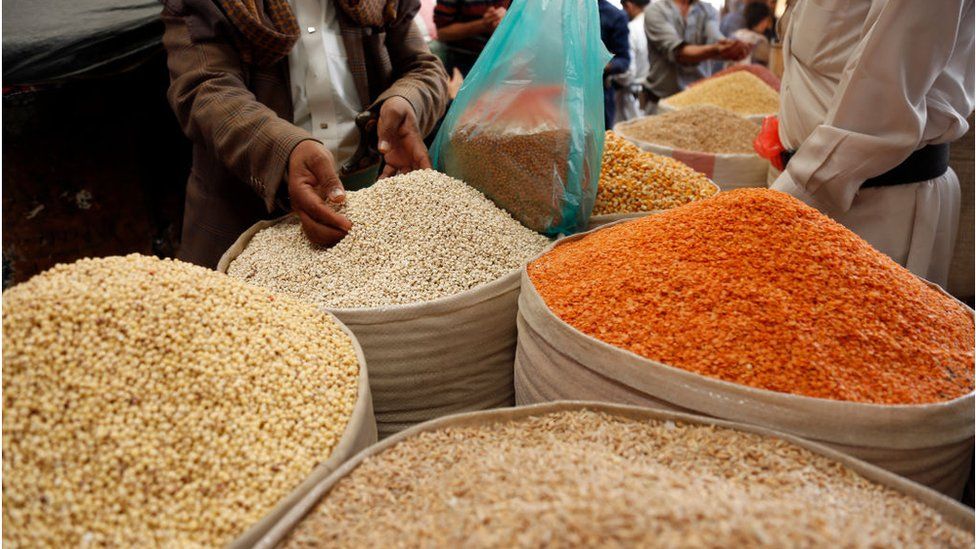
Food prices showed mixed trends across major Nigerian markets in January, offering some relief for households through lower prices of staple grains such as rice and beans, even as rising costs of cooking oils and processed foods continued to strain food budgets.
A comparison of prices between December 2025 and early January 2026 indicates improved supply conditions across several regions, leading to price reductions in key staples.
The moderation is largely attributed to peak harvest inflows, increased domestic production and market adjustments following government policy interventions.
Despite these gains, higher prices for edible oils and packaged foods limited the overall improvement in food affordability.
Markets in Abuja recorded some of the sharpest price corrections, particularly for rice and beans.
A 50kg bag of locally produced rice, which sold for between ₦63,000 and ₦65,000 in December, now trades for ₦50,000 to ₦55,000.
Half bags now sell for ₦25,000 to ₦27,000, down from prices above ₦32,000 previously.
At the retail level, a mudu of local rice sells for about ₦2,000, compared with ₦2,200 in December.
Imported rice prices also eased, with a 50kg bag now selling for ₦72,000 to ₦75,000, down from ₦80,000 to ₦85,000, although imported brands remain more expensive than locally milled rice.
White beans prices declined but remained volatile, with a full bag now selling for between ₦70,000 and ₦90,000, compared with about ₦95,000 in December.
Retail prices for white beans dropped significantly, with a mudu now selling for ₦1,000 to ₦1,400, down from nearly ₦2,000 previously.
Brown beans, however, remained elevated, with a half bag selling for around ₦60,000 and a mudu priced at about ₦2,500.
Cooking oils moved in the opposite direction, continuing their upward trend.
A 25-litre container of groundnut oil rose to about ₦70,000 from below ₦65,000, while palm oil increased to around ₦57,000 from ₦52,000.
At the retail level, groundnut oil sells for about ₦2,500 per litre, while palm oil goes for approximately ₦2,300 per litre.
Processed foods provided little relief for consumers.
A carton of spaghetti or macaroni now sells for about ₦19,000, up from ₦17,000 to ₦18,000, while individual packs retail for around ₦1,000.
Traders say the easing of grain prices has negatively affected those who stocked heavily last year, as falling prices have forced sales at slimmer margins.
In the South-East, food prices were largely stable or declining, supported by bumper harvests and peak farming activity.
At the Abakaliki Foodstuff Regional Market in Ebonyi State, a bag of iron beans sells for about ₦80,000, while Patasko beans go for ₦70,000.
These prices represent a sharp decline from ₦130,000 to ₦150,000 recorded last year.
Other staples also moderated, with okpa bambara nut selling for about ₦120,000 per bag, groundnut ₦130,000, ukah ₦35,000 and soybeans ₦65,000.
Rice prices in the region remained largely stable.
A 25kg bag of high-grade Abakaliki rice sells for ₦18,000 to ₦20,000, while lower-grade varieties go for about ₦15,000, down from ₦25,000 to ₦40,000 last year.
Garri prices eased significantly in parts of Ebonyi State.
In Ngbo communities of Ohaukwu Local Government Area, a paint of white garri sells for about ₦1,000, while red garri goes for ₦1,500, compared with prices of about ₦5,000 last year.
Yam prices also softened, with ₦10,000 now buying five to six large tubers.
Markets in Kano recorded widespread declines across major staples.
Surveys at Yankura, Sabon Gari, Tarauni and Dawanau International markets show foreign rice selling for about ₦53,000 per 50kg bag, while local rice sells for around ₦63,000.
These prices compare with levels above ₦70,000 for foreign rice and up to ₦80,000 for local rice a year earlier.
White beans now sell for about ₦60,000 per bag, while red beans trade at ₦52,000, down from ₦70,000 to ₦85,000.
White garri sells for about ₦47,000 per 50kg bag, while yellow garri goes for around ₦22,000.
Sorghum prices dropped to about ₦36,000 per bag, while millet sells for roughly ₦32,000.
Traders attributed the moderation to improved harvests, better supply flows and reduced speculative buying, while warning that fuel costs, exchange rate pressures and security challenges remain risks.
In South-West and Lagos markets, price movements remained mixed.
A 50kg bag of foreign rice sells for about ₦57,000, while local rice trades at around ₦65,000.
A 100kg bag of oloyin beans sells for ₦100,000, while olo2 beans go for ₦95,000.
Yellow and white garri sell for about ₦18,000 per 60kg bag.
Tomatoes sell for ₦45,000 per big basket and ₦25,500 per small basket.
Onions sell for about ₦95,000 per big bag, while a medium bag of rodo pepper costs around ₦80,000.
Vegetable oil sells for about ₦65,000 per 25 litres, while palm oil costs around ₦64,000.
Food prices are easing as seasonal harvests coincide with higher domestic production and targeted policy interventions that expanded supply.
The Federal Ministry of Agriculture and Food Security says output of staples such as maize, rice, wheat and cassava improved following expanded planting and better access to inputs since 2023.
According to Abubakar Kyari, Minister of Agriculture and Food Security, the combined effect of reforms, mechanisation and market focused interventions is repositioning agriculture as a scalable business capable of stabilising food supply and prices.
Aliyu Sabi Abdullahi, Minister of State for Agriculture and Food Security, also linked the price moderation to increased production under the National Agricultural Growth Scheme Agro Pocket initiative.
He said the initiative had shifted markets from scarcity toward relative abundance by increasing the volume of produce entering markets during the current harvest cycle.
Government signalling further influenced market behaviour.
Announcements of a temporary import window last year prompted traders to release stored grains, easing supply pressures, even as authorities insist that imported stocks have not been released into the market.
Input support also helped reduce production costs.
Fertiliser distribution and subsidised inputs at both federal and state levels enabled farmers to produce more competitively during the current season.
Mechanisation partnerships are gradually lowering land preparation costs and improving yields through shared service centres.
Policy reforms have also improved coordination across production, storage and distribution networks.
While risks linked to logistics, inflation and security challenges remain, January data point to easing pressure on core food staples.
However, continued increases in cooking oils and processed foods highlight the fragile nature of food price stability across the country.

