


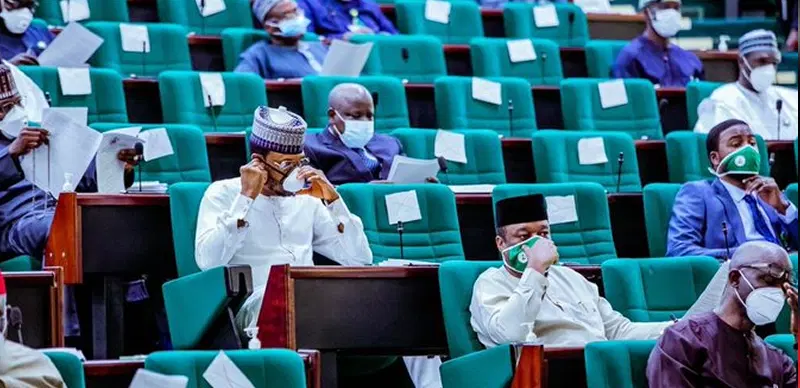
The House of Representatives Committee on Banking Regulations held a public hearing on Thursday in Abuja on two critical bills aimed at strengthening Nigeria’s financial system, expanding access to finance for small and medium enterprises, and protecting bank customers from fraudulent activities.
According to BusinessDay, the hearing, chaired by Hon. Mohammed Bello El-Rufai, focused on two proposed legislations: A Bill to Regulate Factoring, Purchase of Receivables, and the Establishment, Operation, and Control of Factoring and Receivables Financing Businesses (HB. 516) and A Bill to Amend the Banks and Other Financial Institutions Act (BOFIA) 2020 (HB. 1160).
In his opening remarks, El-Rufai characterized the bills as part of the Committee’s efforts to promote a stronger, more transparent, and consumer-friendly financial sector.
He outlined the purpose of the first bill, stating: “The first Bill seeks to deepen access to finance for SMEs, promote liquidity, and align Nigeria’s legal framework with international best practices in trade finance.”
He added that the second bill, sponsored by Hon. Moses Oluwatoyin Fayinka, specifically seeks to enhance accountability in the banking sector and protect victims of fraudulent withdrawals.
El-Rufai noted the shared objective of the two bills, saying: “Both bills share a common goal — enhancing trust, transparency, and stability in our financial ecosystem,” and urged stakeholders to collaborate to produce laws that are effective and fair.
Representing Kaduna State Governor Senator Uba Sani, his Special Adviser on Research, Documentation and Strategy, Mr. Fabian Okoye, described the Factoring and Receivables Financing Bill as a transformative policy tool capable of boosting liquidity and energizing Nigeria’s productive sectors.
Sani, who sponsored a similar bill in the 9th Senate, explained that factoring enables businesses to convert their receivables into immediate cash, helping them sustain operations and expand production.
He highlighted the benefit for businesses, stating: “Many Nigerian enterprises deliver goods and services on credit but wait months before being paid. Factoring provides a practical solution — enabling them to raise cash against those receivables,” he said.
He emphasized the importance of transparency and regulatory oversight to protect small businesses from predatory practices and called for alignment with existing laws such as the Secured Transactions in Movable Assets Act, the Companies and Allied Matters Act, and relevant CBN regulations.
Governor Sani commended Speaker Hon. Tajudeen Abbas for his leadership in promoting economic reform bills and praised El-Rufai’s Committee for its work in strengthening financial regulation.
He expressed optimism about the bill’s expected impact, adding: “When passed, this Bill will not only expand access to finance but also foster innovation, reduce the cost of credit, and promote sustainable economic growth.”
The public hearing attracted representatives of major stakeholders, including the Central Bank of Nigeria, Securities and Exchange Commission, Nigerian Export-Import Bank, Afreximbank, African Development Bank, the World Bank, and members of the organized private sector such as NACCIMA and NASME. The two bills will undergo further legislative review based on stakeholder input before being presented for third reading and passage by the House.