

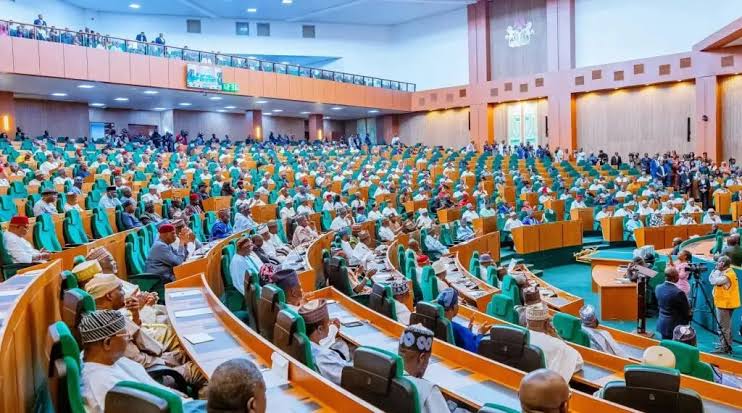
The House of Representatives has intensified efforts to reform Nigeria’s aviation laws, proposing a new revenue-sharing formula that could change how billions of naira generated through the sector’s five per cent Ticket Sales Charge and Cargo Sales Charge are allocated among aviation agencies.
The proposal follows figures presented to lawmakers indicating that the Nigeria Civil Aviation Authority received an estimated N777bn from the five per cent Ticket Sales Charge and N352bn from the Cargo Sales Charge in 2026. The two revenue streams amounted to approximately N1.129tn.
The proposed amendment seeks to revise the revenue-sharing formula among aviation agencies, automate remittances to beneficiary institutions and harmonise conflicting provisions across existing aviation laws. It is also designed to strengthen the financial capacity of agencies responsible for aviation safety, navigation, accident investigation and other critical services.
Speaking at a recent stakeholder engagement, the Speaker of the House of Representatives, Tajudeen Abbas, who was represented by the bill’s sponsor, Sada Soli, assured stakeholders that the review was intended to address longstanding structural and funding challenges in the aviation sector.
The proposed amendment has sparked tensions among aviation agencies, particularly the Nigeria Civil Aviation Authority and the Nigeria Airspace Management Agency, as both institutions push competing positions on how the revenue should be distributed.
Under the current arrangement, the NCAA receives 56 per cent of the five per cent charge, while NAMA gets 22 per cent. The Nigeria Meteorological Agency receives nine per cent, the Nigerian College of Aviation Technology gets seven per cent, and the Nigerian Safety Investigation Bureau is allocated six per cent.
Under the proposed revenue-sharing formula, the NCAA’s allocation would drop from 56 per cent to 40 per cent, while NAMA’s share would increase from 22 per cent to 40 per cent.
While the NCAA is pushing to retain or potentially increase its share of the fund to strengthen regulatory and safety oversight, NAMA has maintained that its growing operational responsibilities, infrastructure requirements and ageing facilities justify a larger allocation.
Speaking at the stakeholders’ forum, Soli said the proposed reform was not intended to deprive any agency of funding, but to establish a fairer and more transparent financial framework for Nigeria’s aviation sector.
He said lawmakers had carefully considered the concerns raised at the public hearing and were committed to addressing gaps in the existing legislation.
Soli said the hearing had helped clarify the key areas requiring amendment, adding that the proposed reforms were aimed at bringing Nigeria’s aviation laws and institutions in line with international best practices.
“We are changing the law and changing the name of AIB to NSIB to align with international best practice. We are trying to control the financing and block leakages and corruption,” he said.
Soli said the significant revenue generated by the sector made it necessary for lawmakers to ensure that the funds were properly accounted for and effectively channelled towards improving aviation infrastructure and strengthening safety standards.
“When I look at the financial framework of the NCAA, what they presented to the Committee for five per cent TSC for 2026 was N777bn. The five per cent for cargo charges, that is CSC, was N352bn,” he said.
He noted that the figures were part of the fiscal framework approved by the House Committee on Aviation.
Soli also linked the proposed reforms to the International Civil Aviation Organisation’s emphasis on cost recovery across the aviation sector, arguing that funding allocations should correspond with the responsibilities and operational demands of the various agencies.
“When I look at the financial framework of the NCAA, what they presented to the Committee for five per cent TSC for 2026 was N777bn. The five per cent for cargo charges, that is CSC, was N352bn,” he said.
He said the figures were contained in the fiscal framework approved by the House Committee on Aviation.
Soli also tied the proposed reforms to the International Civil Aviation Organisation’s focus on cost recovery across the aviation sector, stressing that funding should be aligned with the responsibilities and operational demands of each agency.