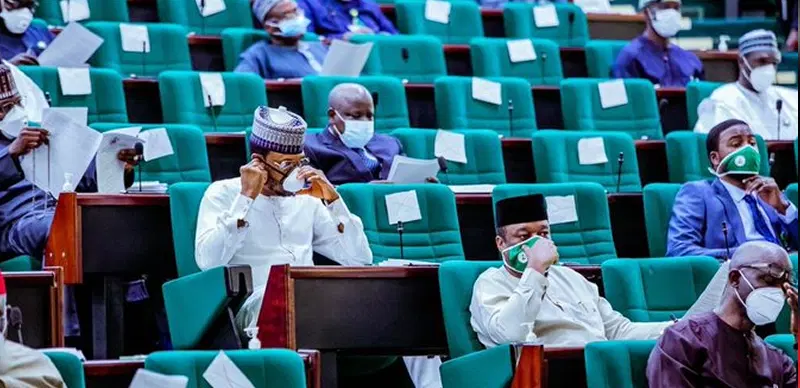
The House of Representatives on Tuesday initiated an investigation into the establishment, funding, and governance framework of the Museum of West African Art located in Benin City, Edo State.
This action was prompted by growing concerns that the new cultural complex might be operating under arrangements that afford undue influence to foreign and private interests.
The launch of the probe follows a recent exhibition at the museum that descended into chaos and was abruptly canceled after a protest invasion, which necessitated police intervention to rescue the foreign envoys in attendance. This investigation is considered critical as Nigeria is currently receiving historic batches of repatriated Benin Bronzes from international museums, intensifying scrutiny over the permanent storage location for these invaluable artifacts.
The House ordered the investigation after adopting a motion of urgent national importance. The motion was sponsored by Esosa Iyawe and co-sponsored by six other lawmakers from Edo State: Julius Ihonvbere, Peter Akpatason, Billy Osawaru, Omosede Igbinedion, Marcus Onobun, and Okojie Odianosen.
Leading the debate, Iyawe cautioned that a project intended to be a premier West African cultural heritage hub must not be allowed to become a “backdoor for foreign entities to influence or control Nigeria’s cultural property.”
Iyawe stated: “Credible reports suggest that the ownership and governance framework of MOWAA may have created an arrangement that places excessive influence in the hands of private or foreign interests. This would be contrary to Nigeria’s sovereignty over her cultural patrimony.” He further emphasized that the international community agreed to repatriate the Benin Bronzes based on the understanding that these items would be held in a public trust under Nigerian control.
Lawmakers also voiced additional concerns regarding the museum’s legal status, donor agreements, tax waivers, and land allocations.
Co-sponsor Julius Ihonvbere underscored the necessity for transparency, warning, “We cannot allow any ambiguity around ownership, land allocation, tax waivers, or foreign partnerships. Nigeria’s cultural assets cannot be traded off under the guise of development support.”
Similarly, Omosede Igbinedion faulted the alleged sidelining of traditional institutions, specifically citing the Palace of the Oba of Benin. She noted, “The custodians of the Benin heritage deserve full transparency and involvement. Their exclusion raises legitimate concerns.”
In addition, Marcus Onobun warned that a lack of clarity in funding sources and governance structures could potentially facilitate conflicts of interest and the exploitation of the nation’s heritage.
Upon adopting the motion, the House resolved to establish an ad hoc committee tasked with investigating MOWAA’s establishment, funding model, donor influence, and governance architecture.
The committee is mandated to ascertain the degree of government oversight and the safeguards currently protecting Nigeria’s ownership of its cultural assets. The panel is expected to submit its report within four weeks.
Speaker Abbas Tajudeen assured the House of the commitment to defending the country’s heritage, stating, “Our heritage is non-negotiable. This investigation is necessary to ensure transparency and national interest.”
The investigation coincides with renewed momentum in Nigeria’s restitution campaign. Just the day before, the Ministry of Arts, Culture and Creative Economy received two Benin Bronzes—a bronze relief plaque and a commemorative head—which were returned from the Museum of Fine Arts, Boston.
These pieces, which were stolen during the 1897 British invasion of Benin, were symbolically handed over by the Ministry of Foreign Affairs, with high chiefs representing the Oba of Benin in attendance.
Nigeria has received a total of no fewer than 285 Benin Bronzes over the past eight years, including substantial batches from the United States, the Netherlands, and the UK’s Horniman Museum.