







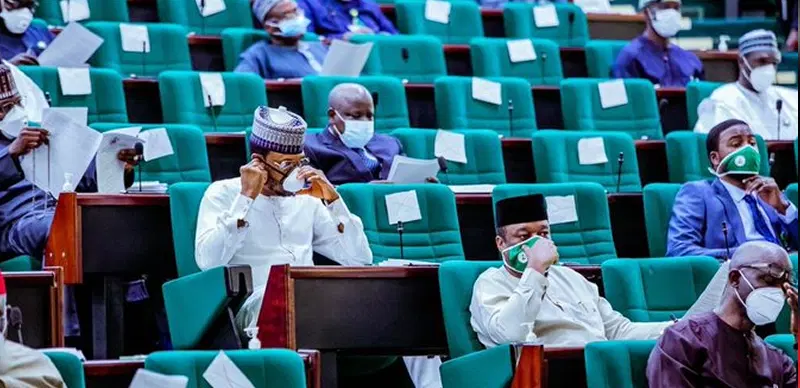
The minority caucus of the House of Representatives has set up a seven-member committee to investigate allegations that the recently assented tax reform laws were altered after they were passed by the National Assembly.
The committee is chaired by the lawmaker representing Ogbaru Federal Constituency of Anambra State, Afam Ogene, and has been mandated to probe the controversy surrounding the alleged alterations and make recommendations deemed appropriate in the national interest.
The decision followed allegations raised during plenary by a member representing a constituency in Sokoto State, Abdussamad Dasuki, who claimed that the version of the tax reform laws currently gazetted differed substantially from the harmonised version approved by both the Senate and the House of Representatives.
Although Speaker of the House, Tajudeen Abbas, had earlier constituted a seven-man panel to investigate the allegation, the House later appeared to reverse its position by directing the Clerk to the National Assembly to re-gazette the harmonised version of the tax laws and issue a True Certified Copy in an attempt to resolve the controversy.
Despite appeals by some lawmakers and stakeholders for the suspension of the implementation of the new tax regime pending the resolution of the alleged alterations, the Federal Government on Thursday proceeded with implementation, acting on the directive of President Bola Tinubu, as the new tax regime formally took effect.
In a statement issued on Friday and signed by the Minority Leader of the House of Representatives, Kingsley Chinda, alongside three other leaders of the caucus, the minority bloc explained the reasons behind the establishment of the committee.
“We wish to inform our members that after due consultations with relevant stakeholders on the unending controversy over the allegations of unlawful alterations made to the tax reform laws passed by the National Assembly and signed by the President, as well as the insistence of the executive to proceed with implementation of the tax laws from January 1, 2026, the leadership of the minority caucus of the House of Representatives, thought it expedient to institute a seven-man fact-finding committee to help our caucus get to the root of all the issues surrounding this scandal.
“As the opposition bloc in the House of Representatives, we believe that we owe it to Nigerians to make an independent and non-biased investigation, to establish all the facts and arrive at the truth in the matter of the tax laws,” the statement read in part.
The minority caucus further outlined the specific responsibilities assigned to the committee.
According to the statement, the committee’s mandate includes, “Getting copies of the actual tax laws passed by both chambers of the National Assembly and assented to by the President.
“Getting the Federal Government gazette bearing the purported forged version of the tax laws.
“Scrutinising copies of the actual tax laws passed by the National Assembly to ascertain if they were the actual ones signed by the President, and then compare them with the ones gazetted by the gazetting agency of the Federal Government.
“Recommending to the minority caucus of the House of Representatives the possible actions that can be taken in the event any infractions have been proven to have occurred.”
Other members of the committee are Jonathan Gbefwi, Shehu Fagge, Aliyu Garu and Stanley Adedeji, while Ibe Okwara and Marie Ibikake complete the seven-man panel.
The lawmakers have been given a seven-day deadline to conclude their assignment and submit their report to the minority caucus.
The caucus, led by Chinda, reaffirmed its determination to pursue the matter to its logical conclusion in the interest of Nigerians.
“We want to remind Nigerians of our unflinching commitment to the protection of their interests, and this step we have just taken is one of the ways we are using to get to the root of this controversy that has overheated our polity.
“We are determined, more than ever, to make sure our country’s citizens are not short-changed, especially the poor and vulnerable segments of our populations,” the statement added.

