


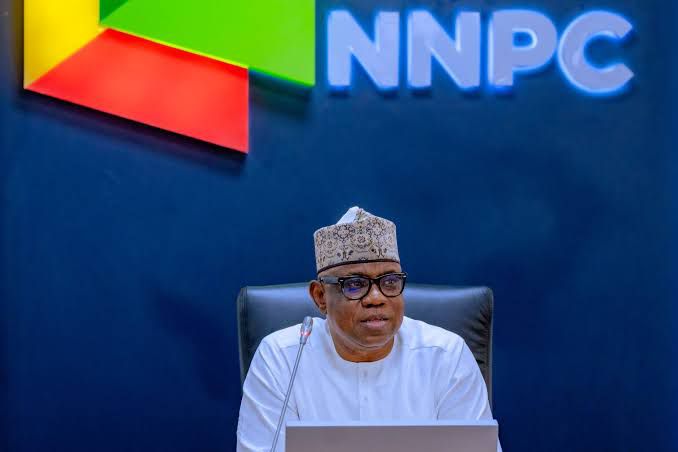




The House of Representatives Ad-hoc Committee investigating expenditure in Nigeria’s power sector has accused electricity Distribution Companies of shortchanging Nigerians and failing to fulfil the promises that led to the privatisation of the industry 13 years ago.
The allegations were raised on Thursday during the resumed investigative hearing of the committee, where officials of the Abuja, Port Harcourt and Benin Electricity Distribution Companies appeared before lawmakers to answer questions on their operations.
Chairman of the committee, Ibrahim Aliyu, said the expectation that privatisation would result in stable and improved electricity supply has largely remained unmet, worsening public frustration across the country.
“Across Nigeria, the general perception is that the DisCos are the weakest link in the entire power value chain.
“Many of them ended up in the hands of individuals who are not genuine investors, who lack both the capacity and the willingness to invest, and who instead take advantage of the system,” he said.
Aliyu noted that more than a decade after power assets were transferred to private operators, most of the DisCos have failed to make deliberate and measurable investments capable of significantly improving electricity supply nationwide.
Using the Abuja Electricity Distribution Company as a case study, he accused the firm of concentrating its operations in high-income urban areas while neglecting rural and less profitable communities within its coverage area.
“Abuja DisCo’s franchise stretches as far as Kontagora, yet its attention is fixed almost entirely on Abuja because that is where the revenue is.
“Large parts of Kontagora remain without electricity because extending supply to those areas is considered economically unviable,” he said.
According to Aliyu, such selective service delivery contradicts the core objectives of privatisation, which were designed to ensure equitable access to electricity and promote economic growth across all regions of the country.
The committee chairman also expressed concern over the financial performance of the DisCos, noting that despite private investors owning 60 per cent of the companies and the Federal Government retaining 40 per cent equity, the government has not received any dividend from its investment.
“If you ask how much dividend has been paid to the government on its 40 per cent equity, the answer is zero. Yet these companies continue to claim they are operating at a loss, even after benefitting from multiple government interventions,” he said.
Aliyu recalled that the Federal Government has repeatedly intervened in the power sector using taxpayers’ money, providing bailouts and loans, including funding from the Central Bank of Nigeria.
“These interventions are funded with public resources, but the same citizens who finance them remain the worst victims of poor electricity supply,” he said.
He disclosed that the committee has begun engaging investors and co-investors in the DisCos in an effort to identify practical and sustainable solutions to the persistent crisis in electricity distribution.
“We must have honest conversations as Nigerians on how to rescue this sector,” he added.
Also speaking during the hearing, Edo State lawmaker, Billy Osawaru, criticised what he described as the systematic transfer of the DisCos’ operational failures to electricity consumers.
Osawaru said Nigerians are routinely compelled to pay for electricity meters that should ordinarily be provided by the companies, while many communities are forced to raise funds to procure transformers, poles and other infrastructure.
He added that such facilities are often taken over by the DisCos without any form of compensation to the communities that financed them.
Responding on behalf of the electricity distribution companies, the Chief Financial Officer of Benin Electricity Distribution Company, Evwienure Agama, told the committee that the firms are facing serious operational challenges.
Agama cited obsolete infrastructure, electricity theft, meter bypass, vandalism and revenue shortfalls as major constraints undermining the performance of the DisCos.
Nigeria’s power sector was privatised in 2013 following the unbundling of the defunct Power Holding Company of Nigeria into generation, transmission and distribution segments.
While the generation and transmission arms of the sector have faced their own difficulties, electricity distribution has remained the most problematic link in the power value chain.
Under the privatisation framework, DisCos were expected to invest heavily in network expansion, metering, loss reduction and customer service improvement.
However, more than a decade later, the sector continues to grapple with estimated billing, low metering coverage, frequent power outages and a weak maintenance culture.
Technical and commercial losses remain high, while revenue collection is far below the level required to sustain operations effectively.
Regulatory infractions, poor corporate governance, inadequate capitalisation and weak enforcement of performance agreements have further deepened the inefficiencies within the electricity distribution segment.
Despite repeated financial interventions by the Federal Government, including bailouts and tariff adjustments, electricity service delivery has shown little improvement, leaving millions of Nigerians without reliable power supply more than a decade after privatisation.

