




The Petroleum Training Institute has announced plans to introduce a new, more flexible modular refinery aimed at strengthening in Nigeria’s local refining capacity and advancing self-sufficiency in oil and gas technology.
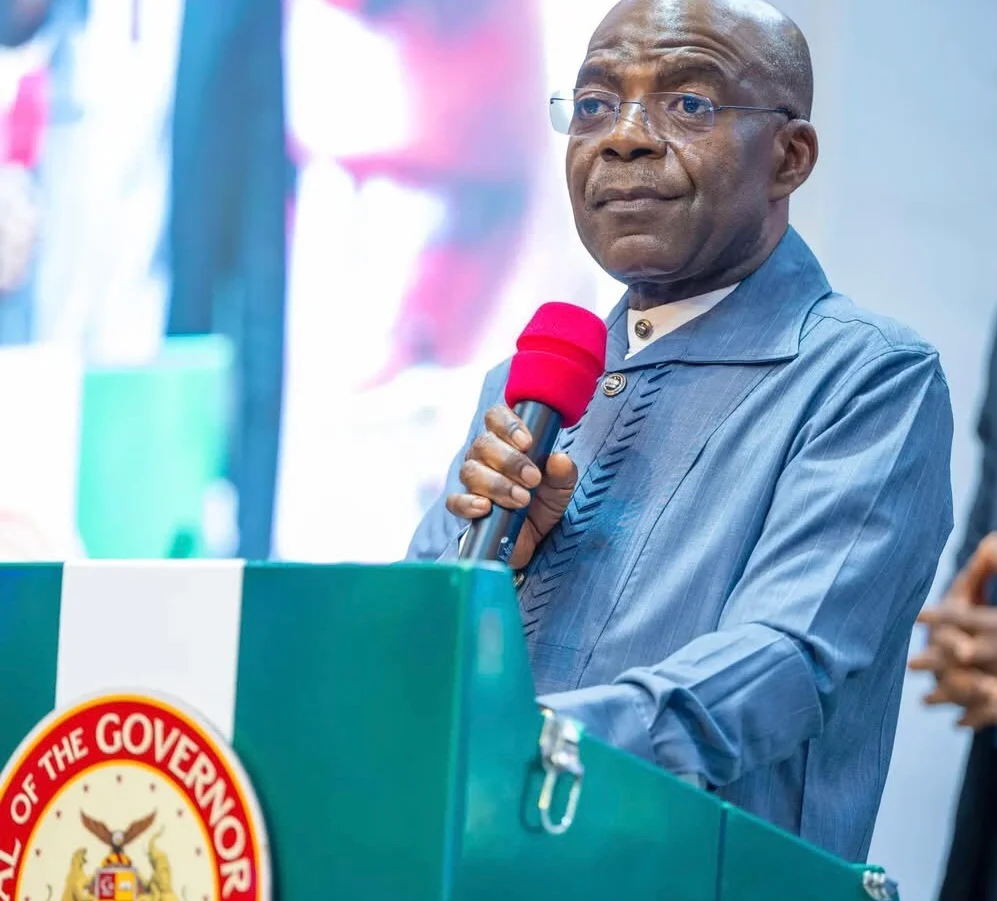
PTI Principal and Chief Executive Officer, Samuel Onoji, made this disclosure at a world press conference on Monday in Abuja ahead of the 4th Biennial International Conference on Hydrocarbon Science and Technology, scheduled for October 22–23, 2025, at the PTDF Towers, Central Business District.
Onoji said the institute is collaborating with industry partners to develop indigenous technologies that will enhance oil exploration, drilling, and refining operations across the country.
He added that the modular refinery initiative is part of PTI’s broader commitment to closing technological gaps and positioning Africa to sustainably harness its hydrocarbon resources in the era of global energy transition.
He said, “The Petroleum Training Institute is in partnership with some other organisations, and we are also working very hard to develop local technology that will help us expand crude production, because the oil exploration is simple. We talk of oil exploration, we talk of drilling, we speak of production, and we talk of processing. We have mastered this area.
“We have been in the business of oil and gas for the past 53 years. And so local technologies have been developed to exploit this oil and gas. We are not waiting for 2060, which is still far away, but it’s also very, very close. So, we are working on that. Like the modular refinery, we are also developing a more stable and adaptable modular refinery that can help us process our crude oil into refined crude oil.
“We are doing that already. Secondly, in the area of drilling, the Petroleum Training Institute has a well-functioning drilling rig that we use to train experts and train people in oil and drilling technology. We are also doing that.
“And presently we have Drill 6,000, the kind of simulation equipment that we use to train people on how to carry out drilling operations. We are also doing that. So, we are ensuring that in the next couple of years from now, we will have mastered the technology of exploiting for oil, drilling for oil, processing the crude oil into refined crude oil, and so on.”
Onoji noted that Africa is richly endowed with an estimated 125 billion barrels of crude oil and 600 trillion cubic feet of natural gas. He emphasized that instead of hastily abandoning fossil fuels, the continent should focus on research, innovation, and cleaner production technologies.
He stressed that the global transition to cleaner energy must not come at the expense of Africa’s comparative advantage in hydrocarbons.
The PTI chief further cautioned that only a few African nations currently have the capacity to manufacture critical oil and gas equipment—highlighting the urgent need for knowledge-driven local content development across the continent.
“With an estimated 125 billion barrels of crude oil reserves and over 600 TCF of natural gas reserves in Africa, it is our considered opinion that Africa should not hasten to abandon fossil fuel but should strive to deepen research and development of local technologies that enable the exploitation and utilisation of our oil and gas endowment in a more environmentally friendly manner, as the reality of global demand for fossil fuel is expected to linger for the next 50 years.
“Today, we are confronted with the stark reality that only a few African countries have been able to master certain aspects of oil production technology and fabricate key machinery for the industry. Thus, this conference intends to focus on research in these key areas to develop local content capacity in oil technology,” he added.
Speaking on the upcoming ICHST 2025, Onoji said the biennial conference would convene industry leaders, policymakers, researchers, academics, and international development partners to deliberate on the theme: “Transforming Africa’s Hydrocarbon Sector: Balancing Growth, Environment and Governance.”
He added that the conference would feature keynote addresses by the Minister of State for Petroleum Resources (Oil and Gas), chief executives of key industry regulators, and other renowned experts in the field.