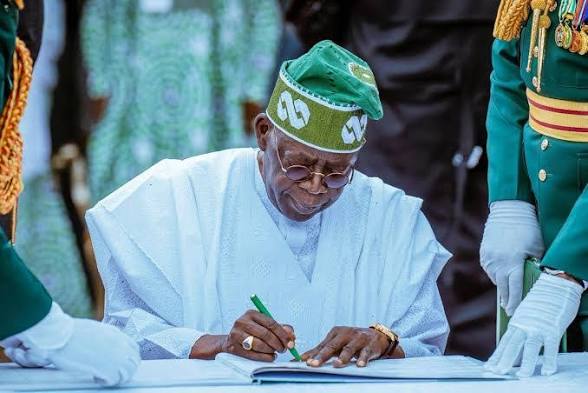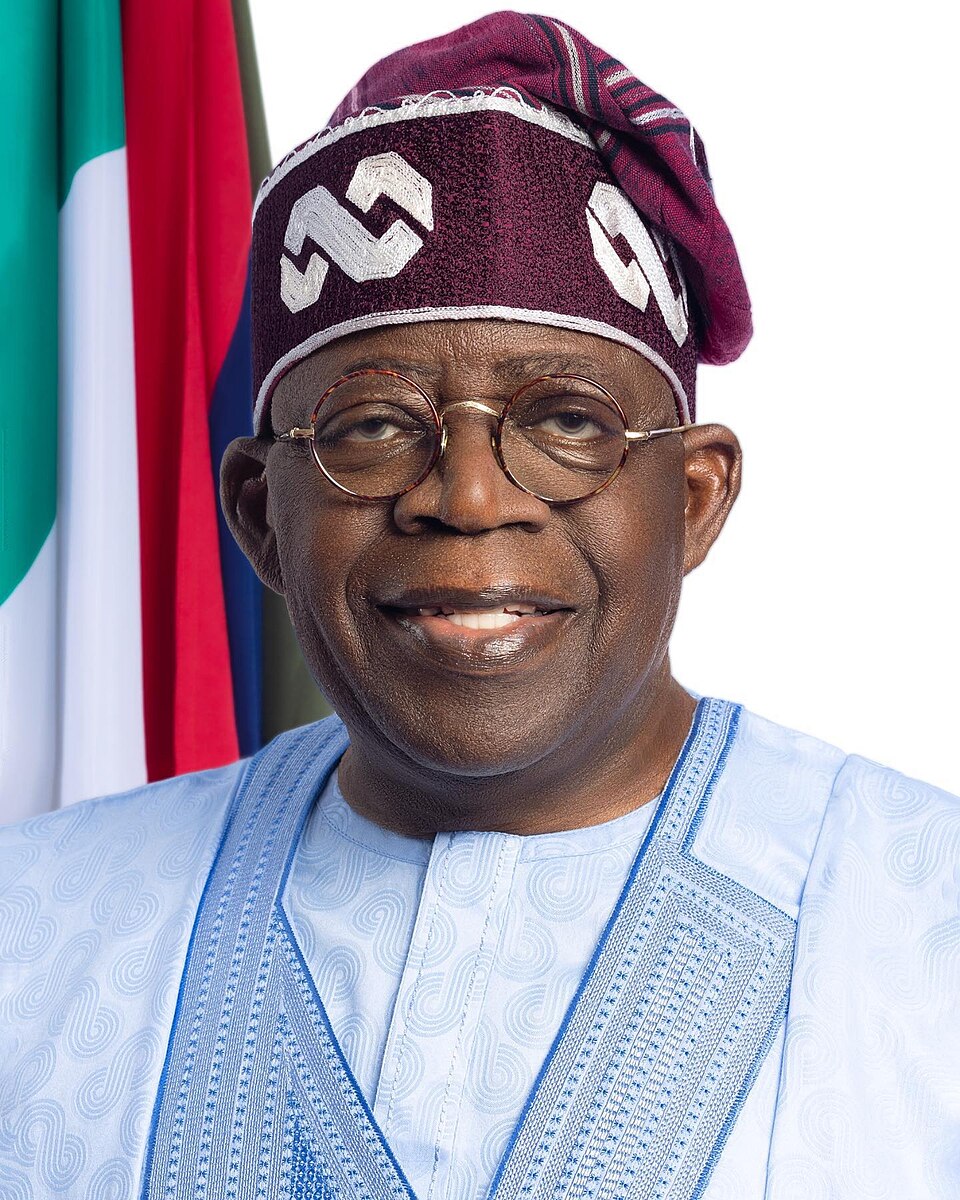

The Socio-Economic Rights and Accountability Project has urged President Bola Tinubu “to direct the Ministry of Humanitarian Affairs and Poverty Reduction, the National Cash Transfer Office and the National Social Safety Nets Coordinating Office to urgently account for over N78.8 billion in public funds reportedly diverted, unaccounted for or irregularly spent.”
The allegations are contained in the 2024 Annual Report released by the Auditor-General of the Federation on 7 August 2026.
The Auditor-General noted that the findings covered periods spanning January to December 2023 and running through to 31 December 2024.
SERAP urged the President “to direct the Ministry and NCTO to publish the full records and audit trail of the N33.751 billion 2023 cash transfers, including the name of the beneficiaries, payments, verification, authorisations and reconciliation, and to explain the failure to provide REMITA records to the Auditor-General.”
SERAP urged him “to direct the Ministry and NCTO to account for the N36.744 billion payments made without prepayment audit, the N4.616 billion in unsupported expenditures, the N350.182 million enrolment payments, the N89.511 million store purchases and the N17.422 million diesel advances.”
SERAP also urged him “to direct appropriate anticorruption agencies to promptly and thoroughly investigate the N76.24 billion in questionable and unaccounted-for expenditures at NCTO and N2.55 billion at NASSCO, and to ensure the recovery and remittance of any public funds improperly spent, diverted or lost.”
In a letter dated 5 September 2026 and signed by its deputy director, Kolawole Oluwadare, the organisation stated: “Anyone suspected to be responsible should be sanctioned and prosecuted as appropriate if sufficient admissible evidence is established, irrespective of status, position or institutional affiliation.”
SERAP said, “Every naira identified in the report must be properly accounted for, and any public funds found to have been diverted, misapplied or ‘paid to ineligible or fictitious beneficiaries’ must be fully recovered and remitted to the Treasury.”
The letter read in part: “The Ministry should be directed to publish a clear schedule showing the amount recovered, the date of recovery, the institution responsible and the Treasury account into which each recovered amount was paid.”
“We would be grateful if the recommended measures are taken within seven days of the receipt and/or publication of this letter. If we have not heard from you by then, SERAP shall consider appropriate legal actions and measures including before the ECOWAS Court, and the Inspection Panel, World Bank Accountability Mechanism to compel your government to comply with our request in the public interest.”
“There is a legitimate public interest in ensuring justice and accountability for these very serious allegations.”
“The findings raise fundamental questions about the integrity, transparency and effectiveness of Nigeria’s social protection system, particularly where billions of naira are intended to provide assistance to poor and vulnerable households/beneficiaries.”
“The failure to provide basic payment records and beneficiary information capable of establishing that public funds reached genuine beneficiaries undermines public confidence in the cash-transfer programme and creates a serious risk that funds intended for some of Nigeria’s poorest and most vulnerable citizens may have been lost, misapplied or paid to persons who were not entitled to receive them.”
“The failure to subject billions of naira in payments to prepayment audit, the absence of supporting documents for several expenditures, irregular procurement processes, and payments without evidence of delivery also raise serious concerns about the adequacy of existing safeguards over public funds.”
“Nigerians have the right to know the state-by-state beneficiary numbers, amounts disbursed, payment dates, failed and reversed transactions, amounts returned to the Treasury and all administrative and transaction costs incurred under the cash-transfer programme.”
“The Ministry and NCTO also ought to explain if there is any independent mechanism for receiving and investigating complaints from persons who were listed as beneficiaries but did not receive payments, as well as persons whose identities or bank accounts may have been used without their knowledge.”
“SERAP further urges you to direct the Ministry to publish a comprehensive and regularly updated register of all beneficiaries of the cash transfer programmes, subject to appropriate safeguards for personal data and the privacy of vulnerable persons, together with sufficiently detailed and anonymised information.”
“SERAP is particularly concerned about the Auditor-General’s finding that the NCTO made N33.751 billion in cash transfers to 3,295,207 households and beneficiaries in 35 states in 2023 without evidence confirming receipt of the money by the beneficiaries.”
“The Auditor-General found that the NCTO failed to provide REMITA statements needed to authenticate the payments and establish whether the beneficiaries were genuine and eligible. The audit report also raised concerns about incomplete beneficiary information and frustration of the audit process.”
“The Federal Government must reconcile the payments against the National Social Register and National Beneficiary Register and independently verify the identity and eligibility of beneficiaries, including identifying any duplicate, fictitious, deceased, ineligible or otherwise irregular beneficiaries.”
“According to the Auditor-General’s report, the NCTO paid N4.616 billion for various expenditures without adequate supporting documentation. The Auditor-General is concerned that ‘the money may have been diverted.'”
“The NCTO also ‘paid N36.74 billion in December 2023 without prepayment audit or internal audit checks, contrary to applicable financial regulations.’ The NCTO ‘paid N89.51 million for store items that were not delivered or entered in the store ledger’. The Auditor-General found that the store ledger had not been updated since 2020.”
“The NCTO also ‘disbursed N350.18 million to state coordinators for the enrolment of unbanked beneficiaries’, but the Auditor-General is concerned that ‘the money remained unaccounted for, with no adequate beneficiary lists, acknowledgements or other supporting documentation.'”
“The NCTO ‘spent N17.42 million through cash advances to staff for the purchase of diesel.’ The Auditor-General said the expenditure should have been subjected to the applicable procurement process and that the procured items could not be traced to the stores.”
“The NCTO ‘paid N280.42 million as mobilisation and advance payment to Payment Service Providers without an Advance Payment Guarantee.’ The Auditor-General found no evidence that due process was followed in their selection.”
“The NCTO also ‘failed to account for N393.71 million in unutilised funds disbursed to nine states for beneficiary enrolment activities.’ Although the NCTO reportedly claimed that the funds were returned to the Treasury, the Auditor-General found no evidence showing that the money was credited to the Consolidated Revenue Fund.”
“NASSCO also ‘paid N2.24 billion paid through 158 vouchers without prepayment audit.'”
“NASSCO also ‘paid N44.55 million for laptops that were not delivered or entered in the store ledger, N19.76 million for advertisements without evidence that the publications were made, and N141.01 million to two contractors for software without NITDA clearance.'”
“NASSCO also ‘paid N16.93 million paid to 56 officers for National Social Register data reconciliation without supporting documentation and N14.53 million paid for staff reimbursement relating to National Social Register validation and verification activities without supporting documentation.'”
“NASSCO ‘paid N14.53 million as reimbursement to one officer rather than individually to the 55 staff concerned, with no acknowledgements of receipt.'”
“NASSCO ‘awarded N27.56 million to an unqualified contractor for the design and printing of materials and paid N44 million in insurance premiums to two companies without evidence of the premium payments.'”
“SERAP is particularly concerned that the audit findings reveal repeated failures of basic financial and administrative controls, including the failure to conduct mandatory prepayment audits, missing payment and procurement records, payments for goods and services that could not be verified, inadequate beneficiary documentation, questionable procurement processes and unaccounted-for public funds.”
“Transparent investigation and accountability are especially important where the public funds concerned are part of programmes designed to provide social assistance to millions of poor and vulnerable Nigerians.”
“Section 13 of the Nigerian Constitution imposes a responsibility on government to conform to, observe and apply the provisions of Chapter II of the Constitution. Section 15(5) requires the State to abolish all corrupt practices and abuse of power. Section 14 further provides that the security and welfare of the people shall be the primary purpose of government.”
“Nigeria is also a state party to the UN Convention against Corruption and the African Union Convention on Preventing and Combating Corruption, which require effective measures to prevent, investigate and sanction corruption and promote accountability and transparency in the management of public resources.”
“Article 9 of the UN Convention requires appropriate systems of public procurement and public finances founded on transparency, competition and objective criteria. Article 10 requires measures to enhance transparency in public administration, including access to information. Article 13 recognises the role of civil society and public participation in preventing and combating corruption.”