
Ekiti State Governor, Biodun Oyebanji, has said his administration will prioritise industrialisation, small business development and productivity in his second term, to turn infrastructure investments into jobs, local manufacturing and economic growth.
Oyebanji said the government would expand support for small-scale entrepreneurs, strengthen agricultural value chains and attract private investors.
He added that the administration would also introduce alternative transportation systems powered by compressed natural gas (CNG) and electricity to reduce operating costs.
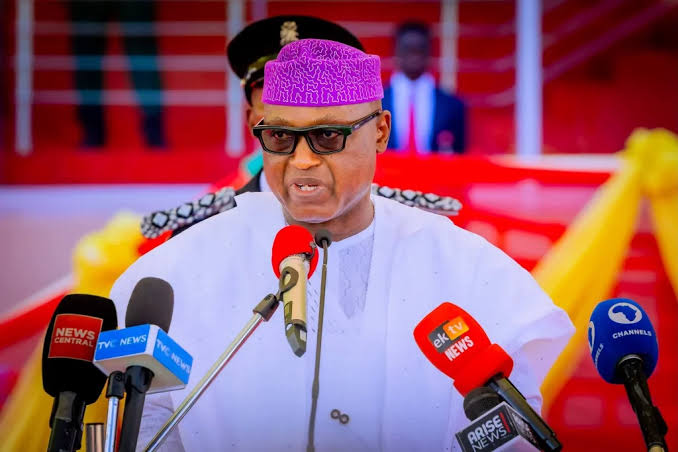
The governor spoke in an interview on his second-term agenda.
He said the next phase of his administration would focus on ensuring that the infrastructure developed during his first term translated into tangible economic benefits for residents.
According to him, the administration invested substantially in roads, electricity, agricultural infrastructure and other critical facilities during its first term, providing a foundation for increased production and economic activities.
He said the state had constructed roads linking communities, improved township roads and developed farm roads.
He added that nearly 400 kilometres of roads would have been completed by the end of 2026.
Oyebanji, however, stressed that infrastructure development would continue alongside efforts to promote industries, expand businesses and improve the state’s economic fortunes.
He identified welders, tailors, hairdressers, barbers and other small-scale entrepreneurs as key beneficiaries of the proposed economic expansion.
He said access to affordable financing would help them grow their businesses and create employment.
The governor also emphasised the need to strengthen agricultural production and establish reliable markets for farmers.
He argued that locally produced commodities must be processed within the state to generate greater economic value.
On attracting private investment, Oyebanji said his administration was improving the business environment through reforms in land administration, taxation and regulatory processes.
He said the government was establishing a one-stop shop to enable prospective investors to obtain relevant information, approvals and services without unnecessary bureaucratic delays.
Oyebanji maintained that the government’s primary responsibility was to create an enabling environment for private capital, rather than take on the task of establishing and operating industries itself.
On transportation, the governor said his administration was testing a pilot mass transit scheme to determine its effectiveness before expanding government investment in the sector.
He explained that the initiative was not meant to displace existing commercial transport operators, but to introduce fair competition and give residents more affordable alternatives.
Oyebanji identified CNG-powered and electric vehicles as important components of the state’s long-term strategy to reduce transportation costs.
He noted that petrol-dependent operations continued to impose significant financial burdens on drivers and passengers.
He said discussions were ongoing with a company expected to introduce the initiative, which would extend beyond cars to include tricycles and motorcycles.
On aviation, Oyebanji said his administration was working to enable the state’s airport to operate round the clock, rather than close at 6 p.m. or face restrictions during adverse weather conditions.
He disclosed that an Instrument Landing System (ILS) had been installed and was undergoing assessment by a certification team.
He added that a contract had been awarded for the airport lighting infrastructure required to support night operations.
The governor also announced plans to commission a privately developed fuel depot at the airport.
He explained that the facility would allow aircraft to refuel in Ekiti and make flight operations more convenient.
He said improved aviation facilities, agricultural investments and better road connectivity would support the state’s broader economic development strategy.
Speaking on his priorities, Oyebanji said: “Our next major focus, therefore, is industrialisation and support for small businesses. That is the only way we can deepen our shared prosperity agenda.
“Our farmers must also be able to produce at scale and have reliable off-takers who can purchase their produce and supply it to companies that will add value through processing.
“The responsibility of government is to create an enabling environment for investors to come in, establish businesses and create jobs.
“If the pilot scheme succeeds, the government will invest in transportation by procuring more vehicles that can compete with existing operators. I do not want to drive transport operators out of business.
“I am not in government to inflict hardship on anybody. I understand the challenges these operators face, and I will not introduce policies merely to win applause from some people at the expense of others.”